



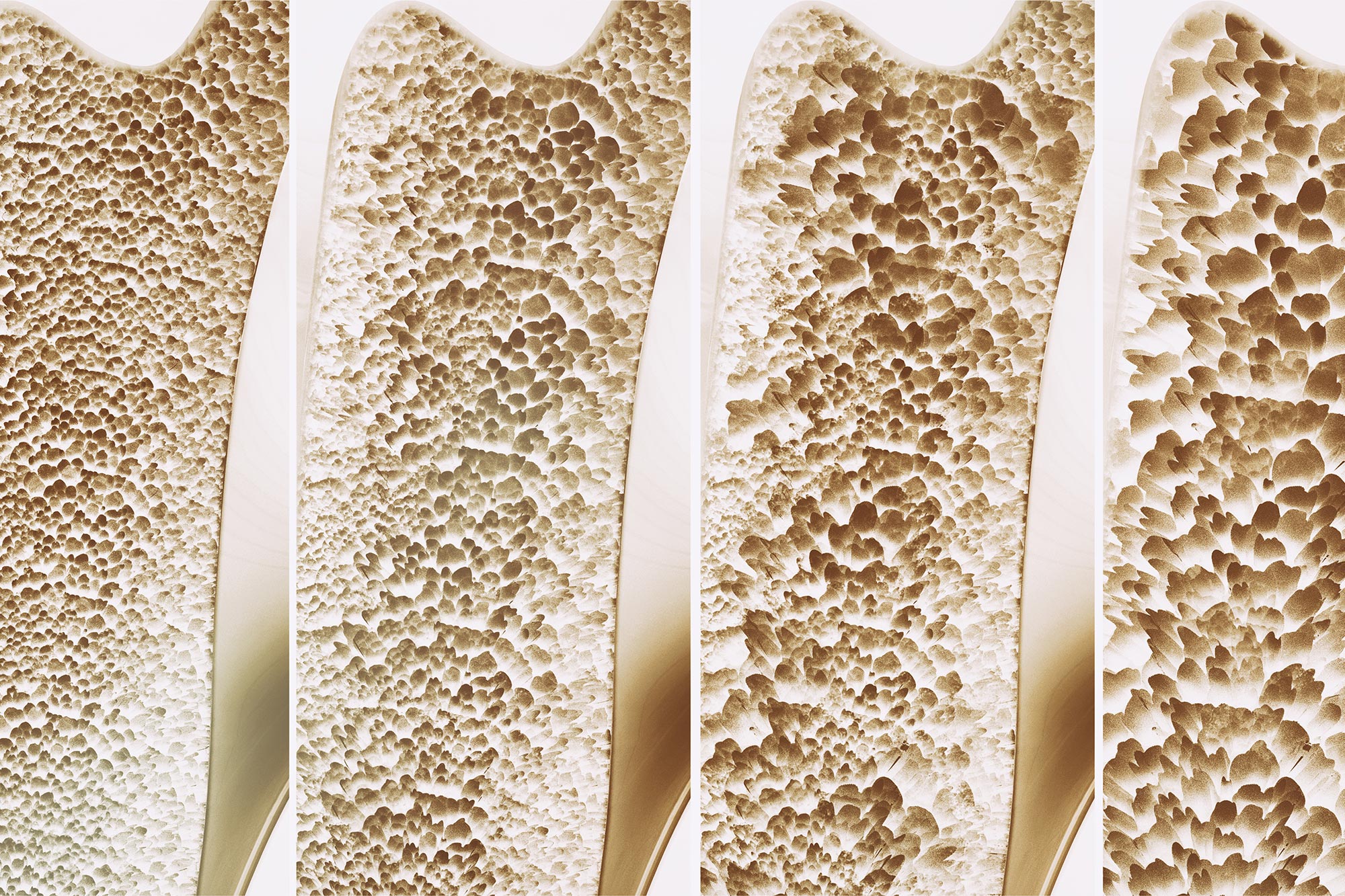
A newly identified vitamin K-dependent signaling pathway appears to help coordinate communication between key bone cells.
Bones may seem like lifeless structures, but they are constantly being torn down and rebuilt. Every day, specialized cells remove old bone while others replace it with new material, a process that keeps the skeleton strong and adaptable throughout life. When this delicate balance shifts too far in one direction, bones can gradually weaken, raising the risk of fractures and diseases such as osteoporosis.
For decades, vitamin K has been recognized as an important nutrient for bone health. Yet scientists have struggled to explain exactly how it helps maintain the skeleton. Now, researchers have uncovered an unexpected communication system inside bone that may provide an answer. Their findings suggest that vitamin K does far more than support bone mineralization. It also helps control how bone cells coordinate the breakdown and renewal of skeletal tissue.
A team led by Dr. Mathieu Ferron, Director of the Molecular Physiology Research Unit at the Montreal Clinical Research Institute (IRCM) in Canada, investigated how vitamin K-dependent γ-carboxylation influences interactions between osteoblasts (bone-forming cells) and osteoclasts (bone-resorbing cells). Using genetically engineered mice, cell culture experiments, molecular analyses, histology, and microcomputed tomography imaging, the researchers identified a previously unknown pathway that helps regulate bone resorption. Their study was published in Bone Research.
Deleting a Key Enzyme Produces Unexpected Effects
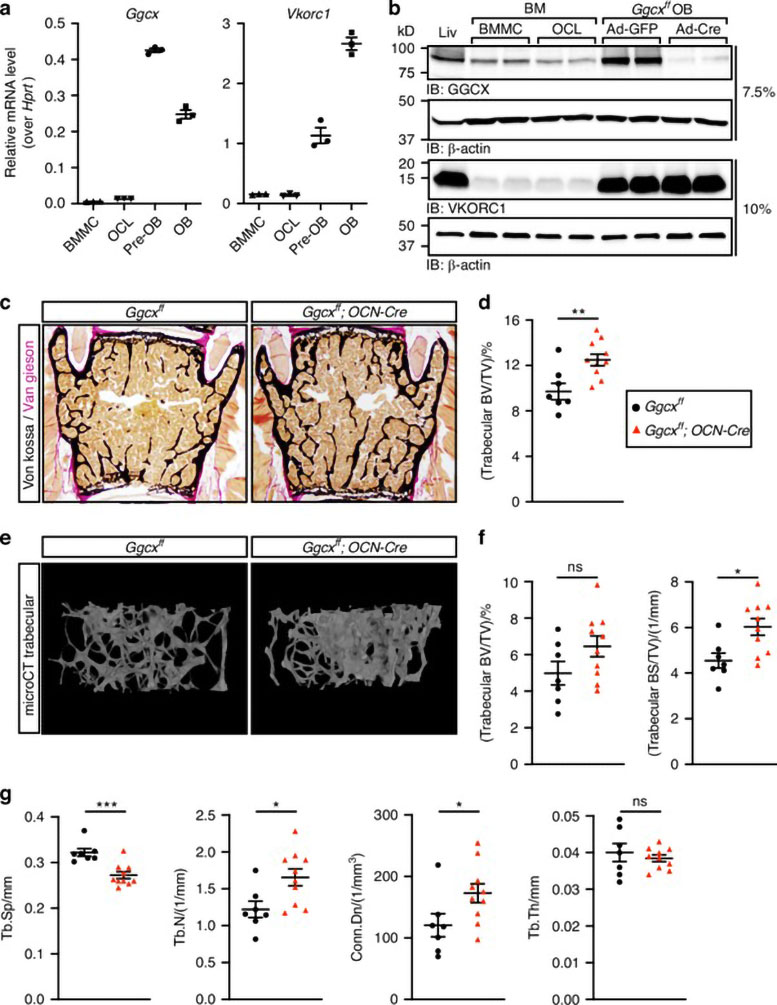
The researchers began by studying the enzymes involved in vitamin K-dependent γ-carboxylation. They found that γ-glutamyl carboxylase and vitamin K oxidoreductase were expressed mainly in osteoblasts rather than osteoclasts, suggesting that vitamin K signaling primarily acts through bone-forming cells.
To test this idea, the team removed γ-glutamyl carboxylase specifically from osteoblasts in male mice. By 6 months of age, the animals had developed substantially greater bone mass, along with denser and more interconnected bone structures.
Further investigation showed that the increase in bone mass was largely the result of reduced bone breakdown rather than increased bone formation. Mice lacking γ-glutamyl carboxylase in osteoblasts had fewer osteoclasts and less osteoclast surface area. Blood markers associated with bone resorption were also lower. In co-culture experiments, osteoblasts without γ-glutamyl carboxylase were much less capable of supporting osteoclast development.
The team then searched for a γ-carboxylated protein that could connect osteoblast activity to osteoclast development. Their analysis identified growth arrest-specific 6 (GAS6), a signaling protein released by osteoblasts that activates the TAM family receptors AXL and MerTK on pre-osteoclasts.
Laboratory experiments showed that recombinant γ-carboxylated GAS6 strongly stimulated osteoclast formation and increased the number of nuclei within each osteoclast, creating larger multinucleated cells with greater bone-resorbing capacity. Blocking AXL and MerTK with drugs significantly reduced osteoclast production, confirming the central role of the GAS6-TAM signaling pathway.
“Our findings reveal an unexpected mechanism through which osteoblasts actively regulate osteoclast maturation,” says Dr. Ferron. “Vitamin K-dependent γ-carboxylation not only affects bone mineralization. It also controls how osteoblasts communicate with osteoclast precursors through GAS6 signaling.”
Testing the Pathway in Living Animals
To determine whether higher GAS6 levels could directly influence bone remodeling in vivo, the researchers studied transgenic mice with elevated circulating GAS6. These mice showed the opposite pattern, with lower bone density, more osteoclasts, and increased bone resorption.
Additional experiments revealed that GAS6 primarily promotes the fusion of pre-osteoclasts into mature multinucleated osteoclasts rather than affecting the earlier process of osteoclast differentiation.
“The study provides a new framework for understanding how vitamin K influences skeletal biology,” Dr. Ferron explains. “Targeting GAS6 or TAM receptor signaling could eventually help modulate excessive bone resorption while preserving normal bone remodeling.”
The findings could have important medical implications. Over time, a better understanding of the GAS6-TAM signaling axis may help support the development of treatments for osteoporosis and other diseases driven by excessive osteoclast activity.
Overall, the study uncovers a previously unknown vitamin K-dependent mechanism that allows osteoblasts to regulate osteoclast maturation and bone resorption. By identifying GAS6 as a key signaling link between these two cell types, the research provides new insight into how bone balance is maintained and points to potential new strategies for treating bone fragility and metabolic bone disorders.
Reference: “Vitamin K-dependent carboxylation in osteoblasts regulates bone resorption through GAS6 in male mice” by Monica Pata, Diep Ngoc Thi Pham, Julie Lacombe, B. Ashok Reddy, Young Woong Kim, Abeer Gamal Ali Ahmed, Monzur Murshed and Mathieu Ferron, 28 April 2026, Bone Research.
DOI: 10.1038/s41413-026-00528-2
Never miss a breakthrough: Join the SciTechDaily newsletter.
Follow us on Google and Google News.
Full article can be found at: https://scitechdaily.com/new-discovery-reveals-vitamin-ks-surprising-role-in-preventing-bone-loss/


