



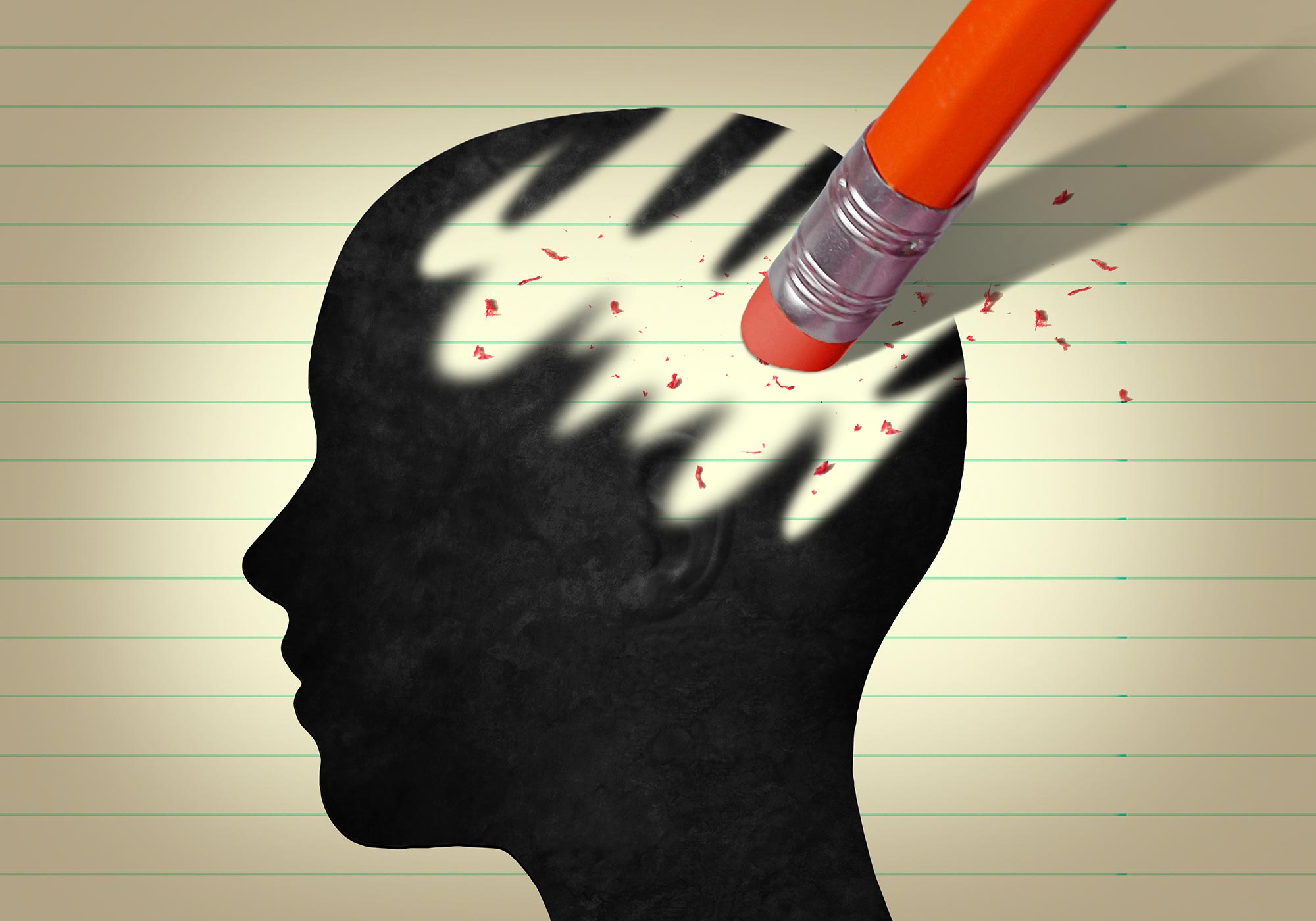
Aging changes gut bacteria in mice, weakening communication between the intestines and the brain. Restoring that connection helped older mice form memories as effectively as young mice.
For decades, age-related memory loss has largely been viewed as a problem that begins in the brain. But growing evidence suggests that some of the processes shaping cognition may start much farther south — in the gut, home to trillions of microbes that help regulate everything from digestion to immunity.
A new mouse study from researchers at Stanford Medicine and the Arc Institute in Palo Alto, California, points to a surprising gut-brain connection behind cognitive aging.
The team found that age-related changes in gut bacteria can interfere with signals traveling along the vagus nerve, a major communication highway linking the gastrointestinal tract and the brain. Their findings suggest that memory decline may be influenced by changes outside the brain itself, opening new possibilities for preserving cognitive function later in life.
“Although memory loss is common with age, it affects people differently and at different ages,” said Christoph Thaiss, PhD, assistant professor of pathology. “We wanted to understand why some very old people remain cognitively sharp while other people see significant declines beginning in their 50s or 60s. What we learned is that the timeline of memory decline is not hardwired; it’s actively modulated in the body, and the gastrointestinal tract is a critical regulator of this process.”

The study found that the gut microbiome, the natural community of bacteria living in the intestine, changes as mice grow older. Some bacterial species become more common while others decline. Immune cells in the gastrointestinal tract detect these changes and trigger inflammation that weakens signaling through the vagus nerve to the hippocampus, the brain region involved in memory formation and spatial navigation. When researchers stimulated vagus nerve activity in older mice, the animals regained the ability to remember unfamiliar objects and escape mazes as well as younger mice.
“The degree of reversibility of age-related cognitive decline in the animals just by altering gut-brain communication was a surprise,” Thaiss said. “We tend to think of memory decline as a brain-intrinsic process. But this study indicates that we can enhance memory formation and brain activity by changing the composition of the gastrointestinal tract — a kind of remote control for the brain.”
Thaiss, who is also a core investigator at Palo Alto-based Arc Institute, is a senior author of the study, which was published in Nature. Maayan Levy, PhD, an assistant professor of pathology and Arc Institute innovation investigator, is the other senior author. Timothy Cox, a graduate student at the University of Pennsylvania, is the lead author of the research.
“Our study emphasizes that processes in the brain can be modulated through peripheral intervention,” Levy said. “Since the gastrointestinal tract is easily accessible orally, modulating the abundance of gut microbiome metabolites is a very appealing strategy to control brain function.”
The call is coming from inside the body
The idea that hundreds of bacterial species live in the intestines once seemed surprising. Today, the gut microbiome receives broad attention because it is understood to influence not only digestion, but also wider health. More than 10 years ago, scientists showed that changing the gut microbiomes of rodents could alter their social and cognitive behavior. Thaiss and Levy wanted to know whether a related mechanism might help explain the memory loss and cognitive difficulties often linked to aging.
Signals that travel from inside the body to the brain, including messages sent from the intestines through the vagus nerve, are part of a process called interoception. By contrast, signals that come from outside the body through taste, touch, smell, vision, and hearing are called exteroception.
“Exteroception is basically how we perceive the outside,” Thaiss said. “We have a lot of detailed knowledge about how this works. But we know much less about how the brain senses what is going on inside the body. We don’t know how many internal senses there are, or even all of what they are sensing. It’s clear that our exteroception capabilities decline with age — we grow to need eyeglasses and hearing aids, for example. And this study shows that aging also affects interoception.”

To test whether the gut microbiome contributes to the senior moments many people experience, the researchers housed young (2-month-old) mice with old (18-month-old) mice. Because the animals lived and defecated near one another, the young mice were exposed to the gut microbiomes of the older mice, and the older mice were exposed to those of the younger mice. After one month, the researchers analyzed the animals’ microbiomes.
They found that shared housing caused the microbiomes of young mice to become more similar to those of older animals. When the researchers tested whether the mice could recognize a new object or find the exit of a maze, the young mice with old microbiomes performed much worse than other young mice. They showed less interest in unfamiliar objects and moved through the maze in a way that resembled old animals.
The researchers also compared young and old mice raised from birth in a germ-free environment, meaning neither group had gut bacteria. Young mice kept their ability to form memories. But when young germ-free mice received microbiomes from old mice, they again performed like older animals on memory and cognition tests. Notably, old germ-free mice did not lose memory and cognition as they aged and performed as well as 2-month-old mice.
The results were especially striking when young mice carrying old microbiomes, and therefore showing weaker cognition, were treated with broad-spectrum antibiotics for two weeks. Their cognitive abilities returned, and they explored unfamiliar objects and navigated mazes as well as control mice.
“The object recognition test is like cognitive recognition tests in humans, where you are shown a series of images, then have to remember which ones you’ve seen before after some time passes,” Thaiss said. “And the maze test is like people trying to recall where they parked their car at a large shopping center. What these tasks have in common, in mice and in people, is that they are very strongly dependent on activity in the hippocampus, because that is where memories are encoded.”
What’s different in their guts?
The researchers then looked more closely at how the gut microbiome changes with age in mice. They found that one bacterium, Parabacteroides goldsteinii, becomes relatively more abundant in old mice and is directly linked to cognitive decline in the animals. When young mice were colonized with this bacterial species, they performed worse on the object recognition and maze tests, and that decline was associated with reduced activity in the hippocampus.
When old mice were treated with a molecule that activates the vagus nerve, however, their cognitive performance became indistinguishable from that of young mice.
Additional experiments showed that the rise in Parabacteroides goldsteinii was associated with higher levels of metabolites called medium-chain fatty acids. These metabolites caused myeloid cells, a type of immune cell in the gut, to launch an inflammatory response. That inflammation reduced activity in the vagus nerve, lowered activity in the hippocampus, and weakened the animals’ ability to form lasting memories.
“The GI tract is arguably the first organ system to evolve during human evolutionary history, so the evolution of cognitive processes in the brain has undoubtedly been shaped by signals coming from the intestine,” Levy said. “It’s likely that signals from the GI tract play an important role in contextualizing memory formation.”
Thaiss added, “Basically, we’ve identified a three-step pathway toward cognitive decline that starts with gastrointestinal aging and the subsequent microbial and metabolic changes that occur. The myeloid cells in the GI tract sense these changes, and their inflammatory response impairs the connection between the gut and the brain via the vagus nerve. This is a direct driver of memory decline. And if we restore the activity of the vagus nerve, we can restore an old animal’s memory function to that of a young animal.”
The researchers are now studying whether a similar pathway involving the gut microbiome and brain activity exists in people, and whether it also contributes to age-related cognitive decline. Vagus nerve stimulation is already approved by the Food and Drug Administration to treat depression or epilepsy and to support recovery after stroke. The researchers also hope to develop noninvasive ways to monitor, and possibly control, the activity of peripheral neurons that influence memory formation and cognition.
“Our hope is that ultimately these findings can be translated into the clinic to combat age-related cognitive decline in people,” Thaiss said.
Reference: “Intestinal interoceptive dysfunction drives age-associated cognitive decline” by Timothy O. Cox, Ashwarya S. Devason, Alan de Araujo, Sydney Mason, Madhav Subramanian, Andrea F. M. Salvador, Hélène C. Descamps, Junwon Kim, Yixuan Zhu, Lev Litichevskiy, Sunhee Jung, Won-Suk Song, Adrián Cortés-Martín, Nathan T. Henderson, Kuei-Pin Huang, Thao Nguyen, Wisath Sae-Lee, Iboro C. Umana, Maria Sacta, Ryan J. Rahman, Stephen Wisser, J. Andrew D. Nelson, Ilona Golynker, Alana M. McSween, Eric F. Hohmann, Shaan Patel, Anna L. Bub, Clara Soekler, Niklas Blank, Kevt’her Hoxha, Lavinia Boccia, Andrea C. Wong, Klaas Bahnsen, Jihee Kim, Natalie Biderman, Dina Abbasian, Clarissa Shoffler, Christopher Petucci, Fiona E. McAllister, Amber L. Alhadeff, Marc V. Fuccillo, Colin Hill, Cholsoon Jang, J. Nicholas Betley, Guillaume de Lartigue, Virginia Y.-M. Lee, Maayan Levy and Christoph A. Thaiss, 11 March 2026, Nature.
DOI: 10.1038/s41586-026-10191-6
The study was funded by the Arc Institute, the National Institutes of Health (grants NIH DK019525, T32AG000255, F30AG081097, T32HG000046, F30AG080958, DP2-AG-067511, DP2-AG-067492, DP1-DK-140021, R01-NS-134976 and R01-DK-129691), the Burroughs Wellcome Fund, the American Cancer Society, the Pew Scholar Award, the Searle Scholar Program, the Edward Mallinckrodt Jr. Foundation, the W.W. Smith Charitable Trust, the Blavatnik Family Fellowship, the Prevent Cancer Foundation, the Polybio Research Foundation, the V Foundation, the Kathryn W. Davis Aging Brain Scholar Program, the McKnight Brain Research Foundation, the Kenneth Rainin Foundation, the IDSA Foundation and the Human Frontier Science Program.
Never miss a breakthrough: Join the SciTechDaily newsletter.
Follow us on Google and Google News.
Full article can be found at: https://scitechdaily.com/stanford-scientists-reverse-age-related-memory-loss-by-targeting-the-gut/


