




Results from a UK collaboration mark a major advance toward building large-scale quantum sensors.
A prototype quantum sensor built by Imperial researchers has shown for the first time that a central idea behind future quantum detectors can operate in realistic experimental conditions.
The study demonstrates that comparing two long baseline atom interferometers, instruments that use lasers to measure the behavior of atoms with extreme precision, can effectively cancel experimental noise.
That makes it possible to recover signals even when each individual measurement is buried in noise. The advance could support future searches for gravitational waves from the early universe and signs of unusual forms of dark matter.
The work is part of the Atom Interferometer Observatory and Network (AION) collaboration. Led by Imperial, AION includes researchers from institutions across the UK who are developing next-generation quantum sensing technologies.
This research was published on June 17, 2026, in Nature.
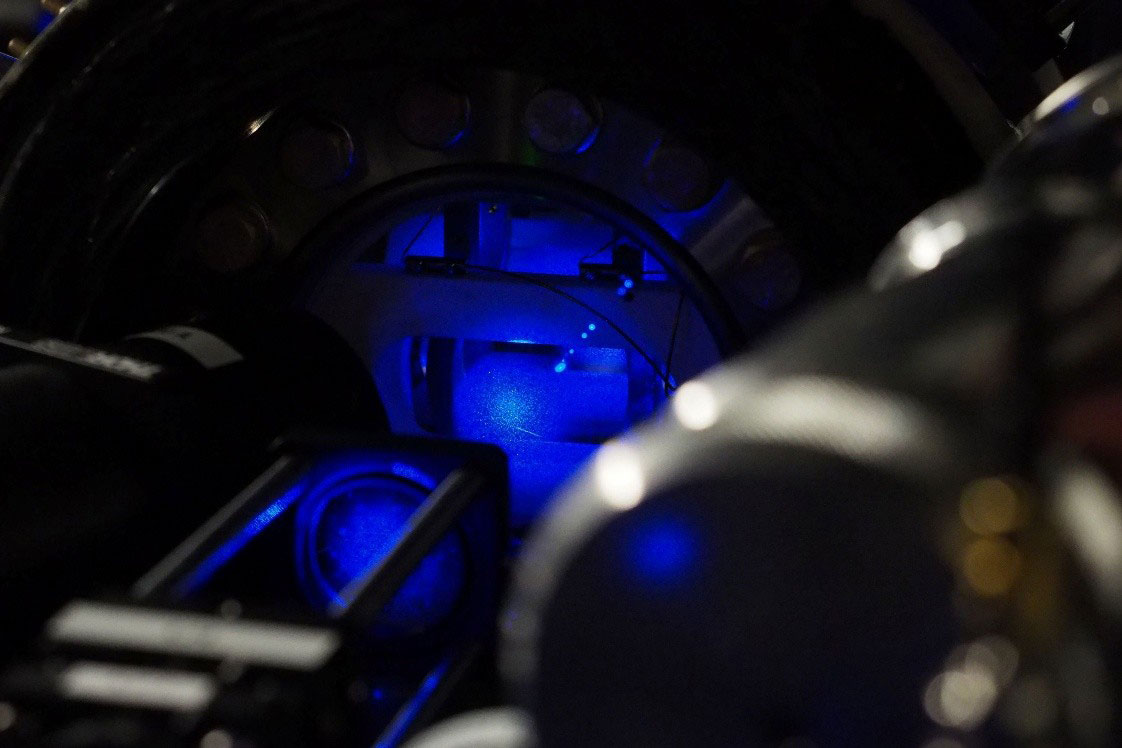
Canceling noise in quantum measurements
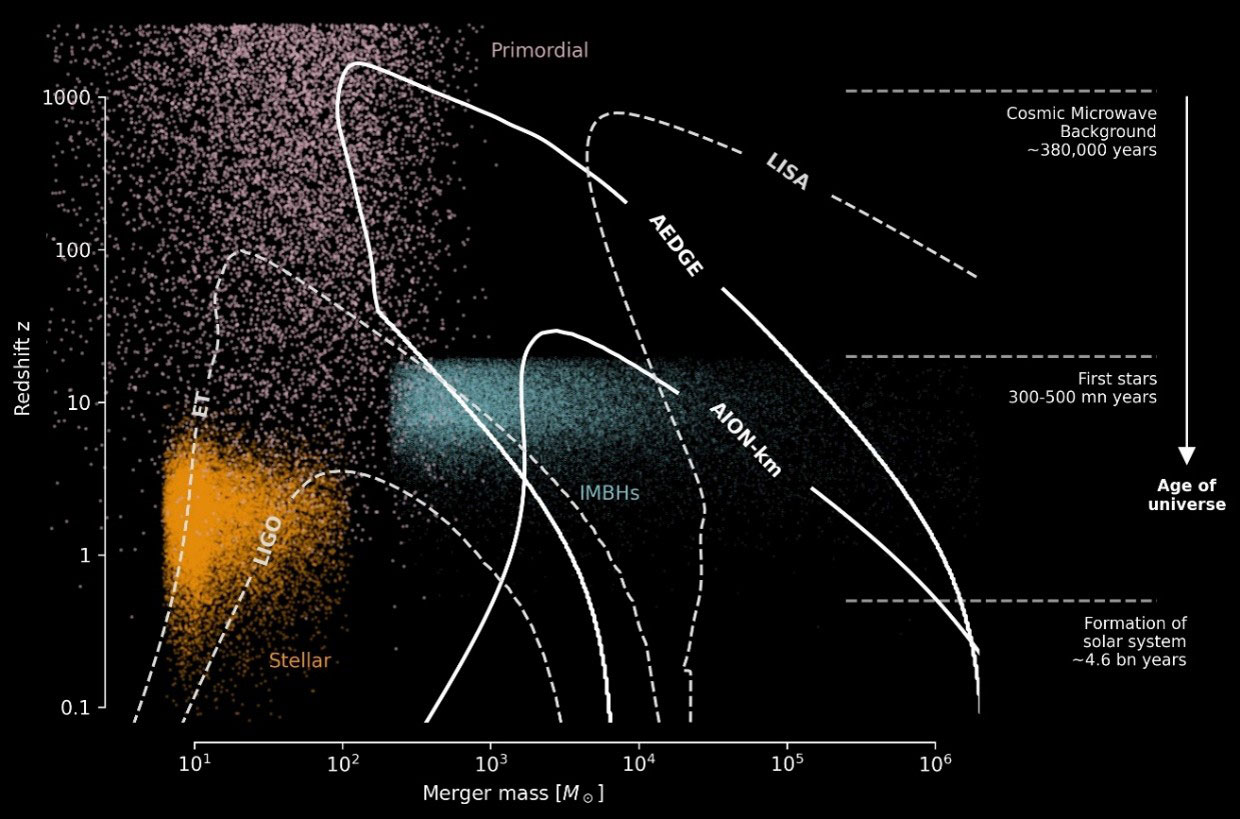
Understanding the contents of the Universe and finding new sources of gravitational waves remain among the biggest questions in modern physics.
Both goals require scientists to detect extremely faint signals that can be hidden by background noise. Reliable ways to separate those signals from noise are essential for probing regions of the Universe that current experiments cannot reach.
Long baseline atom interferometers are becoming one of the most promising technologies for this task. They use lasers to split clouds of atoms and then recombine them, making it possible to measure tiny changes in atomic motion with exceptional precision.
The method depends on comparing the behavior of two atom clouds placed at different locations and measured with the same laser. Any difference between them could reveal hidden signals, such as the presence of a dark matter field.
But the approach faces a serious obstacle. The laser that controls the experiment creates phase noise much larger than the signals physicists hope to detect. Without correction, that noise would completely mask the effects they are looking for.
Scientists have proposed solving the problem with a differential method, comparing two interferometers so that shared noise cancels out. This idea is central to plans for next-generation detectors, but until now it had not been shown to work under realistic conditions.
Speaking about the significance of the advance, Dr. Charles Baynham, co-lead of the Ultracold Strontium Laboratory at Imperial College London, said, “We’ve known for a long time that quantum sensors can help us understand the universe, but it’s only recently that it’s become possible to build them with the resolution needed.
We’re immensely proud of our team’s efforts to make these sensors a reality – I can’t wait for the day when signals from an atom are telling us about a black hole that merged millions of years ago.”
Testing the approach
In the new study, the Imperial group tested this principle in the laboratory.
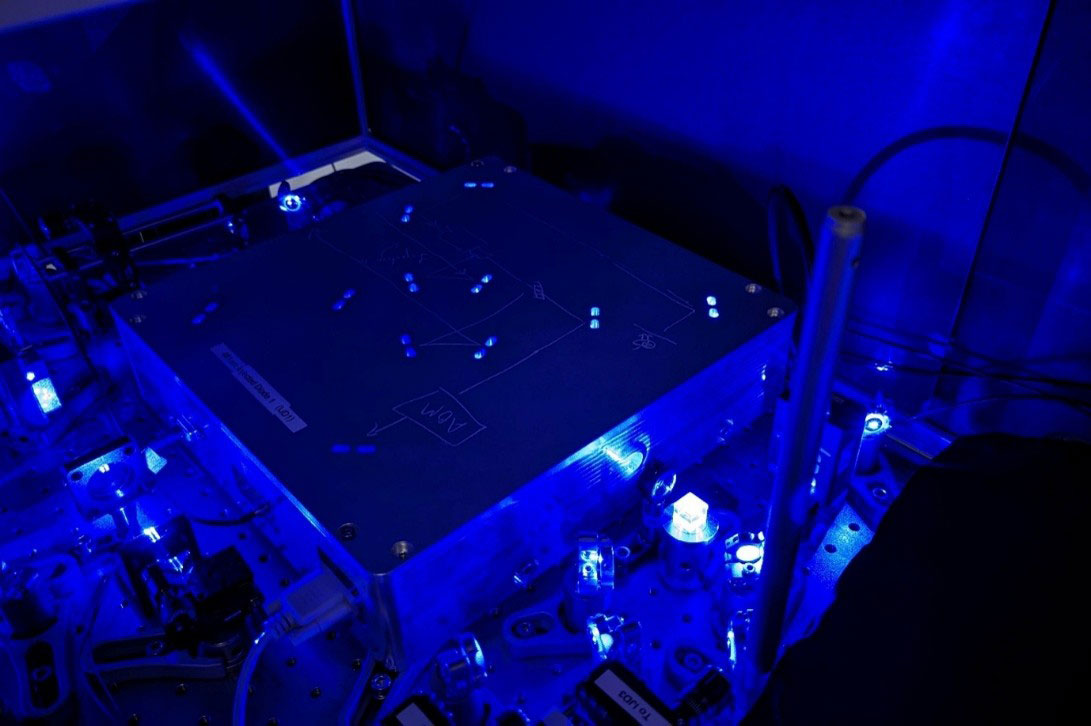
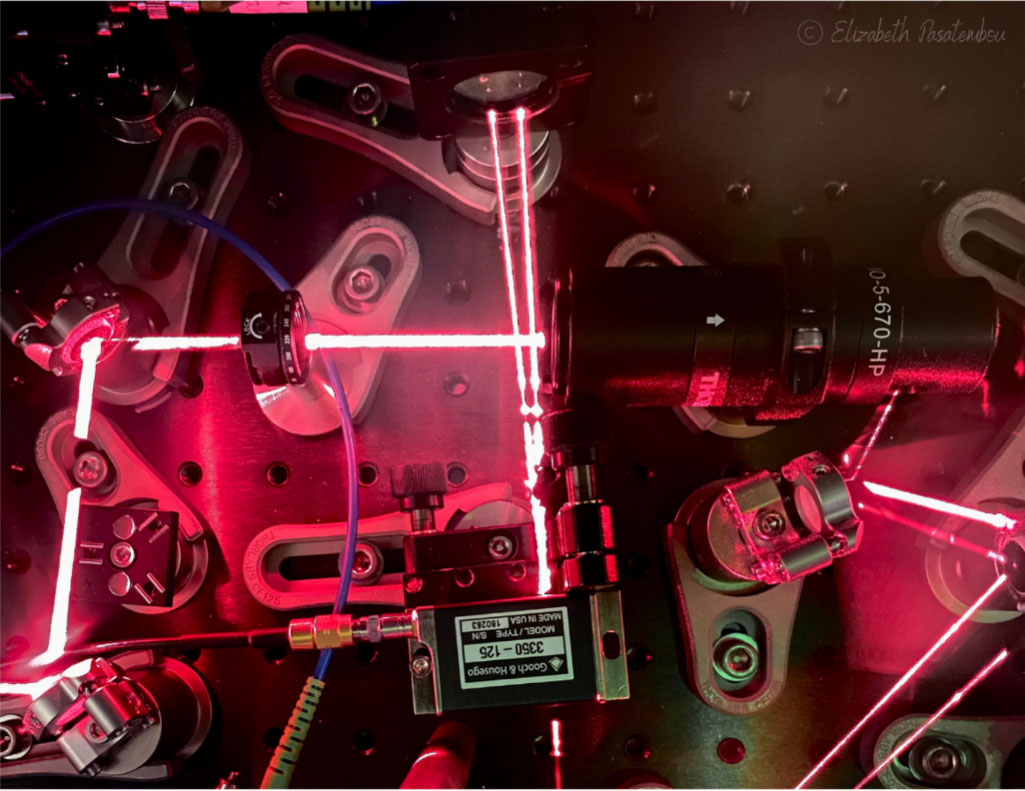
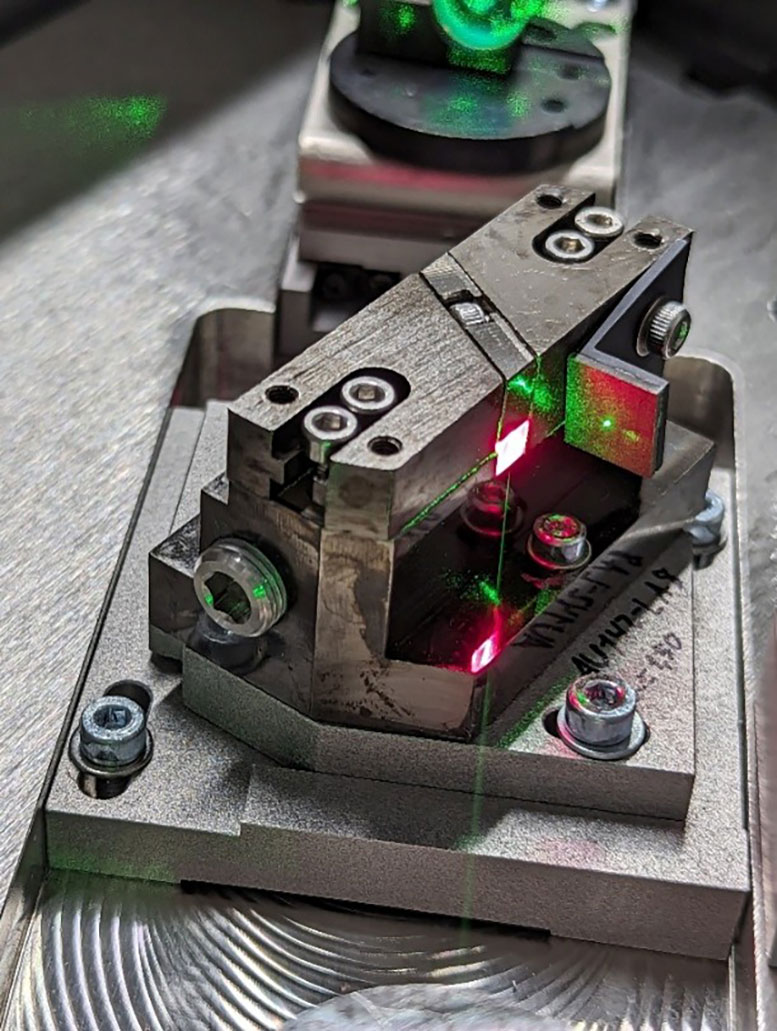
Inside the Imperial Ultracold Strontium Laboratory, they created a tabletop prototype using two widely separated clouds of ultracold strontium 87, both measured with a single ultrastable clock laser.
The design was meant to recreate the conditions expected in much larger future experiments, where noise control will become even more difficult.
To stress test the technique, the group intentionally added large amounts of extra phase noise to the system, far more than clock lasers naturally produce, to imitate the conditions expected in long baseline detectors.
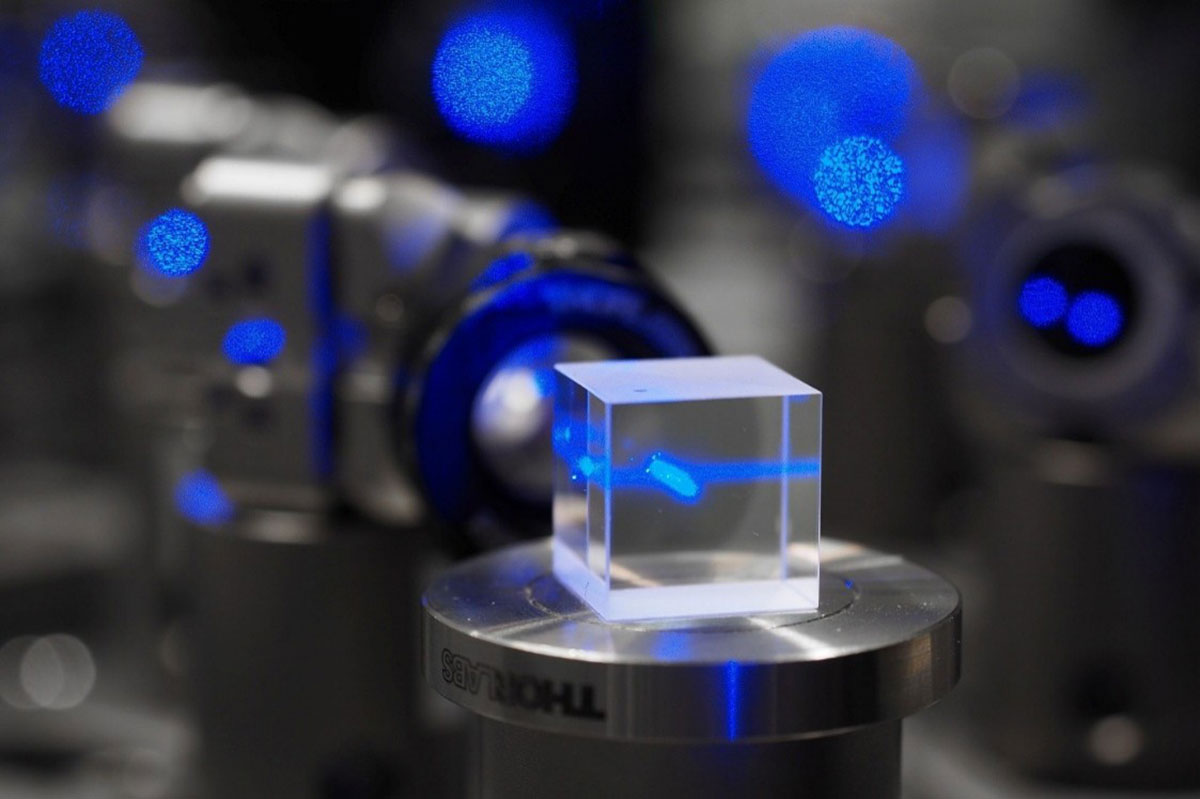
On their own, both interferometers became unusable because noise overwhelmed the signal. The interference patterns normally used for measurement were effectively wiped out.
But when the two interferometers were compared, the signal reappeared. Although each separate measurement looked random, the relationship between them exposed the system’s underlying behavior. The combined measurement reached the fundamental limit set by quantum physics, showing that laser noise cancellation works as needed.
The scientists then added an extra oscillating signal to the system, similar to one that could be produced by a passing gravitational wave or a dark matter field. The signal was still clearly detectable, even though neither interferometer alone contained usable information.
Towards next-generation detectors
The findings provide the first experimental proof of a key principle behind long baseline atom interferometers and help address one of the main challenges in their design.
Through the AION program, researchers are building the technologies needed to scale these systems into experiments capable of exploring new regions of the Universe.
AION is also part of a broader international effort that includes close partnerships with the MAGIS project at Fermilab and related US institutions, all working to advance large-scale atom interferometers for fundamental physics.
One proposal is the Atom Interferometry CERN Experiment (AICE), which would use similar techniques across much longer distances. If realized, AICE would open a new direction for CERN by applying quantum sensing to fundamental physics at scale. Facilities of this kind could also become some of the largest quantum experiments ever built.
Dr. Richard Hobson, co-lead of the Ultracold Strontium Laboratory at Imperial, said, “We have taken some of the most precise instruments ever built—atomic clocks and atom interferometers—and shown that they can be repurposed to open entirely new windows onto the invisible parts of our Universe.
Our current experiment is just a prototype, but scaling it to a full-scale facility at laboratories such as CERN or Fermilab will allow us to tackle some of the deepest mysteries in physics, including the nature of dark matter.”
Imperial researchers are now planning these systems as part of an international push to create a new generation of quantum sensors. In the future, such detectors could study gravitational wave frequency bands that are currently inaccessible and search for new forms of matter, opening a previously unexplored window on the Universe.
Professor Oliver Buchmueller, Principal Investigator of the AION collaboration at Imperial, added, “This work marks an important milestone towards future large-scale quantum sensors for fundamental physics. It demonstrates, under realistic experimental conditions, a key technique relevant for next-generation atom interferometer facilities currently under development internationally, including MAGIS at Fermilab and the proposed AICE facility at CERN.”
Reference: “A prototype differential atom interferometer for fundamental physics” by C. F. A. Baynham, R. Hobson, O. Buchmüller, D. Evans, L. Hawkins, L. Iannizzotto Venezze, A. Josset, D. Lee, E. Pasatembou, B. E. Sauer, M. R. Tarbutt, T. Walker, O. Ennis, U. Chauhan, A. Brzakalik, S. Dey, S. Hedges, B. Stray, M. Langlois, K. Bongs, T. Hird, S. Lellouch, M. Holynski, B. Bostwick, J. Chen, Z. Eyler, V. Gibson, T. L. Harte, C. C. Hsu, M. Karzazi, C. Lu, B. Millward, J. Mitchell, N. Mouelle, B. Panchumarthi, J. Scheper, U. Schneider, X. Su, Y. Tang, K. Tkalčec, M. Zeuner, S. Zhang, Y. Zhi, L. Badurina, A. Beniwal, D. Blas, J. Carlton, J. Ellis, C. McCabe, G. Parish, D. Pathak Govardhan, V. Vaskonen, T. Bowcock, K. Bridges, A. Carroll, J. Coleman, G. Elertas, S. Hindley, C. Metelko, H. Throssell, J. N. Tinsley, E. Bentine, M. Booth, D. Bortoletto, N. Callaghan, C. Foot, C. Gómez-Monedero, K. Hughes, A. James, T. Leese, A. Lowe, J. March-Russell, J. Sander, J. Schelfhout, I. Shipsey, D. Weatherill, D. Wood, S. N. Balashov, M. G. Bason, K. Hussain, H. Labiad, P. Majewski, A. L. Marchant, D. Newbold, Z. Pan, Z. Tam, T. C. Thornton, T. Valenzuela, M. G. D. van der Grinten, I. Wilmut, K. Clarke, A. Vick and AION Collaboration, 17 June 2026, Nature.
DOI: 10.1038/s41586-026-10617-1
Funding: Royal Society, Research Councils UK, University of Cambridge, Generalitat de Catalunya, Ministerio de Universidades
The program was supported by the Quantum Technologies for Fundamental Physics (QTFP) program, a joint STFC–EPSRC initiative.
Never miss a breakthrough: Join the SciTechDaily newsletter.
Follow us on Google and Google News.
Full article can be found at: https://scitechdaily.com/new-quantum-sensor-opens-a-window-into-the-invisible-universe/


