



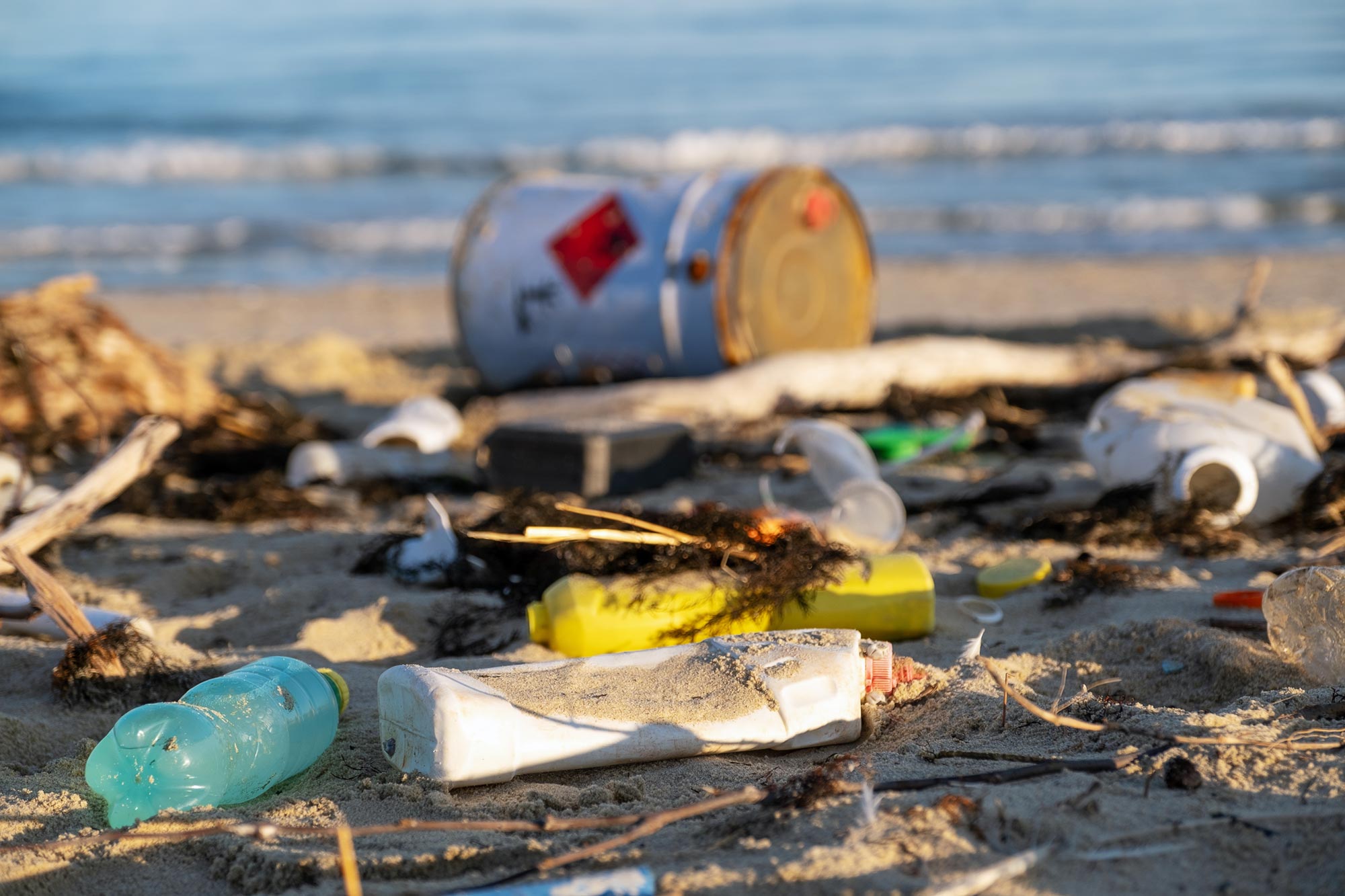
A new study finds that biodiversity loss accounts for the largest share of global environmental damage, surpassing climate change.
A relatively small share of the world’s population may be causing environmental damage on the same financial scale as the global effort needed to repair it. According to a new study, the highest-consuming 10% of people generate an estimated $1.7 trillion to $5.7 trillion in environmental harm each year, several times more, at the central and upper estimates, than current international commitments for climate action and biodiversity conservation combined.
Published in Communications Sustainability, the analysis places a monetary value on damage across four major planetary boundaries: climate change, biodiversity loss, nutrient pollution, and freshwater use. The findings offer a stark measure of how heavily environmental pressures are concentrated among the world’s most resource-intensive consumers.
Rich consumption drives damage
For each person in the global top 10%, the average annual damage cost ranges from $2,300 to $7,500. In the United States, where per-person impacts are the highest, the figure climbs to $19,000 to $63,000. That is equal to 6 to 20% of income, or 0.8 to 3% of wealth.
The geography of high consumption is concentrated. More than 60% of the global top 10% live in the United States and the European Union. In the EU, 40 to 45% of people fall into this highest-consuming group. In the United States, more than half of the population does.
Biodiversity loss makes up the largest share of the global damage bill, accounting for 47 to 56% of the total. Climate change follows at 36 to 45%. The pattern strengthens calls for biodiversity loss and climate change to be treated as connected crises, rather than separate policy problems.
The numbers are probably conservative. The study covers only four of the nine planetary boundaries and focuses on direct consumption. For the wealthiest individuals, about half of emissions come from investments rather than personal consumption, and those investment-related impacts were not included in the analysis.
Polluter pays enters focus
The size of the damage estimate shows how much revenue could be raised if polluter pays principles were applied to high-consuming groups. The researchers note that environmental taxes aimed at luxury consumption, rather than basic goods, tend to be more progressive and more effective at cutting emissions. They also stress that pricing is only one tool and does not undo or fully compensate for the damage itself.
Paul Behrens, British Academy Global Professor at the Oxford Martin School, University of Oxford, and co-author of the study:
“The top 10% are important not only because they cause the most damage but also because they hold the most leverage to reduce it. The capital they invest, from pensions to infrastructure, decides which industries expand, the firms they run set the choices for everyone else, and the lifestyles they pursue shape what people consider as normal. They often have outsized agency, not only individually as consumers, but also as investors, employers, trend makers, and market shapers. Their power to cut emissions is even larger than their share of them.”
Lead author, Inge Schrijver, Institute of Environmental Sciences, Leiden University, Netherlands:
“While I find it uncomfortable to put a price on the environment, as nature’s true value is infinite, showing total damage in monetary terms does show the size of both the damages and responsibility of the top 10%. The damage bill is higher than the money needed internationally for climate and biodiversity funds. If the polluter pays and that money goes to solutions, it would make a huge difference. But it is not just about money. Most importantly, damage must be prevented. Apart from financial measures, stricter rules and regulations are crucial.”
Monetary costs reveal scale
The study combines consumption-based environmental footprints with prices from the Environmental Prices Handbook 2024 to estimate monetary damage across climate change (CO₂), biodiversity loss (mean species abundance loss), nitrogen and phosphorus pollution, and freshwater use. The researchers scaled prices across countries using GDP per capita. The consumption data came from 2017, the latest year with globally comparable footprint data.
The differences between countries reflect major inequalities in consumption. Among the countries studied, the United States had the highest per-person damage bill, while India and Egypt had the lowest. The analysis covered six countries (Brazil, China, Egypt, Germany, India, USA) as well as global totals.
The authors emphasize that putting a monetary value on environmental damage is not the same as treating nature as a commodity. Money can capture only part of what ecosystems are worth. In this study, the goal is to make the scale of concentrated environmental harm more visible and to show how much revenue could be generated if the polluter pays principle were put into practice.
Reference: “Environmental damages of the top ten percent consumers exceed global climate and biodiversity funding gaps” by Inge Schrijver, Rutger Hoekstra and Paul Behrens, 18 June 2026, Communications Sustainability.
DOI: 10.1038/s44458-026-00079-x
Support from the WISE Horizons project, funded by the European Union (grant number 101095219)
Never miss a breakthrough: Join the SciTechDaily newsletter.
Follow us on Google and Google News.
Full article can be found at: https://scitechdaily.com/the-richest-10-cause-up-to-5-7-trillion-in-environmental-damage-each-year/


