



A fully human antibody showed promise against aggressive prostate cancer in preclinical testing.
For most men diagnosed with prostate cancer, the disease grows slowly. The danger changes sharply when cancer cells begin to leave the prostate and spread to the lymph nodes or bones, where treatment becomes harder, and the stakes rise.
Researchers at Umeå University and international collaborators have developed a potential drug aimed at that dangerous step. In work published in Signal Transduction and Targeted Therapy, the treatment was able to slow tumor growth and block metastasis, the process by which cancer spreads to other parts of the body, in preclinical studies of aggressive prostate cancer.
“The new drug has been developed to prevent metastasis, and we are very pleased and proud that we have been able to identify the mechanisms that drive cancer cell growth, invasiveness, and metastatic spread,” says Maréne Landström, Professor of Pathology at the Department of Medical Biosciences, Umeå University, who led the study.
Aggressive prostate cancer needs options
Prostate cancer is among the most frequently diagnosed cancers in men. Many tumors remain slow-growing and do not pose an immediate threat, but some become aggressive and spread beyond the prostate, most often to the lymph nodes and bones.
That is the problem Landström and colleagues set out to address. Maréne Landström led the development of a fully human antibody, meaning the antibody is made entirely from human proteins. That feature is important because it can make an antibody more suitable as a medicine for people.
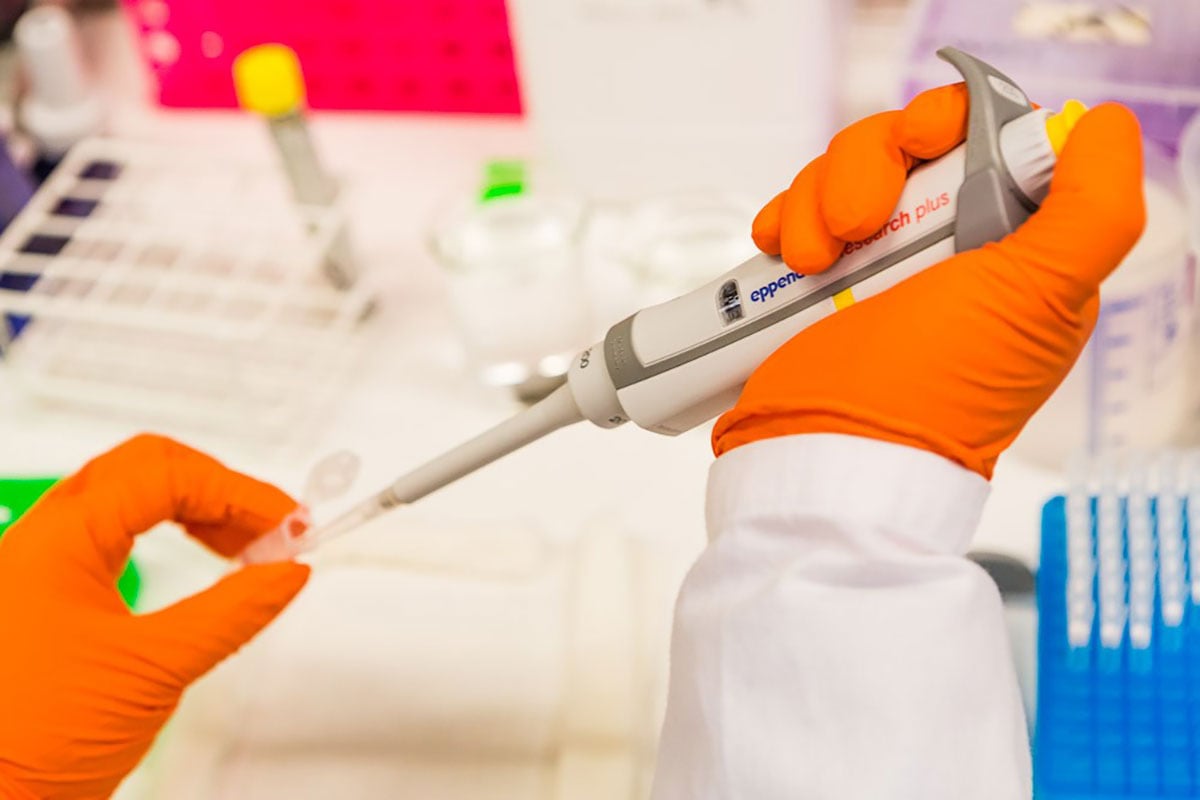
In preclinical experiments, the antibody stopped both tumor growth and metastatic spread in an aggressive form of prostate cancer. The treatment acts through a new mechanism of action, which means it attacks the disease through a biological route that differs from existing approaches. Because of that, the researchers believe it may also reduce the risk of side effects.
The results show that the antibody behaved as intended in the models tested, an important step in moving a possible cancer drug from concept toward future clinical use.

Safety testing comes next
“This is a promising step forward, but several important stages remain before the treatment can benefit patients. We still need to conduct additional safety studies, and the treatment must be approved by regulatory authorities in Europe or the United States,” says Maréne Landström.
The long-term goal is to improve both prognosis and quality of life for men with advanced prostate cancer. According to Maréne Landström, the project has taken several years and depended on contributions from many people and organizations.
Drug development specialists at the SciLifeLab Drug Discovery and Development Platform played an important role by helping develop the antibody used in the study. The project also received support from the Umeå Biotech Incubator at Umeå University, while funding from MetaCurUm Biotech AB, a biotechnology company based in Umeå, was crucial for developing and testing the treatment.
The next question is whether the same strategy could work beyond prostate cancer.
“The next step is to investigate whether this treatment can also be used against other types of solid tumors. We hope that our work will ultimately contribute to the development of a new cancer drug that can benefit patients,” says Maréne Landström.
Reference: “Targeting oncogenic TβRI signaling inhibits androgen-independent prostate cancer growth and metastasis” by Per Flodbring Larsson, Alexej Schmidt, Yabing Mu, Guangxiang Zang, Jie Song, Vishnupriya Gajavilli, Junting Tao, Olena Rakhimova, Madelene Ericsson, Karthik Aripaka, Sofia Halin Bergström, Wei Yuan, Denisa Bogdan, Aaron Huairen Zhang, Jon Welti, Anders Bergh, Johann de Bono, Carl-Henrik Heldin and Maréne Landström, 17 June 2026, Signal Transduction and Targeted Therapy.
DOI: 10.1038/s41392-026-02737-x
Never miss a breakthrough: Join the SciTechDaily newsletter.
Follow us on Google and Google News.
Full article can be found at: https://scitechdaily.com/researchers-uncover-a-promising-new-way-to-stop-prostate-cancer-from-spreading/


