


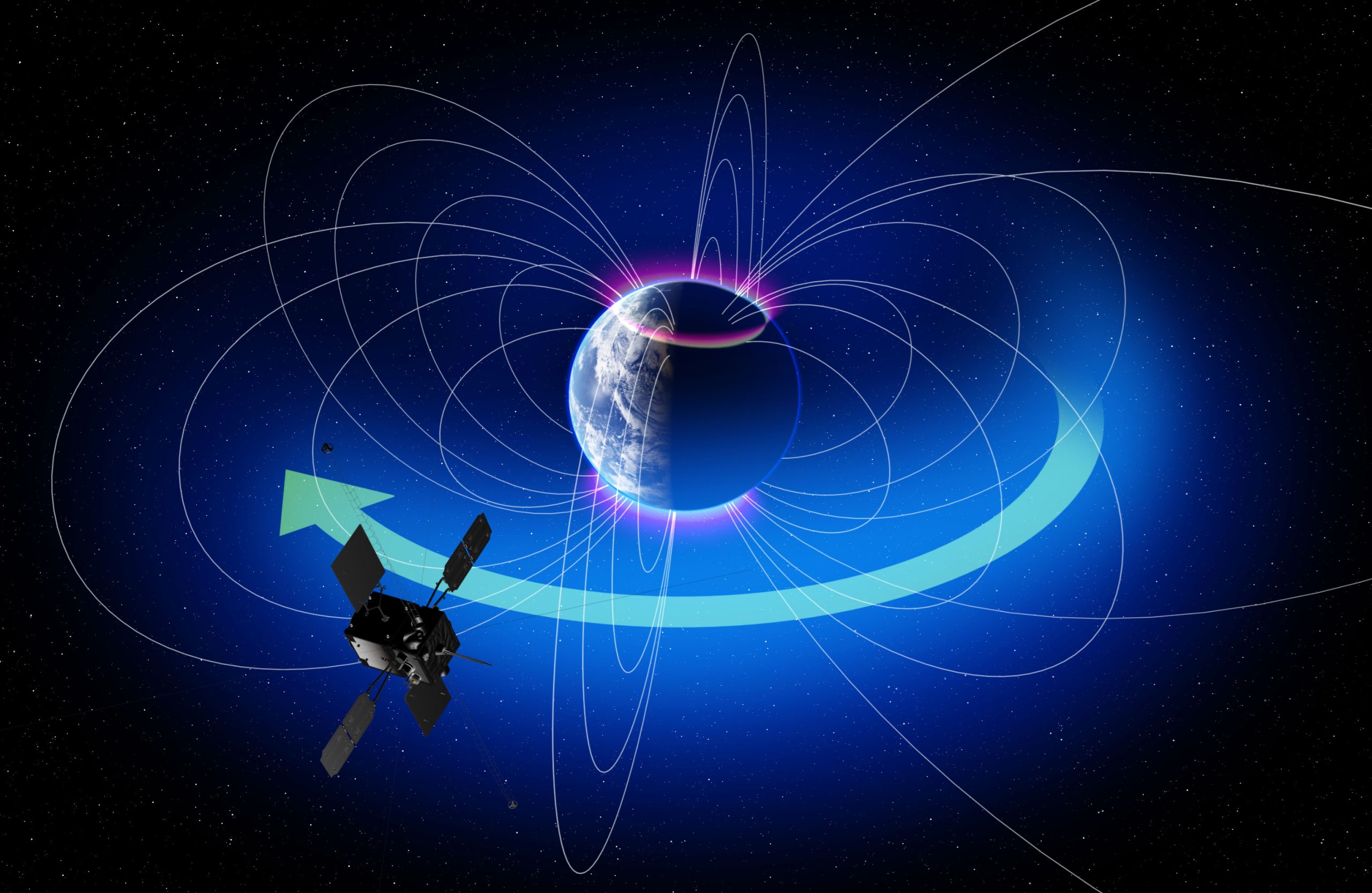
Even though the solar wind was unusually dense during the May 2024 superstorm, ions from the solar wind contributed very little to the ring current, marking the first time both were observed simultaneously during a storm of this magnitude.
In May 2024, auroras spread into skies far beyond their usual range, appearing at unusually low latitudes around the world. Far above those displays, inside Earth’s magnetosphere, measurements were capturing something never before seen during a geomagnetic storm of this magnitude.
The storm began when a large sunspot unleashed a rapid sequence of powerful solar eruptions. Multiple clouds of magnetized plasma merged on their way through space before striking Earth’s magnetosphere, the region dominated by our planet’s magnetic field. The resulting disturbance was the strongest ever measured directly in Earth’s ring current region, a belt of charged particles surrounding the planet.
For decades, researchers have debated how much of the ring current comes from the solar wind and how much originates in Earth’s ionosphere, the electrically charged upper atmosphere. Both sources normally contribute during geomagnetic storms, and because the May 2024 event was driven by unusually dense solar wind, some scientists expected solar wind ions to remain important.
Instead, direct measurements revealed that their contribution was minimal. Earth-origin ions dominated to a degree never previously observed in a super geomagnetic storm.
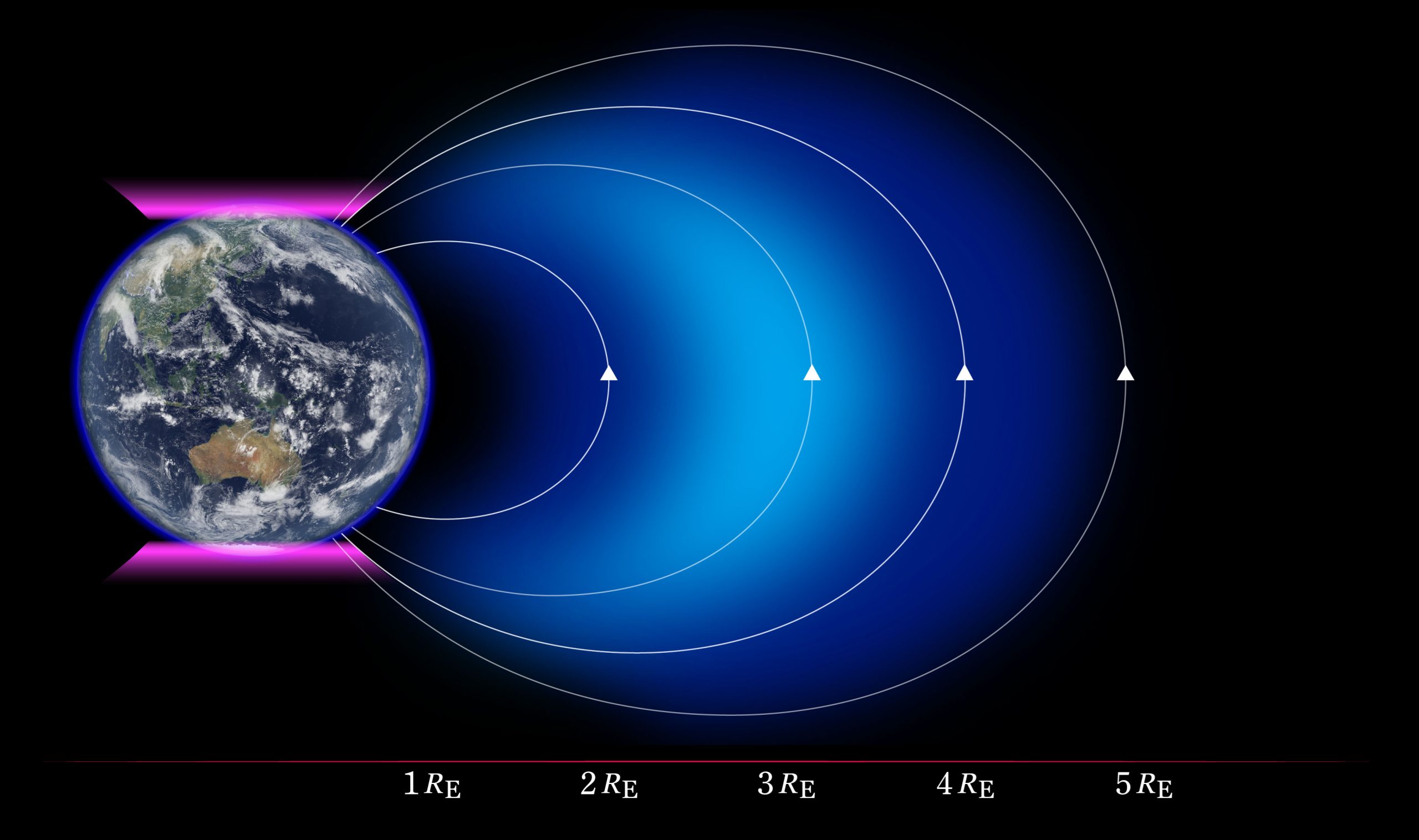
Published in Science Advances, the findings suggest that Earth’s own ionosphere may be an important part of predicting how intense these extreme storms become. Because ionospheric ions are much heavier than particles carried by the solar wind, their dominance may have strengthened the magnetic disturbance and pushed the ring current peak unusually close to Earth. The results also support a proposed Japanese multi-satellite mission designed to investigate how these ions are supplied to near-Earth space.
Earth’s own ions dominated the storm
On May 10 and 11, 2024, enormous clouds of charged solar particles struck Earth’s magnetosphere. The event, known as the May 2024 super geomagnetic storm, the “Gannon storm,” or the “Mother’s Day storm,” reached a minimum SYM-H index of −518 nanotesla. That was the second-largest value recorded since 1981, and the previous comparable event was the November 2004 superstorm.
“Some super or extreme geomagnetic storms are not just impressive light shows—they pose radiation risks to spacecraft, disturb GPS signals and communications, and cause power outages. Understanding how a geomagnetic storm develops is not only a scientific question, but also one with real-world consequences,” said Naritoshi Kitamura, lead author and designated assistant professor from the Institute for Space-Earth Environmental Research (ISEE) at Nagoya University.
At the center of a geomagnetic storm’s magnetic disturbance is the ring current, a vast belt of energized ions, mainly oxygen and hydrogen, moving slowly around Earth thousands of kilometers above the equator. These particles carry electric current, which produces a magnetic field that partially offsets Earth’s own field at ground level. That change is what ground-based instruments detect as the storm’s magnetic disturbance.
Arase captured an unprecedented ring current
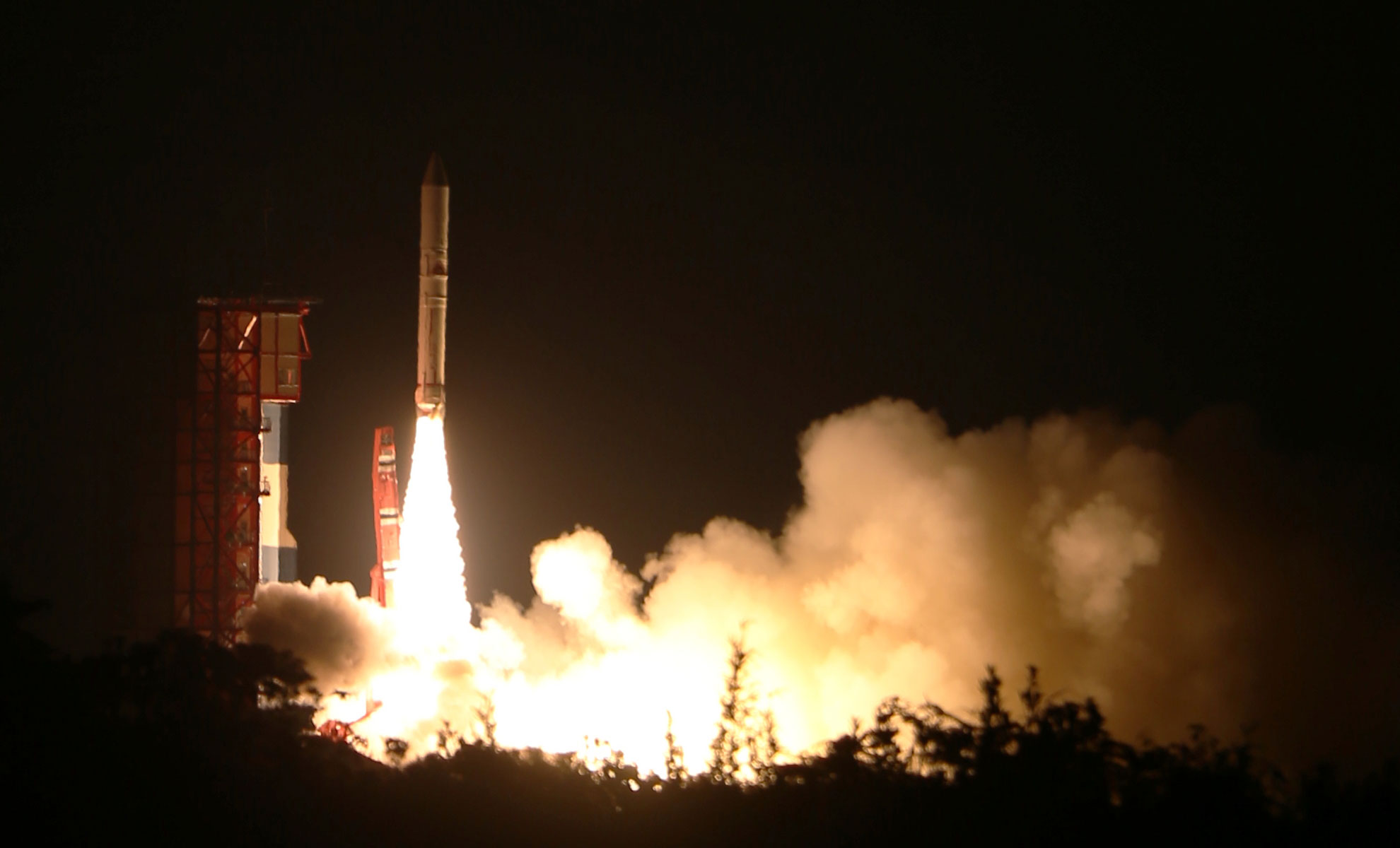
Japan’s Arase satellite, launched in 2016 and operated by the Japan Aerospace Exploration Agency (JAXA), was positioned to observe the ring current directly. The ERG (Arase) science center is jointly operated by Institute of Space and Astronautical Science (ISAS)/JAXA and Institute for Space-Earth Environmental Research/Nagoya University.
Arase travels through the region where the ring current forms and carries instruments capable of measuring both the mass and energy of individual ions. During the May storm, it crossed the ring current shortly after the event began and again close to its peak.
“This is the first simultaneous observation of ring current ions and solar wind during a storm this large, and the data was clear—approximately 85% of ions were oxygen from Earth’s own ionosphere,” Kitamura explained.
“Near the peak of the storm, Arase detected a 40% decrease in magnetic field intensity at roughly 16,000 kilometers above Earth, and much closer to Earth than similar large decreases previously documented.”
A sharp decline in high-energy electrons was detected in the same region. When the magnetic field weakens so strongly, those electrons can drift away from their usual paths. Whether deformation of the magnetic field directly caused the observed electron loss remains an open question.
Forecasts may need Earth’s atmosphere too
The measurements change how researchers may need to think about the development of the most intense geomagnetic storms. Current space weather forecasting models rely heavily on solar wind conditions, but the results indicate that conditions within Earth’s atmosphere may also help determine how severe a storm becomes.
The findings also strengthen the case for FACTORS, a two-satellite mission concept being prepared for JAXA’s upcoming proposal opportunity. FACTORS would investigate how ions from Earth’s atmosphere escape into the magnetosphere and feed geomagnetic storms, potentially helping scientists improve predictions of how intense future storms may become.
Reference: “Extreme dominance of Earth-origin heavy ions in the intense ring current near the Earth during the May 2024 super geomagnetic storm” by Naritoshi Kitamura, Kazuhiro Yamamoto, Shoichiro Yokota, Satoshi Kasahara, Ayako Matsuoka, Kazushi Asamura, Yusuke Ebihara, Lynn M. Kistler, Kunihiro Keika, Atsuki Shinbori, Tomoaki Hori, Yoshizumi Miyoshi, Akimasa Ieda, Chae-Woo Jun, Mariko Teramoto, Masahito Nosé, Masafumi Hirahara, Kanako Seki, Nana Higashio and Iku Shinohara, 26 June 2026, Science Advances.
DOI: 10.1126/sciadv.aee1069
This work was supported by Grants-in-Aid for Scientific Research of the Japan Society for the Promotion of Science grants 20H01957 (S.Y., S.K., K.K., and Y.E.) and 25H00684 (K.S.). This work is partially supported by Nagoya University Research Fund.
Never miss a breakthrough: Join the SciTechDaily newsletter.
Follow us on Google and Google News.
Full article can be found at: https://scitechdaily.com/scientists-expose-unexpected-driver-of-the-may-2024-superstorm/


