



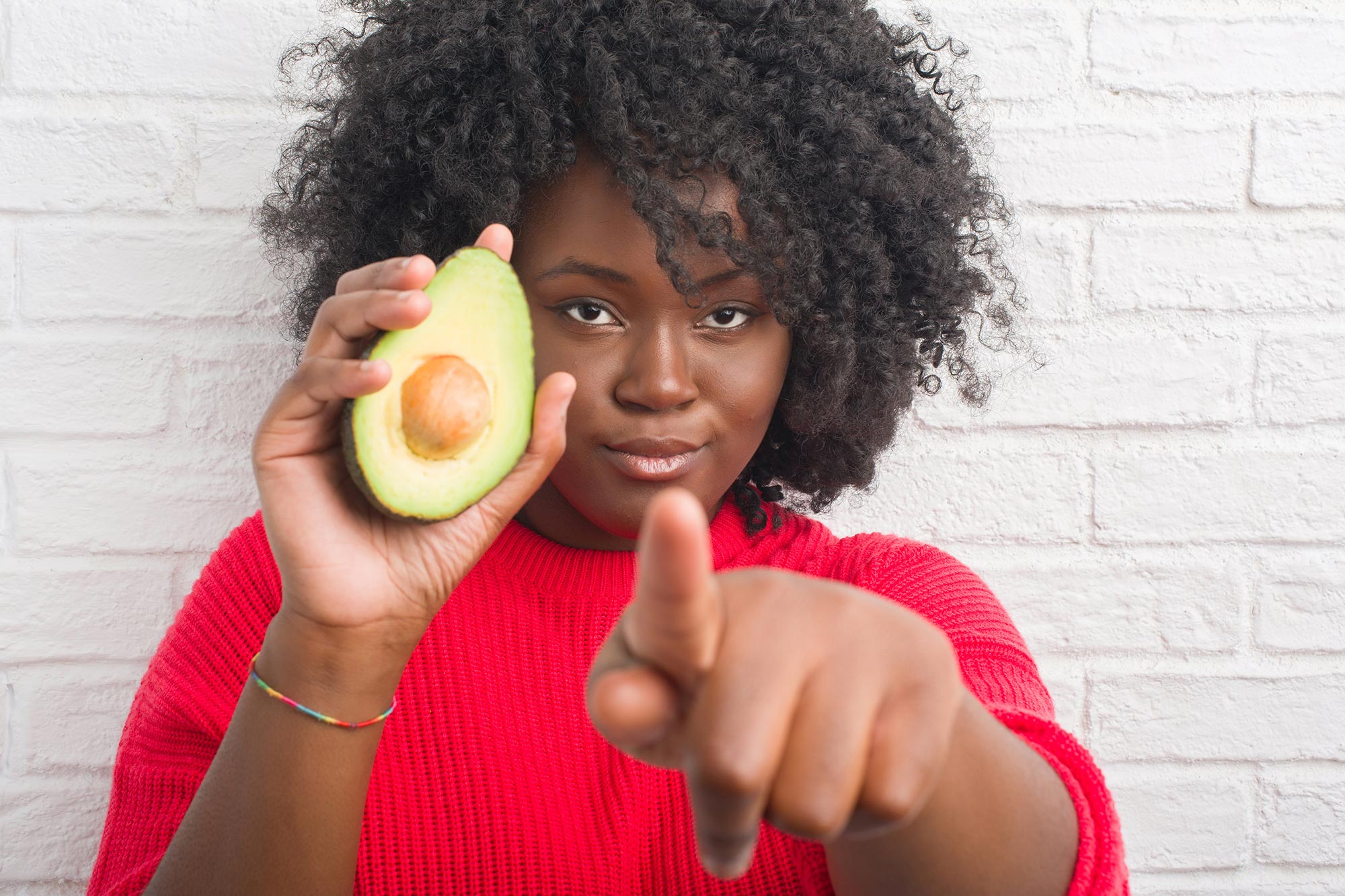
In a six-month study, people with obesity who ate an avocado each day lowered their blood levels of “bad” cholesterol particles.
Adding one avocado to a person’s daily diet may modestly improve a blood marker linked to heart disease. In a study of adults with obesity, researchers at the Penn State Department of Nutritional Sciences found that eating an avocado each day was associated with fewer low-density lipoprotein (LDL) particles circulating in the blood.
These particles carry cholesterol through the body, and higher concentrations are linked to greater cardiovascular risk. The reduction observed in the study corresponded to an estimated 4% decrease in heart disease risk, according to findings published in the Journal of Clinical Lipidology.
“If people want to improve the quality of their diet, making one small change might be a more feasible strategy than attempting to change their entire diet,” said Janhavi Damani, postdoctoral scholar at Penn State and first author of the study. “For people with obesity, including avocados in their daily diet might be a good starting place.”
Particle count reveals hidden heart risk
LDL particle concentration provides information that differs from a standard measurement of LDL cholesterol, often called “bad cholesterol.” Both are associated with heart disease, but LDL particle-related risk tends to be especially elevated among people with abdominal obesity, the researchers said.
Cholesterol cannot move through the bloodstream on its own, so protein particles transport it through the body. A person with more LDL-carrying particles may face greater cardiovascular risk even when the total amount of LDL cholesterol remains unchanged.
“Imagine two people with the same high levels of LDL cholesterol,” Damani said. “Person A carries their cholesterol in fewer, larger LDL particles, and Person B carries their cholesterol in more, smaller LDL particles. Person B’s heart disease risk would be higher because their overall particle count is higher even though a test of their LDL cholesterol would look identical.”
Smaller LDL particles can pass more readily into artery walls, where they may contribute to deposits known as plaque, Damani explained. Plaque narrows blood vessels and makes them less flexible. When the heart must work harder because of physical activity, heat, stress or another demand, stiffened vessels cannot adjust as effectively, causing blood pressure to rise and potentially triggering a heart attack or another cardiac event.
A daily avocado lowers particle levels
The researchers examined data from 786 participants enrolled in the Habitual Diet and Avocado Trial, a six-month study involving adults aged 25 and older. Men qualified if their waist circumference exceeded 40 inches, while women qualified if theirs exceeded 35 inches.
One group was told to continue its usual diet and physical activity. The other received one avocado per day while also maintaining its regular diet and activity.
Earlier findings from the Habitual Diet and Avocado Trial showed that adding a daily avocado did not change participants’ body weight or waist circumference, although it could lower LDL cholesterol.
For the current analysis, researchers compared blood collected at the beginning and conclusion of the trial. LDL particle concentrations among participants assigned a daily avocado fell by 49 nanomoles per liter over six months, an amount associated with an estimated 4% reduction in heart disease risk, according to the researchers.
The improvement was modest but consistent
“Four percent is a modest reduction compared with the 14–29% lower heart disease risk associated with improving the overall diet,” Damani said. “However, it is a step in the right direction.”
The likelihood of improvement in LDL particle levels did not differ by sex, race, ethnicity, age or body mass index. The researchers said this suggests that adults with obesity across these groups might benefit from eating avocados, while cautioning that people should seek personalized dietary guidance from a physician or registered dietitian nutritionist.
“Penn State researchers demonstrated several years ago that avocado consumption could reduce LDL cholesterol and levels of LDL particles,” said Kristina Petersen, associate professor of nutritional sciences and senior author of this study. “But in that study, the researchers controlled participants’ entire diets throughout the experiment. This study demonstrated benefits in the real world, where people’s diets are much less predictable. In the course of people’s normal lives, avocado consumption still contributes to a healthier diet.”
Reference: “Reasonable for others, but not for me: Perceived overqualification and the perception of illegitimate tasks in the hospitality industry” by Yoko M. Negoro, Yanqiao Lei, Heyao Yu and Michael J. Tews, 22 May 2026, International Journal of Hospitality Management.
DOI: 10.1016/j.ijhm.2026.104756
The Avocado Nutrition Center supported this research.
Never miss a breakthrough: Join the SciTechDaily newsletter.
Follow us on Google and Google News.
Full article can be found at: https://scitechdaily.com/scientists-say-eating-one-avocado-a-day-may-lower-heart-disease-risk/


