



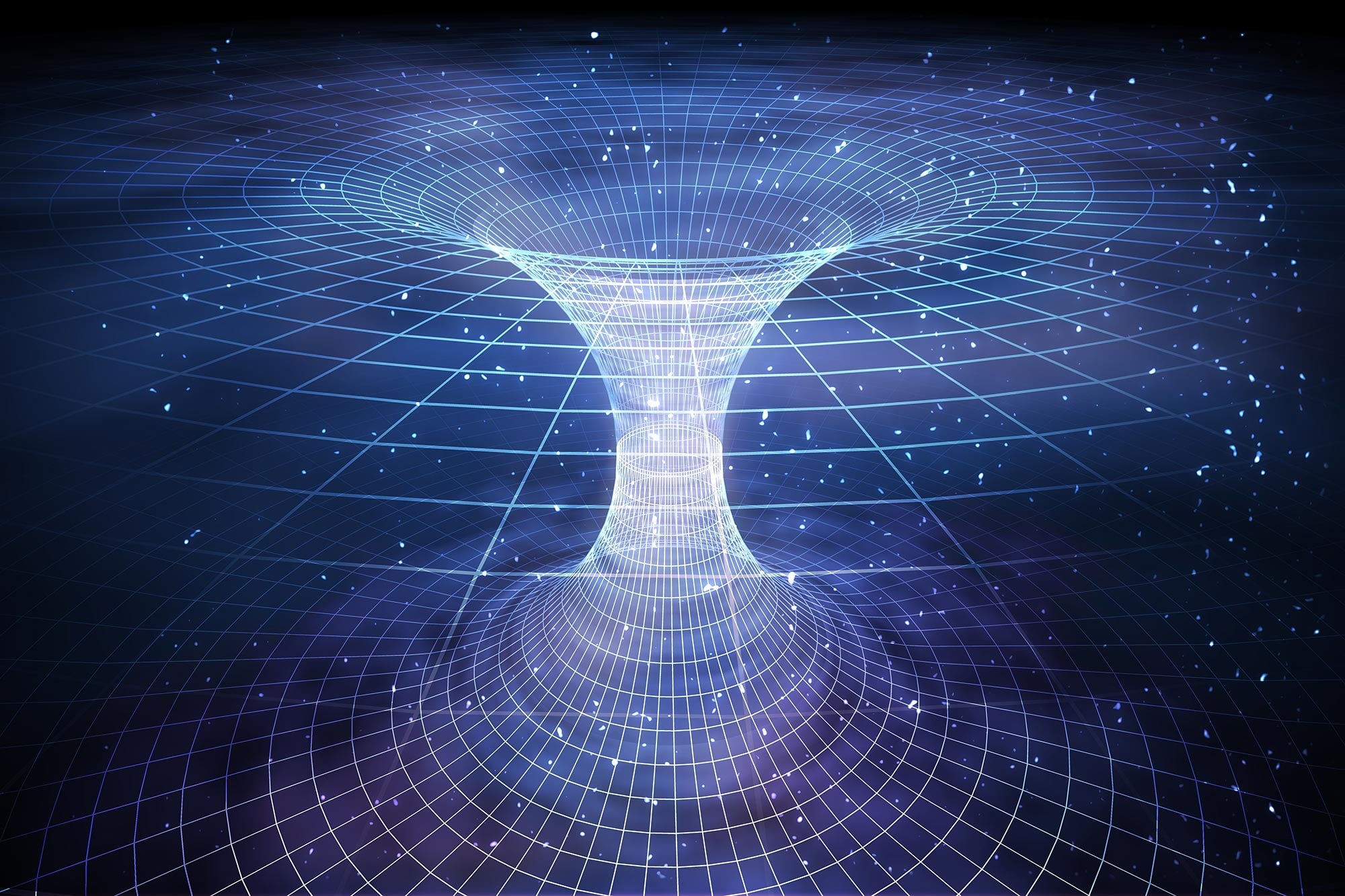
New research examines how gravity can be reconciled with thermodynamics through the Gravity from Entropy theory.
Galaxies, stars, planets, and life emerged as the Universe expanded and became more complex. Yet the second law of thermodynamics says that the total entropy of an isolated system should rise over time, creating a fundamental question: how can increasing cosmic organization coexist with a law commonly associated with growing disorder?
Einstein famously stated that “The second law of thermodynamics occupies a unique position among the laws of Nature,” expressing his belief that it ranks among physics’ most fundamental and durable principles. According to the second law, the total entropy within an isolated system tends to increase as time passes.
Cosmology therefore faces a persistent puzzle. The early Universe is generally thought to have begun in a low-entropy state before moving toward higher entropy. During that same history, however, matter assembled into increasingly elaborate structures, eventually producing galaxies, stars, planets, and life. Explaining how this order arose while entropy continued to grow remains an unresolved challenge.
A theory reframes the entropy puzzle
In a paper published in Physical Review D, Queen Mary University of London mathematician Professor Ginestra Bianconi examines the problem through Gravity from Entropy (GfE), a quantum gravity theory that uses statistical mechanics to derive gravity from the microscopic degrees of freedom within spacetime geometry.

Her analysis of the theory’s thermodynamic behavior finds that the Universe’s total entropy increases with time while its entropy per unit volume declines. This distinction leaves room for new explanations of how organized structures could develop locally even as overall entropy rises.
The idea that gravity and thermodynamics are closely connected dates to work by Jacob Bekenstein and Stephen Hawking in the 1970s. Their research established that black holes have entropy and release thermal radiation, pointing to a deeper relationship among spacetime, information, and heat.
Gravity emerges from spacetime information
Gravity from Entropy (GfE) describes gravity as emerging from an information-theoretic tension between the physical spacetime metric and another metric produced by matter fields and curvature. A metric is the mathematical structure used to describe distances and geometry within spacetime.
This interpretation appears in the GfE Lagrangian through the Quantum Geometric Relative Entropy (QGRE), which measures the relationship between the two metrics. At low energies and weak curvature, the theory’s gravitational equations reduce to General Relativity. Under stronger conditions, however, they begin to differ.
Outside that weak limit, the equations also generate a dynamical dark energy term. Because this contribution changes over time, it could potentially produce observations that allow physicists to test the theory.
Expansion separates total and local entropy
Professor Bianconi explored the thermodynamics of GfE in Friedmann–Robertson–Walker cosmological spacetimes, mathematical models used to describe an expanding and broadly uniform Universe.
The results indicate that the local geometric degrees of freedom follow a first law of thermodynamics. Within this description, the dynamical dark-energy term acts as internal energy, while the Quantum Geometric Relative Entropy (QGRE) represents local entropy per unit volume. Effective forms of temperature and pressure also arise naturally, suggesting that the quantum state behind GfE may have an inherent thermal character.
The local volume element defined by the physical metric plays a central role. As cosmic expansion increases this volume, the total entropy rises, but the amount of QGRE within each unit of volume falls. This separation between total and local entropy gives the theory its distinctive thermodynamic behavior.
A possible bridge remains theoretical
The framework suggests that gravity and spacetime may be fundamentally connected to both thermodynamics and information. If developed further, it could offer a new way to investigate relationships among gravity, quantum theory, cosmology, and the emergence of complexity.
The proposal remains at an early theoretical stage, but Professor Bianconi argues that it could help address long-standing divisions among general relativity, thermodynamics, quantum mechanics, and cosmology.
Hence, “This work reveals how the Gravity from Entropy theory can tackle the challenging question to reconcile the second principle of thermodynamics with the emergence of complexity in our Universe. These results may open new avenues for investigating the long-standing problem of reconciling the foundations of cosmological irreversibility, the emergence of complex structures, and ultimately life, with fundamental gravitational dynamics,” says Professor Bianconi.
Reference: “Thermodynamics of the gravity from entropy theory” by Ginestra Bianconi, 16 July 2026, Physical Review D.
DOI: 10.1103/26kn-thgp
Never miss a breakthrough: Join the SciTechDaily newsletter.
Follow us on Google and Google News.
Full article can be found at: https://scitechdaily.com/mathematician-offers-new-solution-to-a-fundamental-cosmic-paradox/


