



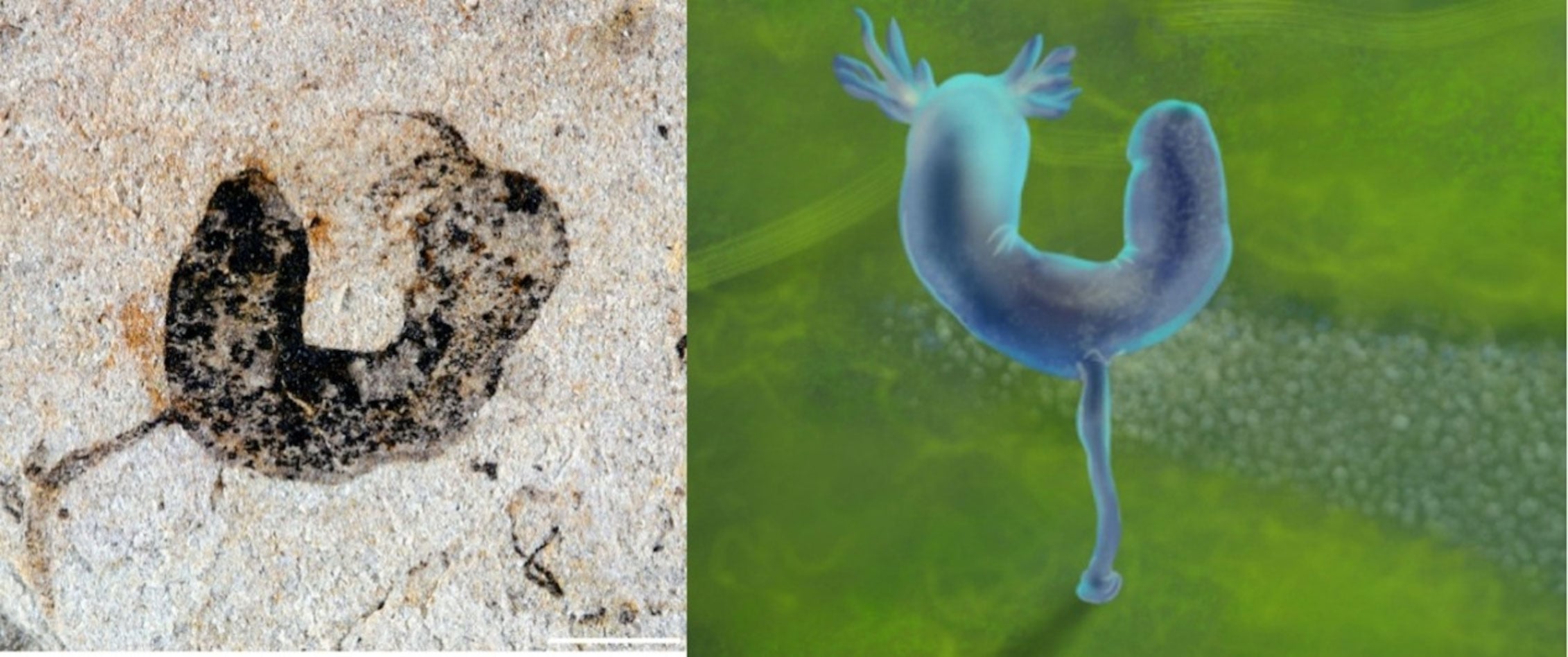
New fossils hint that the roots of complex animal life stretch further back than previously believed.
Animal life today is remarkably varied and complex, and animals have spread into nearly every environment on Earth, from harsh hydrothermal vents in the deep ocean to the skies above the continents.
For most of Earth’s history, however, life looked very different. During the first 3.7 billion years after the planet formed, living organisms were mostly small, simple, and restricted largely to the oceans. Microbes dominated this early world, which also experienced several major climate shifts.
That pattern appears to have changed around 538 million years ago (mya), during the Cambrian period. At this turning point in life’s history, animals appeared in the fossil record in a dramatic diversification known as the “Cambrian explosion.”
The fossils from this interval include many animal groups that are still familiar today, including echinoderms (starfish, sea cucumbers, urchins), arthropods (spiders, crustaceans, insects), and several kinds of worms. This apparently sudden rise of animal life in a geological “blink of an eye” has challenged scientists since the time of Charles Darwin.
Many of these new lifeforms belonged to a group of animals called Bilateria, so-named for their symmetrical left and right sides. This group now contains all animals with brains and complex musculature.
However, a longstanding question for paleontologists has been whether this astonishing diversification event happened all at once during the Cambrian explosion – or if ancestors of Cambrian and modern animal groups can be traced further back in time. Our new study, published in the journal Science, could help to resolve this question.
Strange bodies
The preceding Ediacaran period (635-538 mya) was much more enigmatic than the Cambrian. Many organisms from that period have defied efforts to classify them. Their strange bodies – often resembling shapeless sacs or thin, quilted pillows – have no obvious counterparts among living species, let alone modern animals.
As a result, interpretations of Ediacaran creatures have encompassed almost all multicellular forms of life – from fungi and lichens to an extinct kingdom unrelated to anything multicellular alive today. These Ediacaran organisms lived in close association with mats of microbes that smothered the seafloor – a type of ecosystem that did not survive the advent of grazing bilaterians.
More recent evidence relating to their reproductive strategy and how they grew and developed has suggested they were, in fact, animals – albeit very simple ones without any direct, living descendants.
It isn’t until the very end of the Ediacaran period that the fossil record gives hints that more complex – and recognizable – animals were around. And most of the evidence for these bilaterian animals has come from fossilised burrows and trails, suggestive of complex animal life but telling us little about the animals that made them.
This has led to much debate about the nature of the transition from the Ediacaran to the Cambrian period – the start of which geologists have defined by the action of complex animals churning up ocean sediment for the first time.
A discovery to fill the fuzzy gap
In spring 2023, one of us, Gaorong Li – then a PhD student at Yunnan Key Laboratory for Palaeobiology (YKLP) – made a discovery that helps to clarify this fuzzy gap between the weird Ediacaran world and the recognizable, complex animal-dominated Cambrian period.
Along with my PhD supervisors Wei Fan and Peiyun Cong, we explored Ediacaran rocks in the Chinese region of Eastern Yunnan. We were principally looking for fossil algae (seaweeds), the focus of my PhD thesis, in rocks known for well-preserved fossils called the Jiangchuan biota.
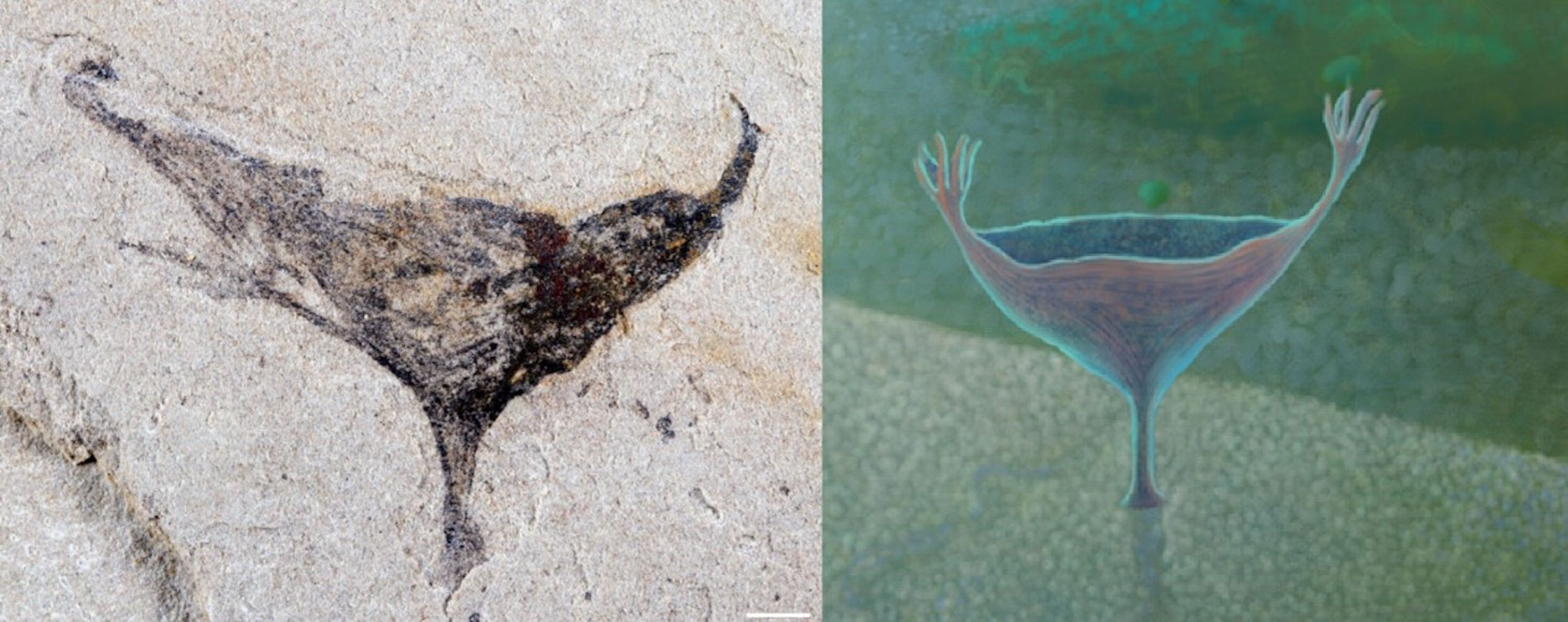
What we found in addition was a bizarre worm that lived tethered to the seafloor by an anchoring disc, and which could turn its strange proboscis inside out to collect food. These specimens were clearly complex animals, but not as they are known today.
We nicknamed it the “bugle worm,” and our team are still figuring out exactly where this strange beast fits into the classification of animals. Previously, it had been described based only on the disc anchoring it to the seafloor and named Cycliomedusa – but we found the whole organism, revealing it as something unexpected and strange.
As we continued splitting more and more rocks, it became clear there were more animals hiding in the Jiangchuan biota. In 2024, now joined by a team from the University of Oxford, including the co-authors of this article, Luke and Frankie, we went back into the field and pieced together this new fossil community.
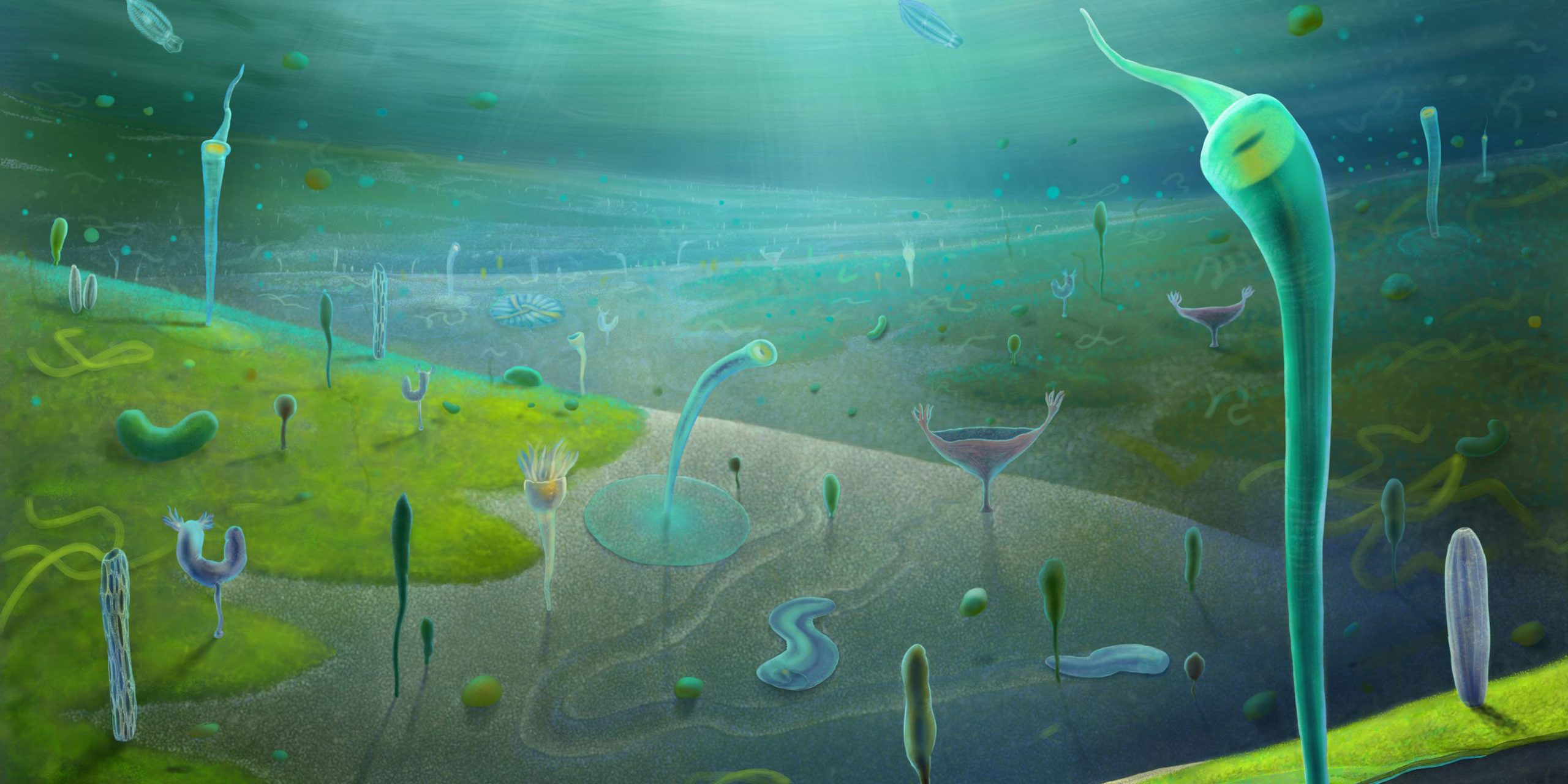
We found some fossilized organisms characteristic of both the Ediacaran and Cambrian periods. But surprisingly, we also found some that had previously only been known from the time of the Cambrian explosion. These included a primitive animal similar to the Cambrian organism Mackenzia, as well as various worms and swimming predators called ctenophores.
Most striking of all, we found the oldest evidence for the group to which we humans belong: the deuterostomes.
Several of these specimens have a stalk and tentacles, and closely resemble a group of Cambrian fossils called cambroernids. These now-extinct animals are related to living starfish and acorn worms – the closest invertebrate relatives to humans. This shows our own evolutionary story has its roots in the Ediacaran period.
The discovery of diverse, complex animals in the Jingchuan biota suggests several animal groups shared the world with the weird and wonderful Ediacarans for millions of years. Diverse complex animal life has a more ancient heritage than the Cambrian explosion.
Reference: “The dawn of the Phanerozoic: A transitional fauna from the late Ediacaran of Southwest China” by Gaorong Li, Fan Wei, Wenwen Wen, Xiaodong Wang, Xiangtong Lei, Ross P. Anderson, Yang Zhao, Frances S. Dunn, Luke A. Parry and Peiyun Cong, 2 April 2026, Science.
DOI: 10.1126/science.adu2291
Adapted from an article originally published in The Conversation.
Never miss a breakthrough: Join the SciTechDaily newsletter.
Follow us on Google and Google News.
Full article can be found at: https://scitechdaily.com/scientists-discover-the-oldest-known-fossils-of-humans-closest-invertebrate-relatives/


