



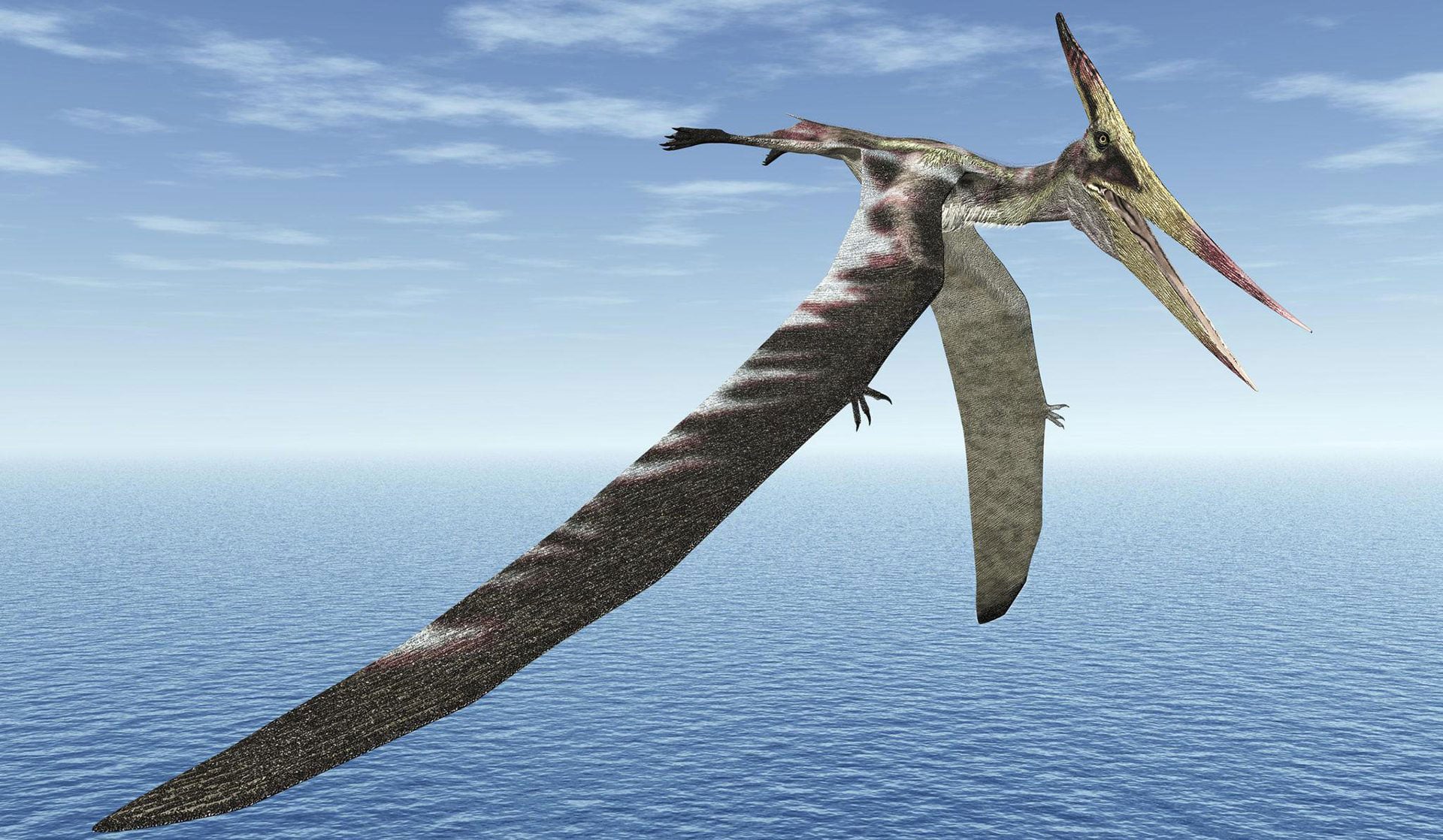
Ancient microbes may have helped preserve a pterosaur fossil and its chemical clues for more than 100 million years.
An international study led by Curtin University has shed new light on how a prehistoric flying reptile fossil remained exceptionally well preserved for 113 million years, offering scientists a rare view into a long-vanished world.
The fossilized wing phalanx of a pterosaur from northeastern Brazil was preserved in three dimensions and even retained chemical traces that may point to what the animal ate. Kliti Grice and her colleagues link that unusual survival to specialized bacteria and the conditions of an ancient marine environment.
Lead author Kliti Grice, a John Curtin Distinguished Professor and founding Director of the Western Australian Organic and Isotope Geochemistry Centre at Curtin, said the findings reveal a new way to understand how some fossils form.
Molecules reveal ancient diet
“This fossil is a true time capsule — not only is it beautifully preserved, but for the first time we’ve detected traces of steroids in a pterosaur, providing further evidence that these creatures likely fed on fish or squid,” Professor Grice said.
“It also marks the first time molecules have been recovered from a pterosaur fossil, revealing new clues about its diet and highlighting the growing potential of molecular paleontology to unlock secrets from deep time.
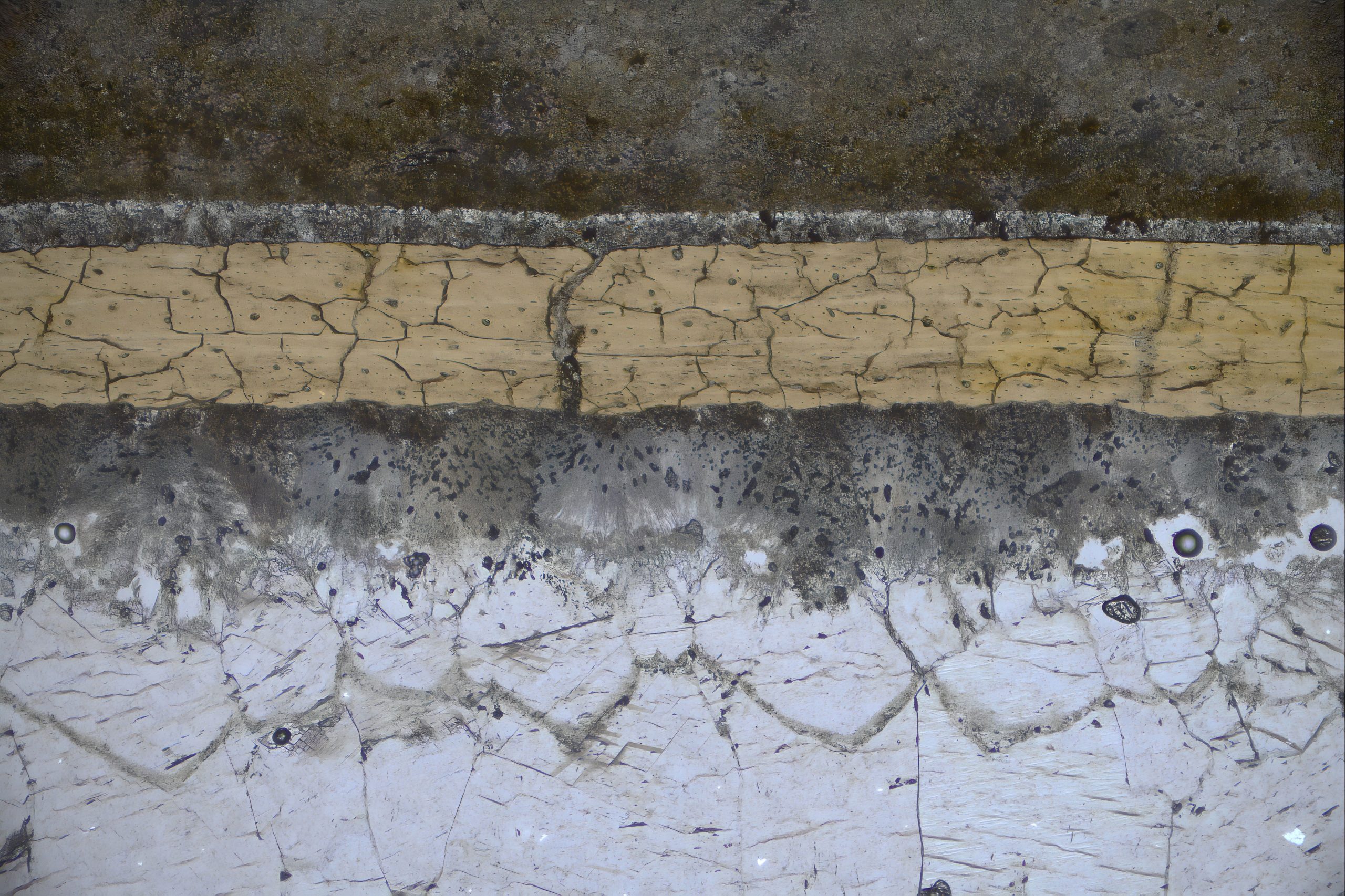
“Steroid preservation in fossils is exceptionally rare, but what’s even more fascinating is that our findings challenge long-held ideas about fossil preservation itself. Rather than being destroyed by oxygen, some fossils are preserved because of it, through oxidative processes carried out by ancient microbiomes.
“After this pterosaur died and sank to the seabed, a perfect storm of chemistry, biology, and the environment worked to seal its story in stone. Microbes, including sulfur-oxidizing bacteria, began breaking down the soft tissue and fats and triggered mineralization around the body – a process that, over time, helped preserve its structure in incredible detail for more than 100 million years.”
Microbes shaped fossil survival
Pterosaurs were flying reptiles that lived alongside dinosaurs and were the first vertebrates known to achieve powered flight. Some species had wingspans reaching up to 12 meters. Like birds today, they had hollow bones, a feature that can improve the chances of exceptional preservation under the right environmental conditions.
Professor Grice said the work points to a new pathway for unusual fossil preservation, while also offering fresh insight into ancient life and the environmental conditions that can protect fragile remains for immense spans of time.
It adds to the growing evidence that tiny microbes played a major role in fossil survival, a process now being identified at other fossil sites. Professor Grice said this may represent a new global Lagerstätten mechanism, meaning the special conditions that make exceptional preservation possible.
Reference: “Multi-staged mineralization and biomarker preservation in a 113-million-year-old pterosaur bone via redox shifts in diagenesis” by Kliti Grice, Stephen F. Poropat, Lorenz Schwark, Maria A. Diaz Mateus, Paul F. Greenwood, Luke M. Brosnan, Madison Tripp, Amy L. Elson, Andrew J.Y. Jian, Antônio A.F. Saraiva, Renan A.M. Bantim, Julien Demore, Alex I. Holman, Michael E. Böttcher, Adele H. Pentland, Robert H.C. Madden, Peter Hopper, Xiao Sun, Aaron Dodd, Arthur V. de Oliveira, Pieter T. Visscher, William D.A. Rickard, Juliana M. Sayão, Hossein Rahimpour-Bonab, Iris Schmiedinger, Victor O. Leshyk and Alexander W.A. Kellner, 18 June 2026, iScience.
DOI: 10.1016/j.isci.2026.116199
This research was supported by a prestigious ARC Laureate Fellowship awarded to Professor Grice.
Never miss a breakthrough: Join the SciTechDaily newsletter.
Follow us on Google and Google News.
Full article can be found at: https://scitechdaily.com/scientists-discover-the-first-ever-molecules-preserved-inside-a-113-million-year-old-pterosaur-fossil/


