




A simple writing task may offer clues about aging brains. Researchers found that dictation, in particular, exposed subtle differences linked to cognitive impairment.
Handwriting depends on both fine motor skills and complex mental processes, including selecting, organizing, and interpreting sensory information. Because writing places heavy demands on the brain, changes in handwriting may help reveal cognitive decline, particularly in older adults. As people age, their handwriting often becomes slower and less fluid.
A new study published in Frontiers in Human Neuroscience explored whether specific handwriting characteristics, such as speed and stroke organization, differ between older adults with cognitive impairment and those without it. Researchers in Portugal also investigated whether handwriting analysis could eventually help detect cognitive decline.
Writing as a Window Into the Brain
“Writing is not just a motor activity; it’s a window into the brain,” said senior author Dr. Ana Rita Matias, an assistant professor at the Department of Sport and Health at the University of Évora.
“We found that older adults with cognitive impairment displayed distinct patterns in the timing and organization of their handwriting movements. Tasks involving higher cognitive demands showed that cognitive decline is reflected in how efficiently and coherently handwriting movements are organized over time.”
The researchers wanted to see whether analyzing the writing process itself could provide earlier and more sensitive signs of cognitive decline than traditional assessments, which usually focus on test scores or completed written work.
Study Design and Handwriting Tasks
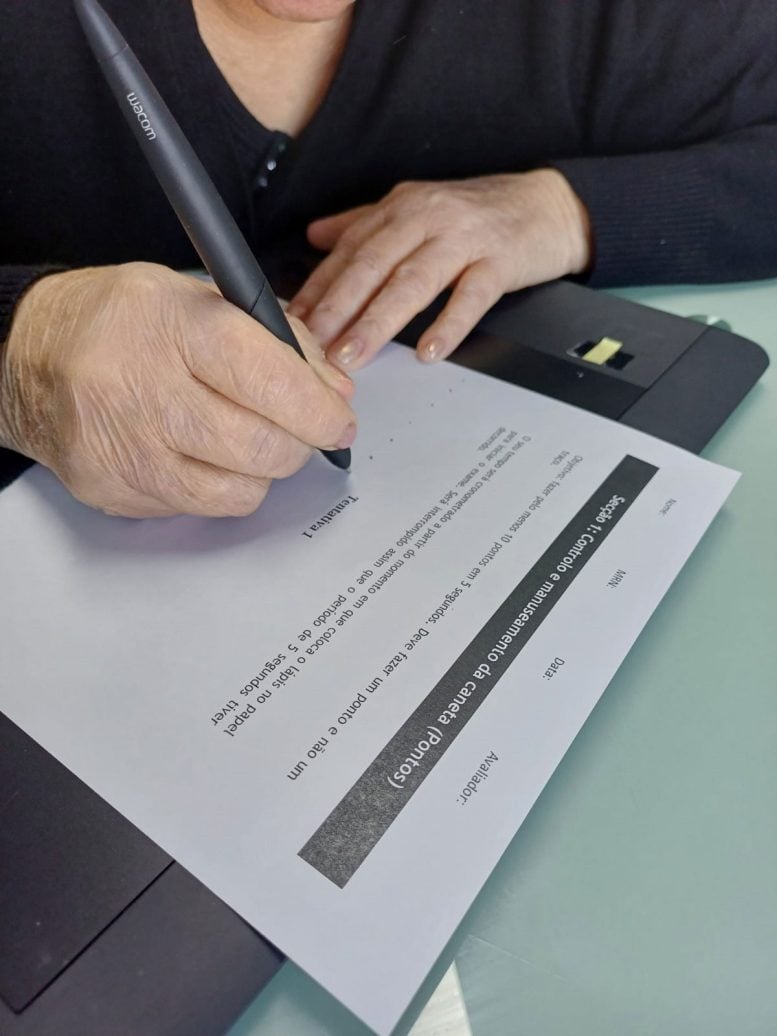
The study involved 58 older adults between the ages of 62 and 92 living in care homes. Among them, 38 had already been diagnosed with some form of cognitive impairment. Participants completed two types of writing exercises using an ink pen and a digitizing tablet.
In the pen control tasks, participants drew 10 horizontal lines within 20 seconds and placed at least 10 dots on the paper during the same period. Another task measured handwriting speed by asking participants to write two sentences of different complexity levels, either by copying text from a card or writing from dictation.
The researchers found that the simple pen control exercises could not distinguish between participants with and without cognitive impairment. These tasks mainly depended on basic motor skills and may not have been demanding enough to reveal subtle cognitive differences. Copying tasks also failed to show significant group differences, although the results suggested a possible trend.
Dictation Tasks Reveal Cognitive Differences
The dictation exercises, however, produced clear differences between the two groups. Researchers believe this is because dictation places greater demands on working memory and executive function.
“Dictation tasks are more sensitive because they require the brain to do multiple things at once: listen, process language, convert sounds into written form, and coordinate movement,” said Matias. “Even within dictation tasks, differences can emerge. A longer, less predictable, or linguistically demanding sentence places greater strain on cognitive resources.”
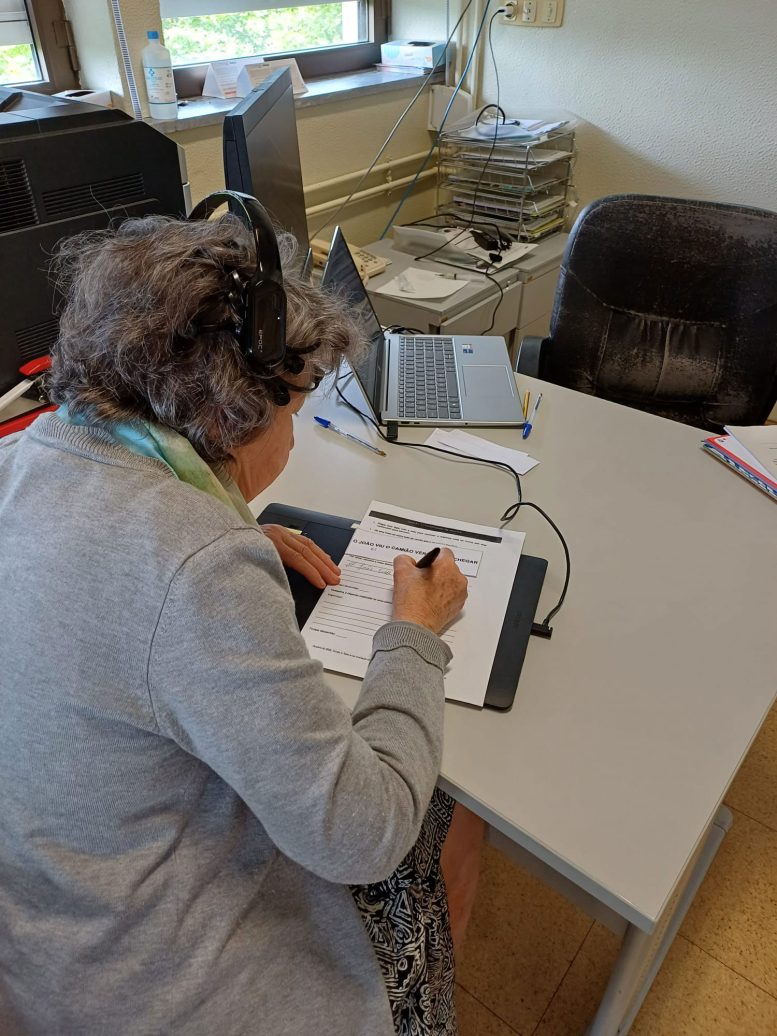
For participants with cognitive impairment, two measures stood out during the shorter dictation sentence: start time and number of strokes. In the more complex sentence, vertical size, start time, and writing duration emerged as significant predictors. According to the researchers, different handwriting features may reflect cognitive decline in different ways.
Timing and Stroke Organization as Indicators
“Timing and stroke organization are closely linked to how the brain plans and executes actions, which depends on working memory and executive control. As these cognitive systems decline, writing becomes slower, more fragmented, and less coordinated,” explained Matias. “In contrast, other features can remain relatively preserved, especially in the early stages of cognitive decline, making them less sensitive indicators.”
The researchers said their method, which uses simple writing tasks and accessible digital tools, could become a practical way to monitor cognitive decline in settings such as doctors’ offices. Because the approach is noninvasive and relatively inexpensive, it could potentially be integrated into routine clinical care.
Still, the researchers emphasized that the method is still in the early stages of development. Larger and more diverse long-term studies will be needed to confirm the findings. The current study also did not account for medication use or its possible effects on handwriting.
“The long-term goal is to develop a tool that is easy to administer, time-efficient, and affordable, allowing integration into everyday healthcare contexts without requiring specialized or expensive equipment,” concluded Matias.
Reference: “Handwriting speed and pen motor control in older adults with and without cognitive impairment” by João Galrinho, Orlando Fernandes, Ana Rita Silva, Marta A. Gonçalves-Montera and Ana Rita Matias, 23 March 2026, Frontiers in Human Neuroscience.
DOI: 10.3389/fnhum.2026.1820193
Never miss a breakthrough: Join the SciTechDaily newsletter.
Follow us on Google and Google News.
Full article can be found at: https://scitechdaily.com/scientists-discover-a-simple-writing-test-that-may-detect-cognitive-impairment/