



JUNO’s first results have launched a new era of precision neutrino physics and brought scientists closer to solving the neutrino mass mystery.
The Jiangmen Underground Neutrino Observatory (JUNO) has achieved its first major scientific milestone. On June 10, its debut physics result was featured as a cover article in Nature.
Using 59 days of high-quality data collected between August 26 and November 2, 2025, the JUNO Collaboration, led by the Institute of High Energy Physics of the Chinese Academy of Sciences, performed highly precise measurements of two fundamental neutrino oscillation parameters. The analysis reduced the uncertainties in those measurements by a factor of 1.6 compared with the combined results of previous experiments conducted over the past several decades.
Why Neutrinos Matter
Neutrinos are among the most mysterious particles in the universe. They carry no electric charge, have extremely small masses, and interact only weakly with matter. As a result, vast numbers of neutrinos pass through Earth, buildings, and even human bodies every second without leaving a trace.
Because they are so difficult to detect, neutrinos remain one of the least understood elementary particles despite their abundance throughout the cosmos.
JUNO began collecting scientific data in August 2025. Its primary objective is to determine the ordering of neutrino masses, one of the most important unanswered questions in particle physics. The experiment is also designed to measure three of the six neutrino mixing parameters with better than 1% precision and to investigate neutrinos produced by supernovae, Earth’s interior, the Sun, the atmosphere, and other sources.
Early Results Impress Researchers
The study received strong praise during peer review.
“These results not only validate the detector performance and analysis methodology but also establish JUNO as a key player in the emerging precision era of neutrino oscillation physics, with direct implications for tests of the three-flavor paradigm, global oscillation fits, and future determinations of the neutrino mass ordering.”
Nature also highlighted the significance of the work in a News & Views article, stating:
“Understanding the behavior of neutrinos is paramount to developing a complete description of matter and forces at the smallest scale. This first analysis builds confidence that the detector will be able to determine the mass ordering. This first result from JUNO marks the dawn of the next era of precise neutrino oscillation measurements, and will provide insights into the properties of these mysterious fundamental particles.”
Earlier this year, Chinese Physics C featured JUNO’s detector performance on its cover. Prof. Arthur McDonald, who received the 2015 Nobel Prize in Physics for the discovery of solar neutrino oscillation, commented on the publication:
“JUNO has met its design objectives, achieving exceptional radiopurity, energy resolution, and detector stability. The experiment is fully operational and ready to pursue its ambitious physics goals, including determining the neutrino mass ordering (NMO), studying neutrino oscillation parameters, detecting neutrinos from various sources, and exploring physics beyond the Standard Model for Elementary Particles.”
Inside the Massive JUNO Detector
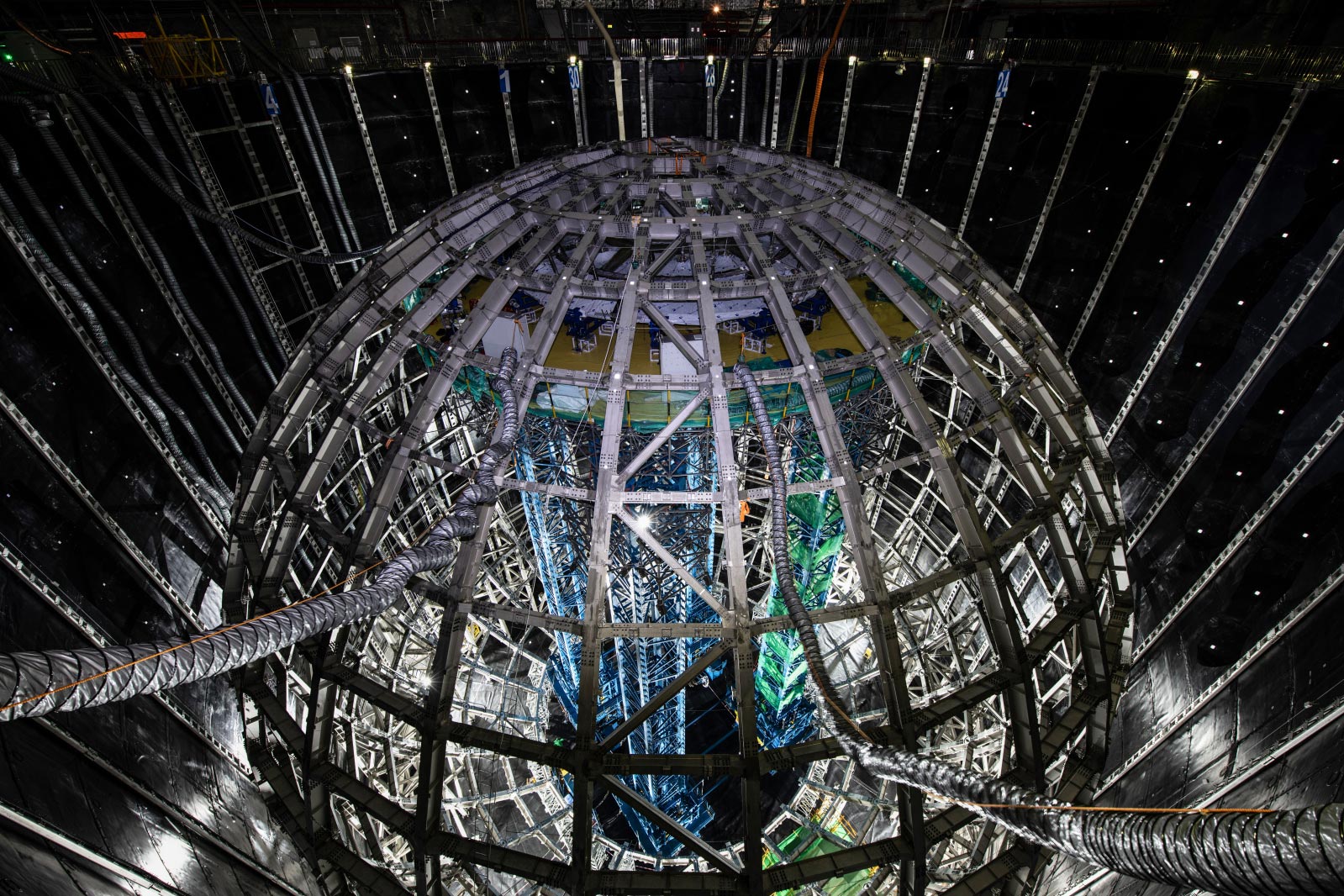
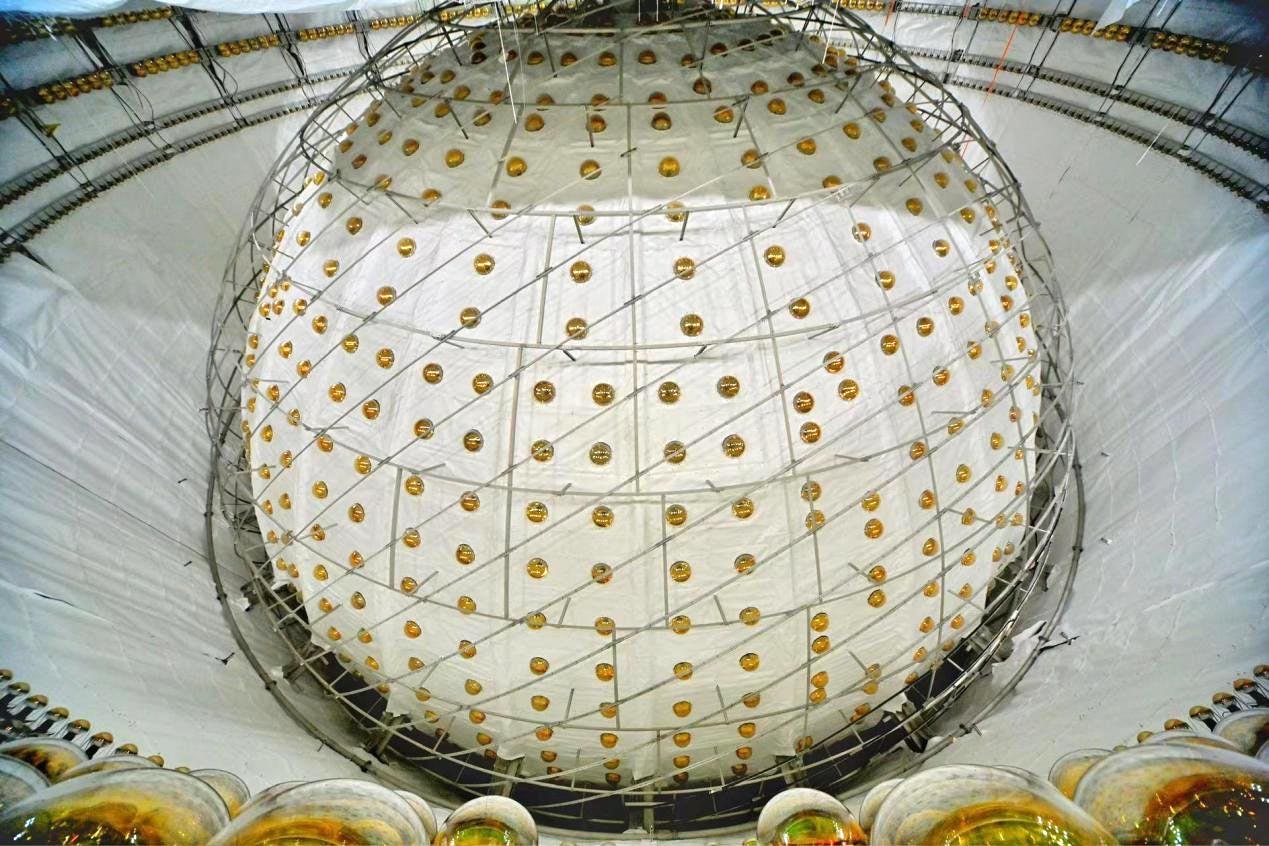
At the center of the observatory, located 700 meters underground, is a liquid scintillator detector with an unprecedented effective mass of 20,000 tons. The detector sits within a water pool that is 44 meters deep.
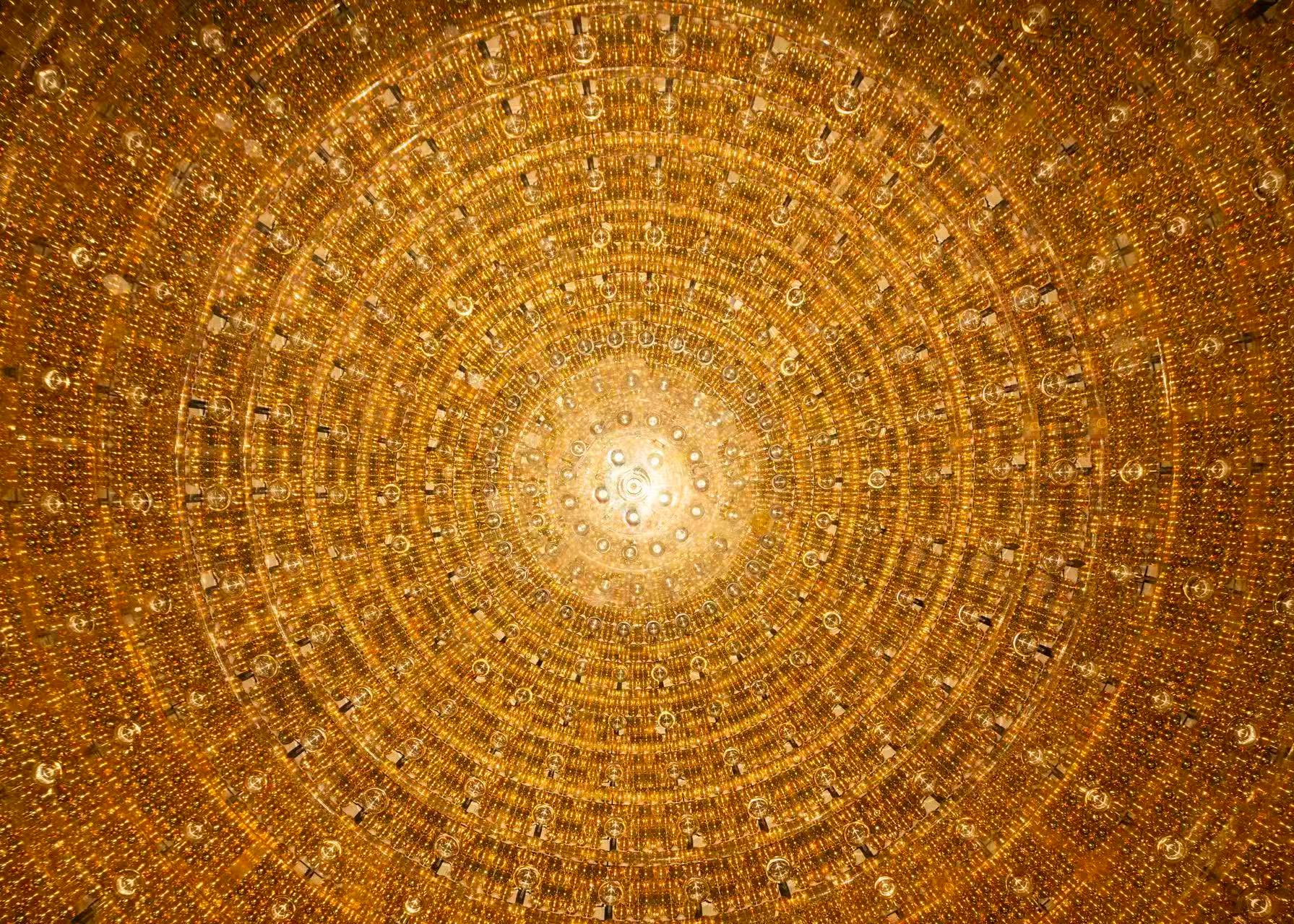
A stainless steel structure measuring 41.1 meters in diameter supports a 35.4 meter acrylic sphere along with the liquid scintillator, 20,000 20-inch photomultiplier tubes (PMTs), 25,600 3-inch PMTs, front-end electronics, cabling, anti-magnetic compensation coils, and optical panels.
When neutrinos interact inside the detector, they produce tiny flashes of light. The PMTs work together to capture this scintillation light and convert it into electrical signals. By analyzing those signals, scientists can precisely determine the energy of the neutrinos and extract key oscillation parameters.
More Discoveries Ahead
JUNO has now operated successfully for nine months. As additional data are collected, researchers expect a steady stream of new scientific results beginning this summer.
Those future measurements could help answer some of the biggest remaining questions about neutrinos and further reveal the properties of these elusive particles.
References:
“Measurement of reactor neutrino oscillation with the first JUNO data” by The JUNO Collaboration, 10 June 2026, Nature.
DOI: 10.1038/s41586-026-10538-z
“JUNO experiment ushers in next generation of neutrino experiments” by Patricia Vahle, and Zoya Vallari, 10 June 2026, Nature.
DOI: 10.1038/d41586-026-01585-7
Never miss a breakthrough: Join the SciTechDaily newsletter.
Follow us on Google and Google News.
Full article can be found at: https://scitechdaily.com/junos-first-results-bring-the-neutrino-mass-mystery-into-focus/


