



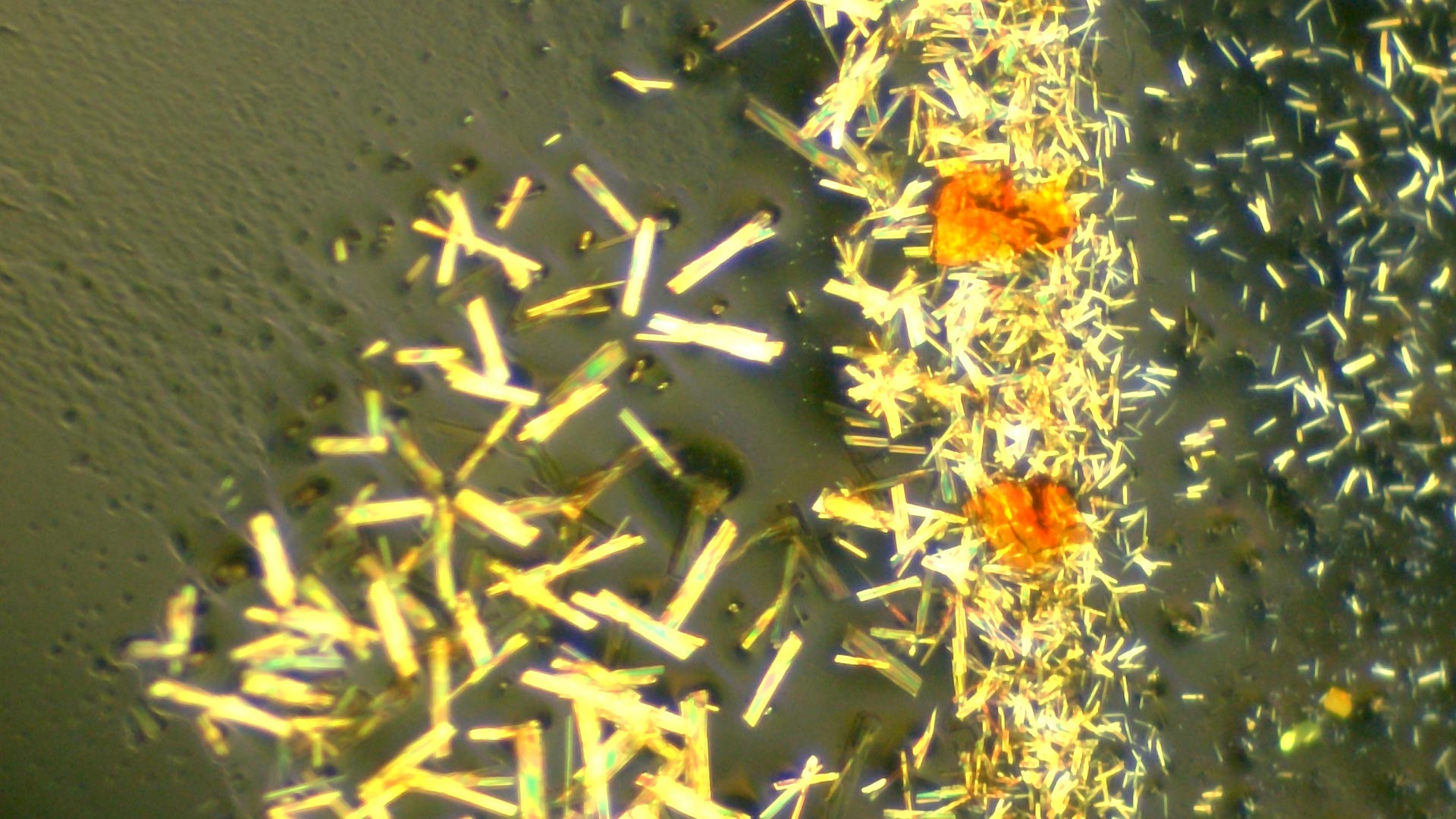
Scientists caught a famous “sandwich” molecule in a rare hidden state, uncovering a long-missing step in its formation.
For more than 70 years, metallocenes have been among the most important molecules in organometallic chemistry. These compounds feature a metal atom positioned between two carbon-based rings, creating a structure often described as a molecular sandwich. They are used in a wide range of fields, including catalysis, materials science, energy technologies, sensors, and drug delivery.
Despite their importance, scientists have struggled to observe exactly how these molecules form because some of the key intermediate structures exist only briefly before transforming into something else.
Now, researchers at the Okinawa Institute of Science and Technology (OIST) have captured and fully characterized a previously unseen intermediate stage in metallocene formation. Their findings, published in the Journal of the American Chemical Society (JACS), provide new insight into how these molecules are assembled, how they react, and how they can be redesigned for future applications.
Rare “Double Ring-Slip” Structure Revealed
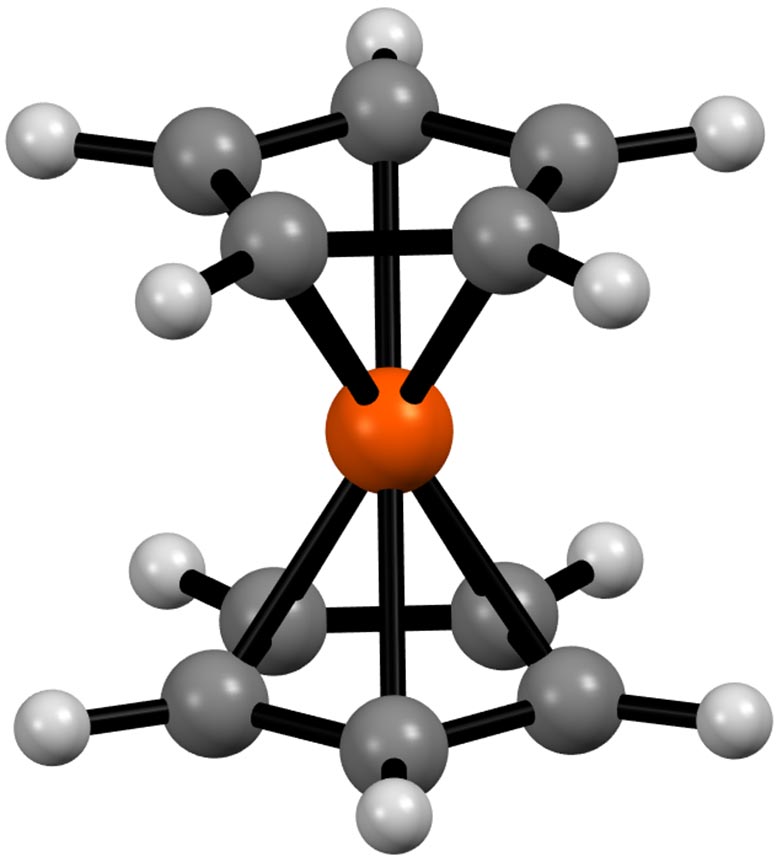
One of the best-known metallocenes is ferrocene, a molecule consisting of an iron atom positioned between two five-carbon rings. The discovery of ferrocene was so significant that it helped earn its discoverers the 1973 Nobel Prize in Chemistry.
Ferrocene also follows a classic principle in organometallic chemistry. According to formal electron counting rules, stable transition metal complexes typically contain 18 electrons in their outermost shell.
The Organometallic Chemistry Group at OIST, led by Dr. Satoshi Takebayashi, has been investigating ways to move beyond this traditional limit. Last year, the team reported unusual ferrocene derivatives containing 20 electrons. During that work, the researchers also attempted to create similar 20-electron complexes using ruthenium. Instead, those reactions unexpectedly produced conventional 18-electron compounds.
That unexpected result sparked a closer investigation.
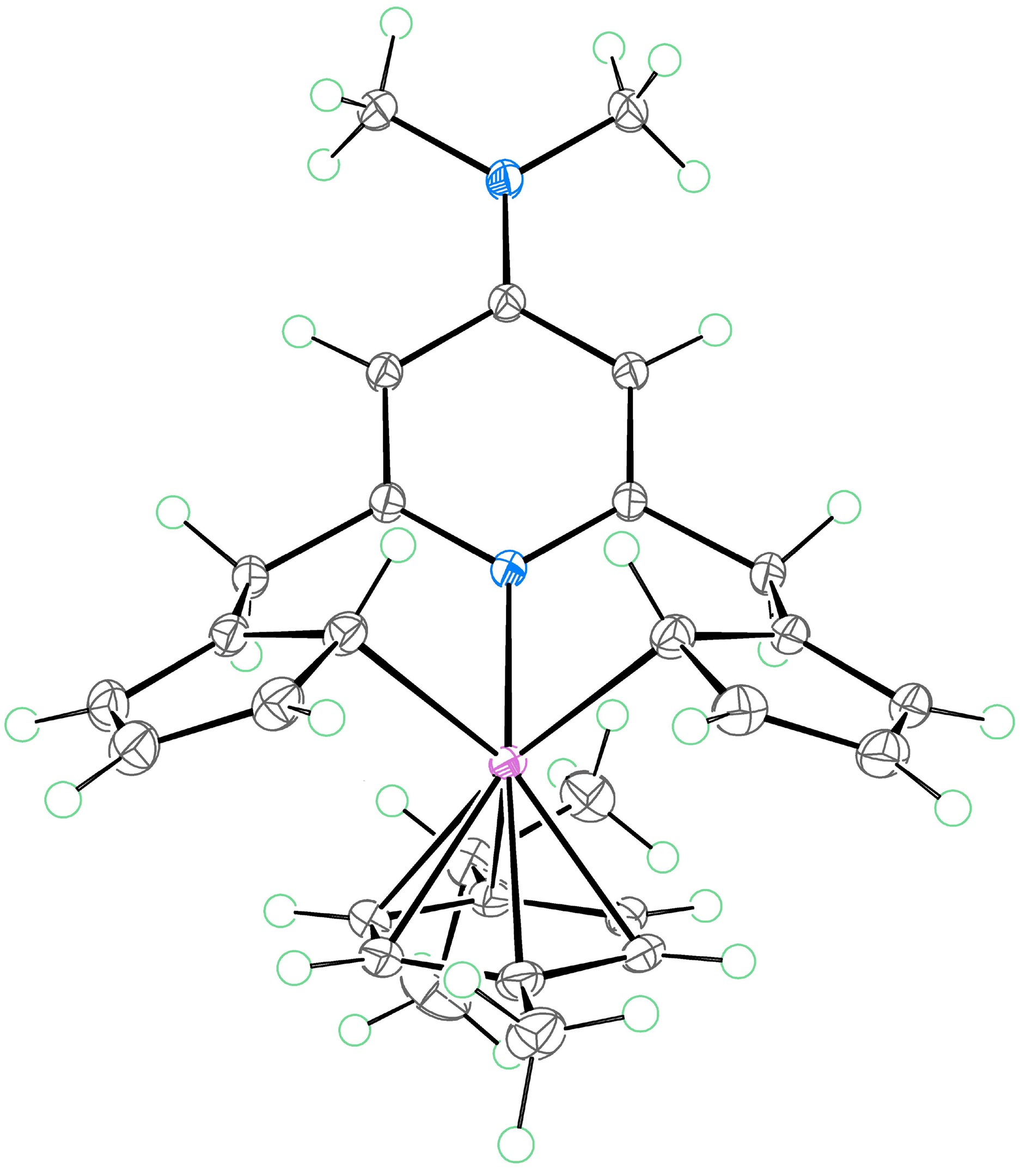
“We were able to isolate an intermediate structure from our ruthenium complex formation reaction and characterize this with single-crystal X-ray diffraction. Surprisingly, we found the structure to be doubly ring-slipped,” says Takebayashi.
Ring-slippage occurs when fewer atoms in a molecular ring participate in bonding with the metal atom. In this newly discovered structure, bonding changed from involving all five carbon atoms in each ring to only a single carbon atom per ring.
According to the researchers, this is the first time a double ring-slipped sandwich intermediate has been fully characterized at the molecular level.
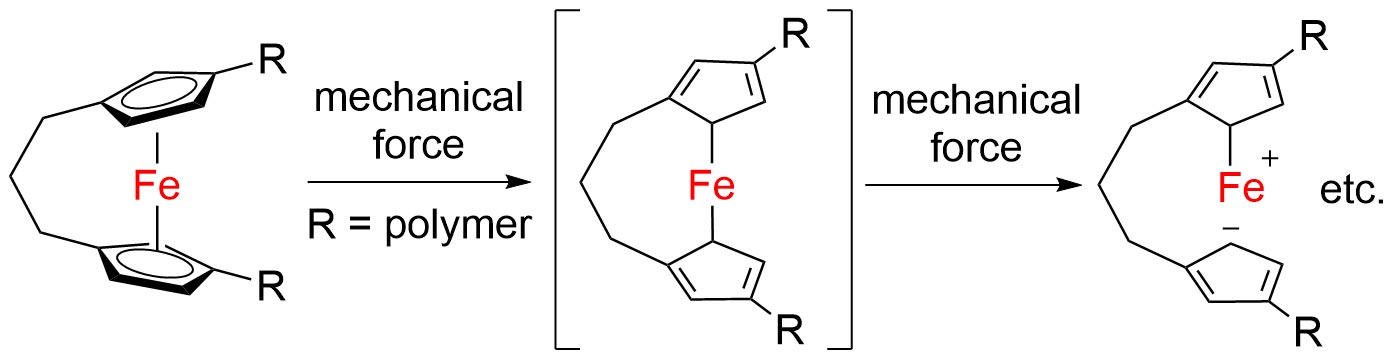
Ring-slippage may be induced in several ways, including by applying mechanical force (e.g., pulling at either end of metallocene-containing polymers). As molecular structure changes through ring-slippage, its properties will change too, which opens new possibilities for stimuli-responsive materials design.
Credit: Reprinted with permission from Wech et al., JACS, 2026, 10.1021/jacs.6c04198. Copyright 2026 American Chemical Society.
Uncovering How Metallocenes Form
To better understand the newly discovered ruthenocene derivative, the team combined several analytical techniques, including nuclear magnetic resonance (NMR) spectroscopy and mass spectrometry.
The researchers also used both computational modeling and laboratory experiments to trace the reaction pathway. Their investigation revealed that the doubly ring-slipped structure gives rise to an unstable single ring-slipped intermediate before eventually forming the final product.
The findings offer a much clearer picture of the sequence of events that occur during metallocene formation and transformation.
New Possibilities for Smart Materials
Beyond solving a long-standing chemistry puzzle, the discovery could have practical implications.
“There is a recent renewed interest in incorporating metallocenes into materials to access different properties. By understanding how they can react and deform, we can design tunable structures for use in drug delivery systems, catalysts, sensors and other settings,” Takebayashi adds.
By revealing how metallocenes can temporarily distort and rearrange themselves, the research provides valuable guidance for designing responsive materials with adjustable properties. Such materials could eventually be tailored for applications ranging from advanced catalysts and chemical sensors to next-generation drug delivery technologies.
Reference: “Molecular Structure of a Doubly Ring-Slipped Ruthenocene Intermediate” by Felix Wech, Yury Torubaev and Satoshi Takebayashi, 21 May 2026, Journal of the American Chemical Society.
DOI: 10.1021/jacs.6c04198
Never miss a breakthrough: Join the SciTechDaily newsletter.
Follow us on Google and Google News.
Full article can be found at: https://scitechdaily.com/chemists-capture-a-bizarre-molecular-structure-never-seen-before/


