



Scientists have uncovered evidence that tiny microbes living inside fish may be helping shape the chemistry of the world’s oceans.
The new study, led by former graduate student Anthony Bonacolta at the University of Miami Rosenstiel School of Marine, Atmospheric, and Earth Science, suggests that bacteria in fish intestines may work together with their hosts to produce a form of calcium carbonate. This mineral plays an important role in ocean chemistry and serves as a significant carbon sink. The findings challenge the long-held assumption that fish alone are responsible for this process.
Fish, Microbes, and Ocean Chemistry
Bony fish, known as teleosts, constantly drink seawater to maintain proper hydration. As part of this process, their intestines remove excess calcium and carbonate ions. These compounds are then expelled as solid calcium carbonate pellets called ichthyocarbonates.
Until now, scientists believed ichthyocarbonate production was driven entirely by fish physiology. The new research points to a possible microbial contribution.
“This work suggests that the gut microbiome may play a broader role in both fish biology and global marine nutrient cycles,” said one of the study’s senior authors, Martin Grosell, Maytag Professor of Ichthyology and chair of the Department of Marine Biology and Ecology. “What was previously thought to be a process driven solely by the fish may actually reflect a close symbiosis between the fish and its gut microbial community.”
Testing Fish in Different Salinity Conditions
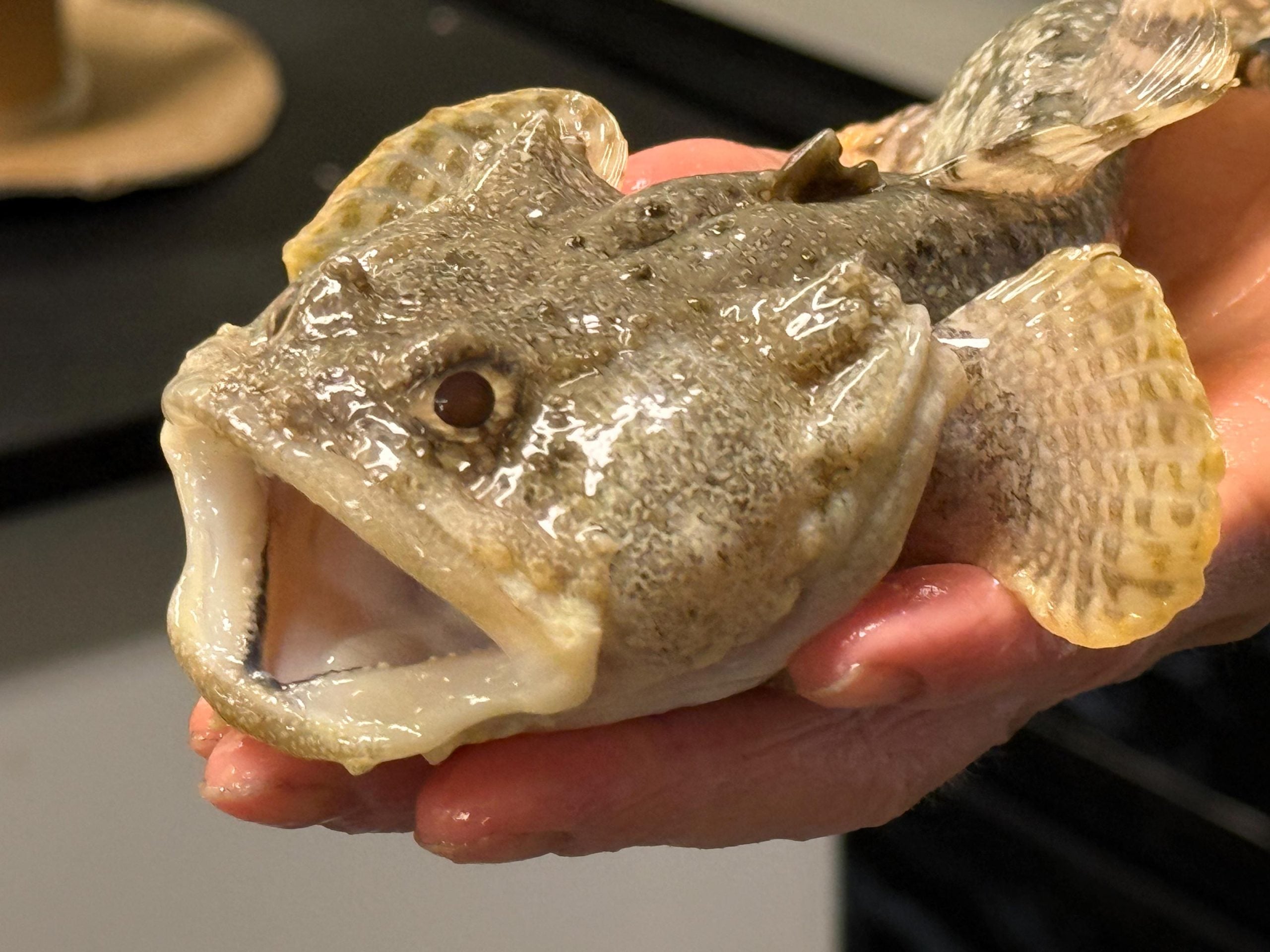
To investigate the process, researchers studied Gulf toadfish under varying salinity conditions. The fish were exposed to brackish water (9 ppt), seawater (35 ppt), and hypersaline water (60 ppt). Previous research has shown that ichthyocarbonate production increases as fish adapt to saltier environments through normal osmoregulation.
The team observed that fish kept in low salinity conditions did not produce ichthyocarbonates. Production occurred in seawater and increased even further in hypersaline conditions.
Researchers collected samples from several locations, including different sections of the intestine, the ichthyocarbonates themselves, and the surrounding water. DNA and RNA were extracted to examine both microbial communities and patterns of gene activity in the fish and associated microbes. Genetic sequencing was used to identify the microbes present, while gene expression analyses helped reveal their potential functions.
Evidence of a Fish Microbe Partnership
The researchers found large numbers of vibrios, especially Photobacterium damselae subsp. damselae, in both the fish intestines and the ichthyocarbonates. Genetic analyses indicated that these bacteria possess traits associated with processes involved in ichthyocarbonate formation.
The findings suggest the microbes may actively participate in mineral production alongside the fish rather than simply existing in the gut environment.
“Most life on Earth is microbial, driving nutrient cycles and ecosystem function while revealing new dimensions of biological diversity through symbiosis,” said Grosell. “The ocean is especially rich in these partnerships, and the toadfish–vibrio symbiosis potentially linked to calcium carbonate production is a striking new example.”
Implications for Ocean Health and Carbon Storage
The discovery provides a new perspective on how marine ecosystems influence ocean chemistry and the marine carbon cycle. If confirmed by future research, the results suggest that microscopic organisms living inside fish could contribute to processes that affect carbon storage and overall ocean health on a much larger scale than previously recognized.
Reference: “Symbiotic bacteria may support calcium carbonate precipitation in the Gulf toadfish” by Anthony M. Bonacolta, Tristan Kravitz, Rocío Mozo, Lydia J. Baker, Rachael M. Heuer, Martin Grosell and Javier del Campo, 18 May 2026, PLOS Biology.
DOI: 10.1371/journal.pbio.3003764
The research was supported by start-up funds from the University of Miami and by Project PID2023-152522NB-I00 financed by the Ministry of Science, Innovation, and Universities in Spain.
Never miss a breakthrough: Join the SciTechDaily newsletter.
Follow us on Google and Google News.
Full article can be found at: https://scitechdaily.com/a-surprising-discovery-inside-fish-could-change-what-we-know-about-the-ocean/


