



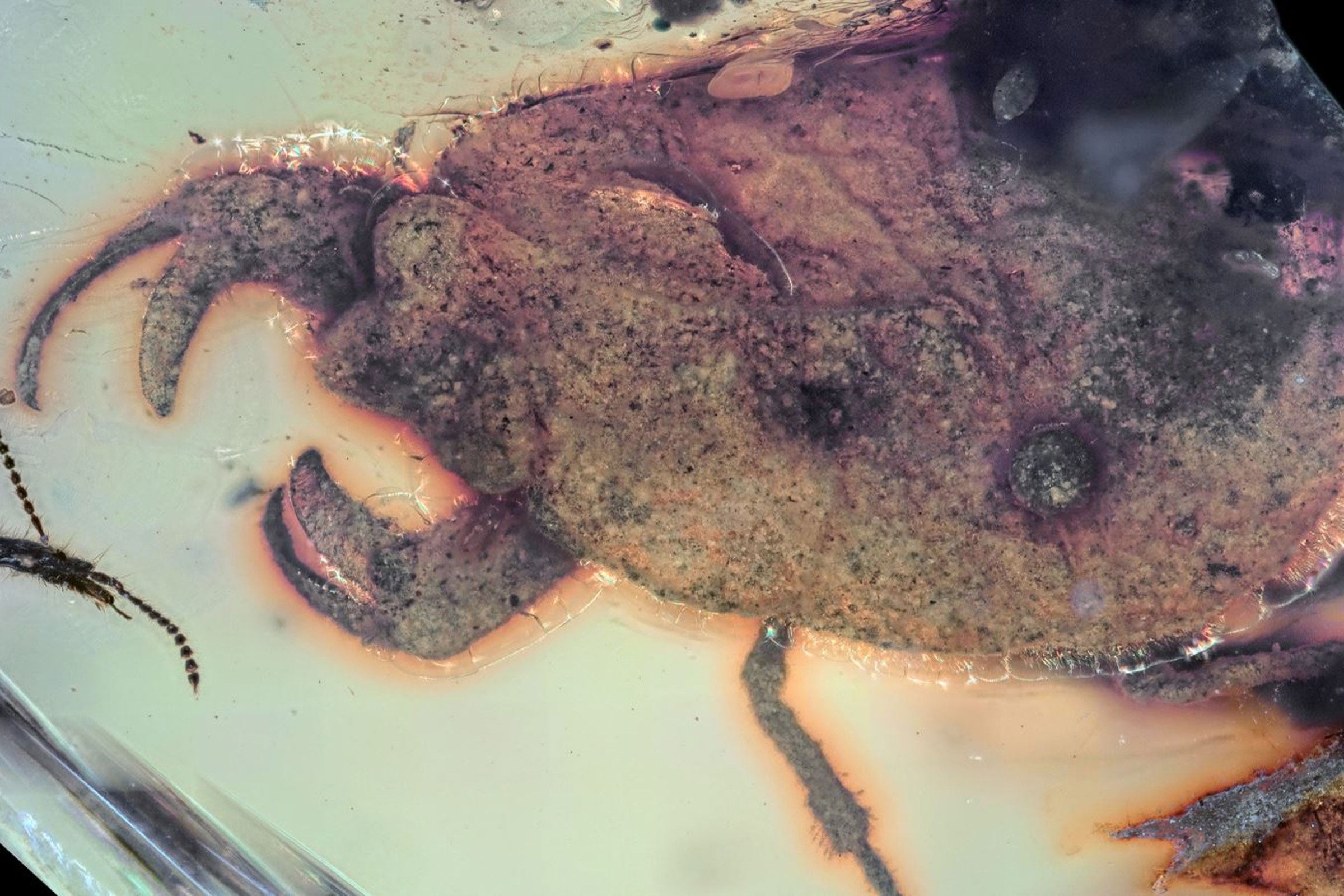
Scientists have discovered a previously unknown species of true bug that has claws.
Amber from Myanmar’s Kachin region has preserved many fossils that reveal the animal diversity of a Cretaceous forest ecosystem from about 100 million years ago. The deposit continues to produce species that were previously unknown to science.
LMU researchers have now identified the fossil of a true bug (Heteroptera) with a striking feature rarely seen in insects: large claws on its front legs that resemble the grasping limbs of crabs. These structures, called chelae, work like pincers or forceps and are extremely uncommon among insects.
Claws reinvented
“Previously, such chelae were known from only three insect groups. This fossil, therefore, represents the fourth known case of these structures evolving independently in insects,” explains Privatdozent Carolin Haug, zoologist at LMU’s Faculty of Biology.
Haug and her team, working with researchers from the University of Rostock and the University of Oulu in Finland, examined the fossil using micro-computed tomography. This allowed them to reconstruct and study its anatomy in 3D. The findings have now been published in the journal Insects.
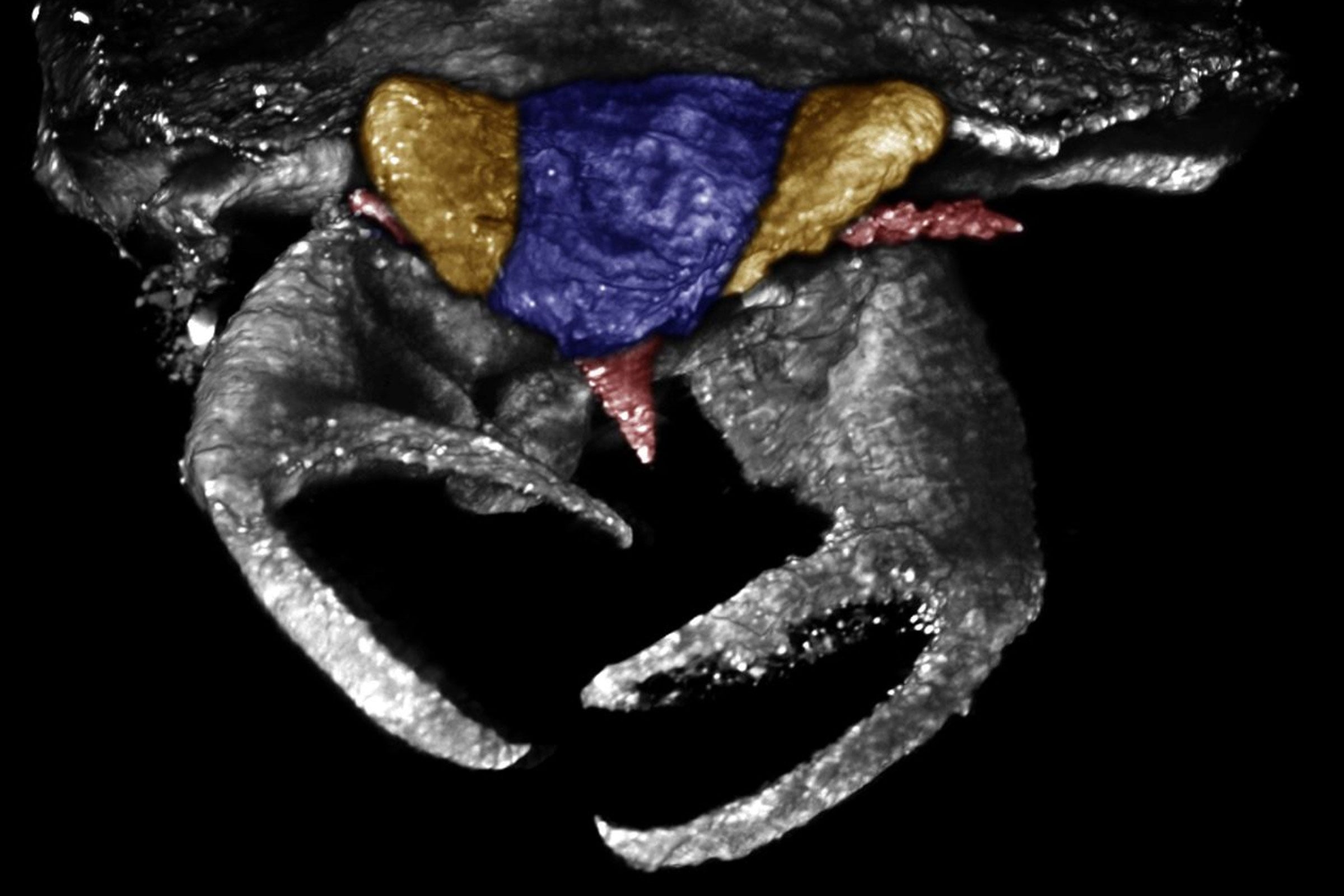
The researchers also carried out a quantitative morphological analysis comparing the shapes of more than 2,000 chelae and similar grasping structures from living and extinct species. Their analysis showed that the fossil true bug’s chelae are clearly different from those found in other insects. Similar forms are seen instead in more distantly related arthropods, including decapods (crabs, lobsters, shrimps, etc.) and tanaids.
Water bugs in K-pop pose
Because its anatomy was so distinctive, the researchers assigned the fossil true bug to a new genus and named the species Carcinonepa libererrantes. The genus name combines the Latinized Greek word for “crab” (carcino-) with nepa, referring to Nepomorpha, the group of true water bugs.
“The species name libererrantes is a Latinization of the highly successful K-pop group Stray Kids,” explains Carolin Haug. “The name seemed fitting because the posture of the fossil’s chelae strongly resembles the group’s trademark pose. Stray Kids, I should add, is the favorite band of one of the paper’s authors, Fenja Haug.”
From the preserved body features, the researchers classified Carcinonepa libererrantes as a member of the true water bugs (Nepomorpha) within the true bugs (Heteroptera). Beyond its unusual front leg chelae, the fossil’s body resembles modern members of Gelastocoridae, the group commonly known as toad bugs, which live as terrestrial predators.
“The morphology of C. libererrantes suggests that this species had a similar lifestyle,” observes Carolin Haug. “We can imagine it living in a Cretaceous forest, probably near the coast.” The large chelae on its front legs were most likely used to capture small insects.
Reference: “A True Bug with a True but Unique Chela in 100 Million-Year-Old Amber” by Carolin Haug, Fenja I. Haug, Marie K. Hörnig, Florian Braig and Joachim T. Haug, 16 April 2026, Insects.
DOI: 10.3390/insects17040431
Never miss a breakthrough: Join the SciTechDaily newsletter.
Follow us on Google and Google News.
Full article can be found at: https://scitechdaily.com/scientists-discover-bizarre-100-million-year-old-insect-with-giant-claws/


