



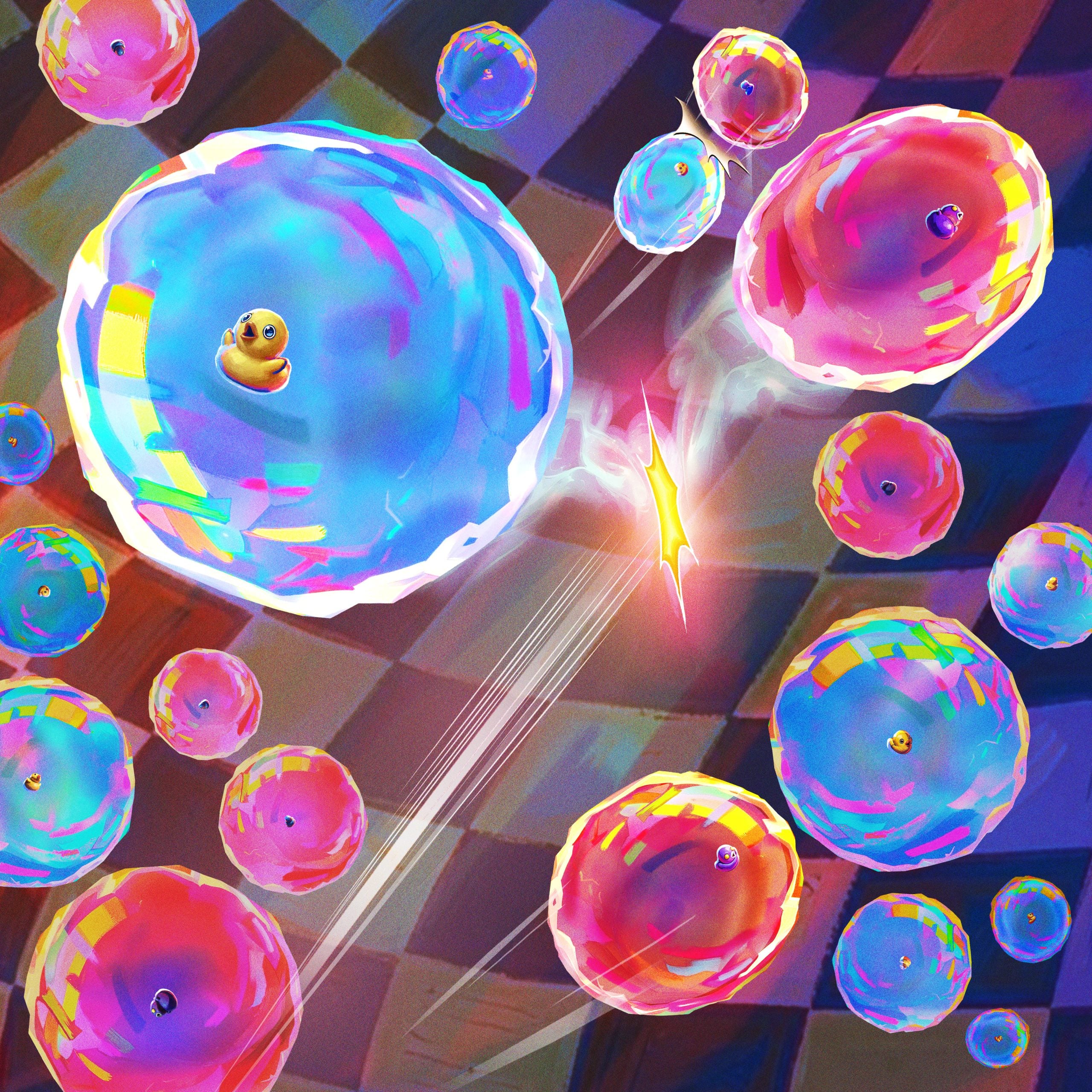
A quantum simulation found a ceiling on resistivity caused by electron collisions.
Every time electricity flows through a wire, some of its energy is inevitably lost as heat because electrons collide with one another and with the material around them. But just how much can these collisions increase electrical resistance? A new study suggests there is a fundamental limit.
To investigate, researchers from the University of Toronto, L’École Normale Supérieure in Paris, and Lehigh University turned to an unusual stand-in for electrons: ultracold potassium atoms cooled to temperatures just above absolute zero.
By precisely controlling how often the atoms collided, they found that resistance increased only up to a certain point before leveling off. The discovery provides rare experimental evidence for a microscopic limit to resistivity and could improve scientists’ understanding of electron behavior in quantum materials.
“Electron-on-electron collisions are known to increase resistivity in some pure materials,” explains Professor Joseph Thywissen in the Department of Physics and the Center for Quantum Information and Quantum Control in the Faculty of Arts & Science at the University of Toronto, senior author of a study published in Physical Review Letters. “The energy produced by electrical resistance shows up as heat. Transmission lines, for instance, lose up to 8% of the generated electrical power. Resistivity is also interesting to study because it can be a signature of new physics in materials.”
Light lattice isolates collisions
The experiment relied on an optical lattice, a grid made of light that holds atoms in place and allows them to act like electrons moving through a solid. This controlled setup let the scientists recreate extreme conditions that ordinary solid materials cannot reach and focus specifically on how collisions affect resistance.
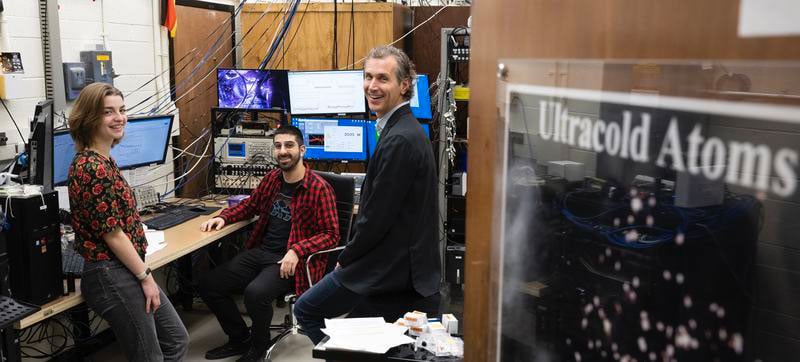
“We observed that the atoms, which are only a few nanometers in size, bump into each other as if they were much larger,” says Thywissen. “This quantum enhancement of the effective atom size makes collisions on a given lattice site much more likely, increasing the resistivity of the system.”
Resistance reaches a ceiling
When the interactions between atoms became very strong, collision-driven resistivity no longer kept increasing. Instead, it reached a saturation point. The result suggests that resistance caused by electron scattering in metals may face a similar upper limit.
“Our results provide a clear microscopic understanding of how resistivity works in low-density metals and open the door to new studies of strongly correlated atomic systems and quantum materials,” says Thywissen.
Reference: “Lattice Unitarity: Saturated Collisional Resistivity in Hubbard Metals” by Frank Corapi, Robyn T. Learn, Benjamin Driesen, Antoine Lefebvre, Xavier Leyronas, Frédéric Chevy, Cora J. Fujiwara and Joseph H. Thywissen, 26 May 2026, Physical Review Letters.
DOI: 10.1103/bhw8-p536
Funding: Natural Sciences and Engineering Research Council of Canada, Agence Nationale de la Recherche, Institut Universitaire de France
Never miss a breakthrough: Join the SciTechDaily newsletter.
Follow us on Google and Google News.
Full article can be found at: https://scitechdaily.com/physicists-discover-a-fundamental-limit-to-electrical-resistance/


