



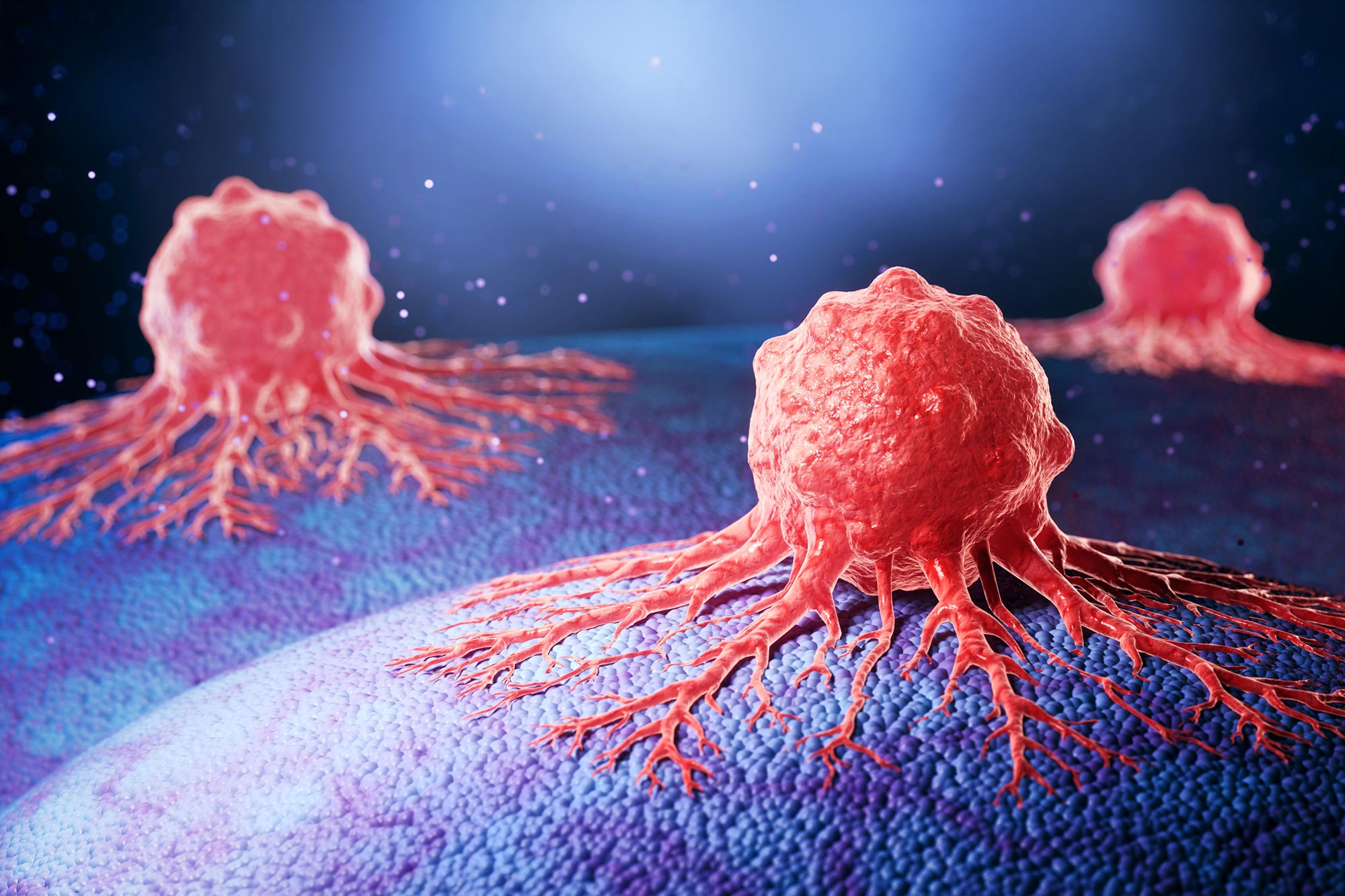
A newly identified inflammatory signaling target may help weaken the protective environment surrounding pancreatic tumors and make existing treatments more effective.
Pancreatic tumors are not made up of cancer cells alone. They are surrounded by scar-like tissue, immune cells, and support cells that can shield the disease from treatment. A new study suggests that disrupting a receptor called IL1RAP may weaken this protective system and make pancreatic cancer more vulnerable to therapy.
The work, led by researchers at Sylvester Comprehensive Cancer Center at the University of Miami Miller School of Medicine, is now helping shape a first-of-its-kind clinical trial. The planned study will combine an IL1RAP-targeted drug with chemoimmunotherapy before surgery in patients whose tumors can still be removed.
Why Pancreatic Cancer Resists Treatment
Pancreatic cancer is especially difficult to treat because its tumors often develop a dense, fibrous microenvironment. This surrounding tissue can limit drug penetration, suppress immune responses, and help cancer cells survive under stress.
That biology also helps explain why treatments that work in other cancers often have limited effects in pancreatic tumors. Even when chemotherapy damages cancer cells, the surrounding cellular network can help the disease recover and adapt.
Recent progress with KRAS-targeted drugs has generated optimism for patients with metastatic disease. However, bringing similar advances to patients with operable pancreatic cancer may take years, underscoring the need for strategies that can be tested sooner in the preoperative setting.
IL1RAP as a Signaling Hub
In the study, published in JCI Insight, Jashodeep Datta, M.D., and his colleagues examined IL1RAP, a receptor that helps transmit several inflammatory signals.
The researchers found that IL1RAP acts as a link among cancer cells, immune cells, and fibroblasts. Fibroblasts are cells that help produce the structural tissue surrounding tumors. Together, these cell types create a coordinated environment that can support tumor growth and blunt the effects of treatment.
“When we target IL1RAP, we are blocking a shared ‘helper’ receptor that many inflammatory signals rely on to transmit their message,” said Datta, a pancreatic and hepatobiliary surgical oncologist, co-leader of the Gastrointestinal Site Disease Group at Sylvester, and senior author of the study.
Because IL1RAP sits at a shared point in the signaling network, blocking it may affect several inflammatory pathways at once. That could be valuable in pancreatic cancer, where inflammation and immune suppression often occur side by side.
This combination creates what researchers describe as an “inflamed but immune-suppressed” environment. The tumor may contain many immune-related signals, yet the immune cells capable of attacking cancer remain weakened or restrained.
Reworking the Tumor’s Defenses
In preclinical experiments, inhibiting IL1RAP changed the composition of the tumor microenvironment.
Immune-suppressive cells became less abundant, while T cells showed stronger activity. The tumors also developed less fibrosis and responded better to combination therapy.
These findings suggest that IL1RAP-targeted treatment may work less like a direct strike against cancer cells and more like a way to dismantle the support system around them.
The aim, Datta explained, is to make the tumor environment less protective so that existing therapies can work more effectively.
Testing the Strategy Before Surgery
The findings have prompted Sylvester researchers to advance a neoadjuvant clinical trial combining IL1RAP-targeted therapy with chemoimmunotherapy before surgery.
Neoadjuvant treatment is given while the tumor is still in place. In addition to potentially shrinking or weakening the cancer, this approach allows researchers to compare tissue collected before treatment with tissue removed during surgery.
That comparison can reveal whether the therapy changed immune activity, fibrosis, inflammatory signaling, or other features of the tumor environment.
“Moving this work into a clinical trial is a landmark development for our GI cancer program at Sylvester,” Datta said. “We’re testing a clear, patient-centered strategy to disrupt IL1RAP using a treatment plan that can be delivered in the clinic.”
The design also gives researchers an opportunity to study why some patients respond more strongly than others. Those biological differences may eventually help identify which patients are most likely to benefit from IL1RAP-targeted treatment.
Linking Laboratory Findings to Patient Outcomes
“Every new approach helps us learn more,” said Peter Hosein, M.D., co-author of the study, co-leader of the Gastrointestinal Cancers Site Disease Group at Sylvester, associate director for clinical research at SPCRI and professor of clinical medicine at the Miller School. “This trial gives us a unique window to connect the science directly to patient outcomes, which is essential for moving the field forward.”
Reference: “IL1RAP-expressing myeloid-stromal networks represent a therapeutic vulnerability to improve chemoimmunotherapy sensitivity in pancreatic cancer” by Erin M. Dickey, Harper M. Marsh, Camilla Rydberg-Millrud, Haleh Amirian, Karthik Rajkumar, Manan Patel, Andrew Adams, Anuroop Allena, Kevin Van der Jeught, Nipun Merchant, Peter J. Hosein, Anna Bianchi, David Liberg and Jashodeep Datta, 22 June 2026, JCI Insight.
DOI: 10.1172/jci.insight.202487
The work is supported by a highly competitive Translational Research Grant from the V Foundation to Datta and his research team, placing it among a small cohort of funded translational teams selected each year. The nominees for this grant undergo meticulous national peer review before selection, and those selected receive $800,000 over four years to support their “bench-to-bedside” research and to advance novel strategies into early-phase clinical trials.
Never miss a breakthrough: Join the SciTechDaily newsletter.
Follow us on Google and Google News.
Full article can be found at: https://scitechdaily.com/new-strategy-could-break-pancreatic-cancers-protective-shield/


