



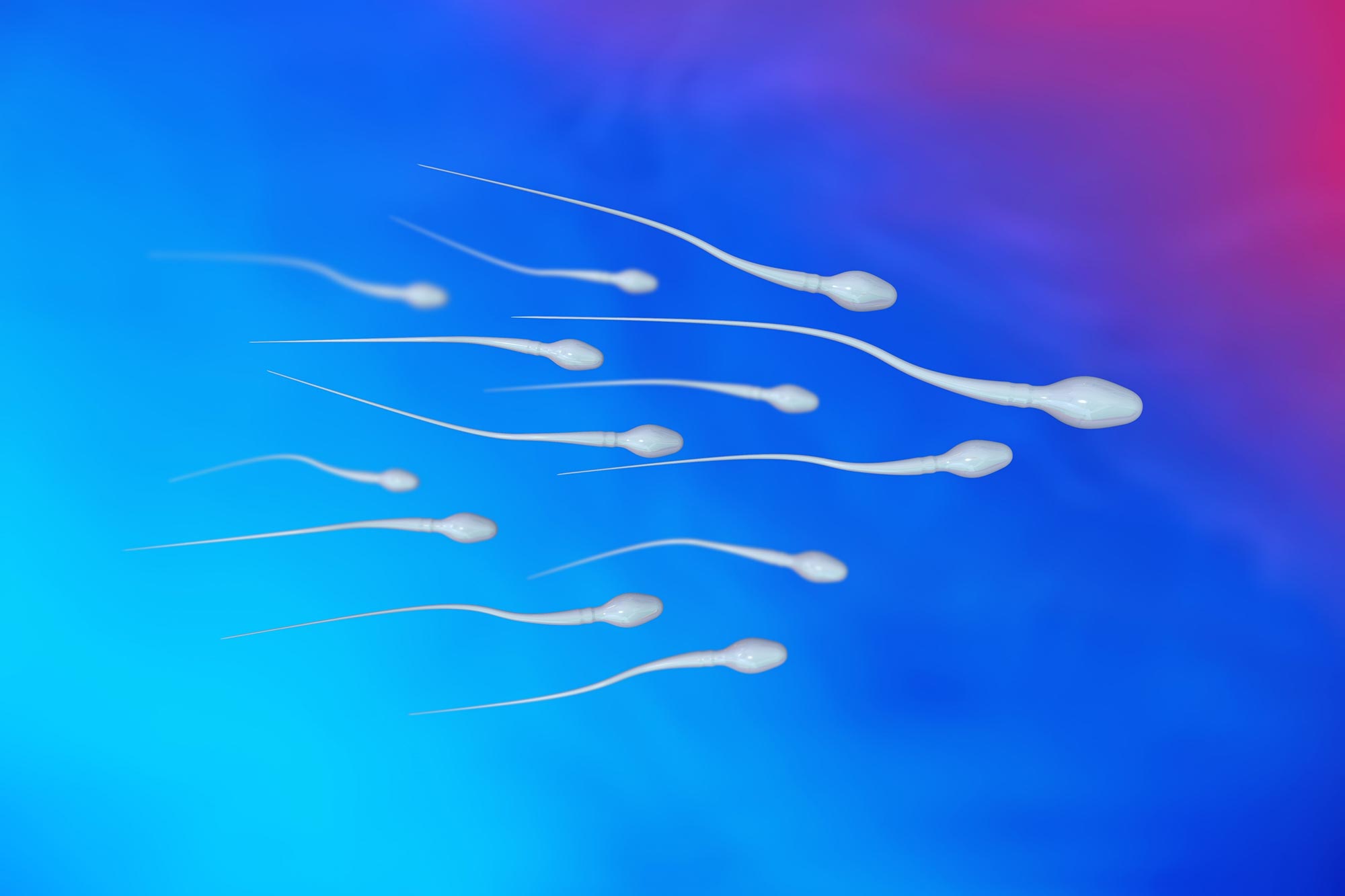
Cornell University scientists have made significant progress toward what many consider the holy grail of male birth control: a safe, long-acting, fully effective, and nonhormonal contraceptive that can be reversed.
Stopping Sperm Production by Targeting Meiosis
In a proof-of-principle study conducted in mice over six years, researchers showed that interrupting a natural checkpoint in meiosis, the process responsible for producing sex cells, can temporarily halt sperm production. Importantly, this approach worked without causing permanent damage.
The findings were published in the Proceedings of the National Academy of Sciences.
To achieve this, the team used JQ1, a small molecule inhibitor originally developed as a research tool for studying cancer and inflammatory diseases. Although JQ1 is not suitable as a treatment due to neurological side effects, it is known to interfere with a specific stage of meiosis called prophase 1. This allowed the researchers to demonstrate for the first time that sperm production can be safely and reversibly stopped by targeting meiosis and sperm production at this stage.
“We’re practically the only group that’s pushing the idea that contraception targets in the testis are a feasible way to stop sperm production,” said Paula Cohen, professor of genetics and director of the Cornell Reproductive Sciences Center.
“Our study shows that mostly we recover normal meiosis and complete sperm function, and more importantly, that the offspring are completely normal,” Cohen said.
Why New Male Birth Control Options Matter
Today, men have limited contraceptive choices, mainly condoms and vasectomies. While vasectomies offer a long-term solution, many men are hesitant to undergo the procedure, even though it can sometimes be reversed with additional surgery. At the same time, efforts to develop hormonal male contraceptives have faced concerns, partly because similar treatments have shown risks in women.
Cohen and her colleagues focused specifically on meiosis instead of other stages of sperm development to ensure that sperm production could be fully stopped while remaining reversible and without affecting overall reproductive function.
“We didn’t want to impact the spermatogonial stem cells, because if you kill those, a man will never become fertile again,” Cohen said. Also, once sperm entered spermiogenesis, there was a potential for viable sperm to leak out and fertilize an egg.
How the Experimental Approach Works
JQ1 disrupts meiosis by eliminating cells during prophase 1 and preventing the gene activity needed for later stages of sperm development.
In the study, male mice were given JQ1 for three weeks. During this time, sperm production stopped completely, and key aspects of meiosis, including chromosome behavior during prophase 1, were disrupted.
When the treatment was discontinued, recovery followed. Within six weeks, most normal processes of meiosis resumed, and sperm production returned to normal. The researchers then bred the mice and confirmed that they were fertile. Their offspring were healthy and also capable of reproduction.
“It shows that we recover complete meiosis, complete sperm function, and more importantly, that the offspring are completely normal,” Cohen said.
What a Future Male Contraceptive Could Look Like
If this approach is successfully developed for humans, it could lead to a new form of male birth control delivered as an injection every three months or possibly as a patch to maintain effectiveness, Cohen said.
Reference: “Meiotic prophase I disruption as a strategy for nonhormonal male contraception using small-molecule inhibitor JQ1” by Stephanie Tanis, Leah E. Simon, Adriana K. Alexander, Tegan S. Horan, Maria de las Mercedes Carro, Samantha Jane Bonnett, Audrey Xie, Roni Ben-Shlomo, Connor E. Owens, Charles G. Danko, Jelena Lujic and Paula E. Cohen, 7 April 2026, Proceedings of the National Academy of Sciences.
DOI: 10.1073/pnas.2517498123
Never miss a breakthrough: Join the SciTechDaily newsletter.
Follow us on Google and Google News.
Full article can be found at: https://scitechdaily.com/male-birth-control-breakthrough-scientists-find-way-to-turn-sperm-production-off-and-back-on/


