




A study suggests pigeons navigate using iron-rich immune cells in their livers that can respond to Earth’s magnetic field. The findings may solve a decades-old mystery about bird navigation and reveal a surprising new sensory role for the immune system.
Pigeons are famous for their ability to travel long distances and still find their way home. For decades, scientists have tried to understand how they do it. A new study suggests that part of the answer may be found in an unexpected place: the liver.
Research published in Science indicates that specialized immune cells in pigeons’ livers may help them detect Earth’s magnetic field, providing an internal compass that assists with navigation.
The cells, called macrophages, normally help break down aging red blood cells. As they perform this task, they accumulate iron. According to the researchers, that iron may give the cells unique quantum properties that allow them to respond to magnetic fields. When these cells were removed, the birds struggled to find their way home.
“We didn’t expect immune cells to act like sensors for magnetic fields at all. Our results reveal a previously unknown mechanism for magnetic perception in animals,” says Prof. Christian Kurts, Director at the Institute of Molecular Medicine and Experimental Immunology at the University Hospital Bonn, and one of the study’s co-senior authors.
“What looks like a ‘gut feeling’ in bird navigation may actually have a physical basis,” adds Prof. Martin Wikelski, Director at the Max Planck Institute of Animal Behavior and the other co-senior author of the study.
Tracks of homing pigeons that were trained to navigate over 20km back to their aviaries in Southern Germany. Some pigeons were treated with clodronate to deplete macrophages. Untreated pigeons (white) navigated successfully home on sunny and overcast days. Clodronate-treated pigeons also navigated successfully home on sunny days (orange), but could not navigate home on overcast days (blue). Credit: Max Planck Institute of Animal Behavior
A Longstanding Mystery of Bird Navigation
Scientists have long known that migratory birds and homing pigeons use Earth’s magnetic field as one of several tools for navigation. Exactly how they detect that field, however, has remained unclear.
Previous ideas suggested that birds might perceive magnetic fields through light-sensitive molecules in their eyes or through tiny magnetic particles in their beaks. Despite years of investigation, convincing evidence for either explanation has been difficult to obtain.
The new study offers a different possibility. The international research team brought together immunologists from the University of Bonn and the University Hospital Bonn, physicists from the University of Duisburg-Essen, and ornithologists from the Max Planck Institute of Animal Behavior (MPI-AB).
Searching for Magnetic Cells
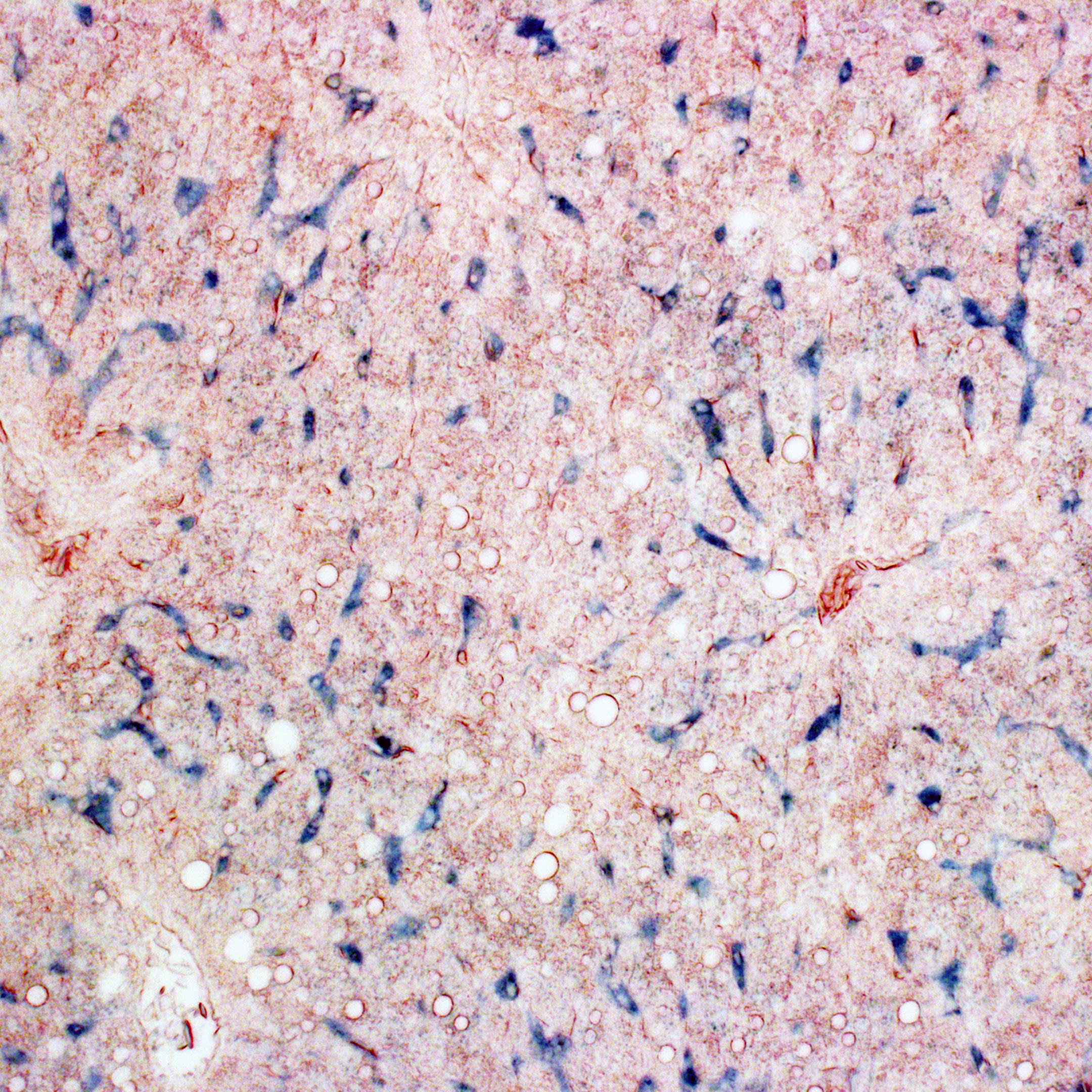
To determine where magnetic sensing might occur, researchers examined several parts of the body that had been considered likely candidates, including the eyes, beak, and brain. They also investigated the liver and spleen.
Using techniques known as “vibrating sample magnetometry” and “magnetic cell separation,” the team measured magnetic properties in different tissues.
“We had some clues that the liver and spleen have magnetic properties, because they break down red blood cells and so store much iron in the body,” says first author Dr. Clivia Lisowski, from the University of Bonn and the University Hospital Bonn, who led the immunological work.
The liver stood out from all other tissues tested, showing the highest concentration of iron.
“Iron is crystallized in oxide nanoparticles making the cells superparamagnetic and reactive to magnetic fields. We found by far the strongest magnetic response in liver tissue,” adds Prof. Ulf Wiedwald, from the University of Duisburg-Essen.
Further investigation identified liver macrophages as the source of this magnetic response.
Miriam Widmann, a staff member at the Max Planck Institute of Animal Behavior, releases a homing pigeon as part of an experiment investigating navigation under overcast conditions. Credit: Christian Ziegler/ Max Planck Institute of Animal Behavior
Testing the Pigeons’ Magnetic Compass
To find out whether these cells actually influence navigation, researchers carried out homing experiments with pigeons trained to return to their aviary at the MPI-AB in Konstanz, Germany, from distances of more than twenty kilometers away.
When the liver macrophages were removed, the birds lost their sense of direction on overcast days, when the sun was not visible. Under sunny conditions, however, they were still able to return home successfully, likely by relying on solar cues instead of magnetic ones.
The results suggest that pigeons use multiple navigation systems and that magnetic sensing becomes particularly important when visual guidance from the sun is unavailable.
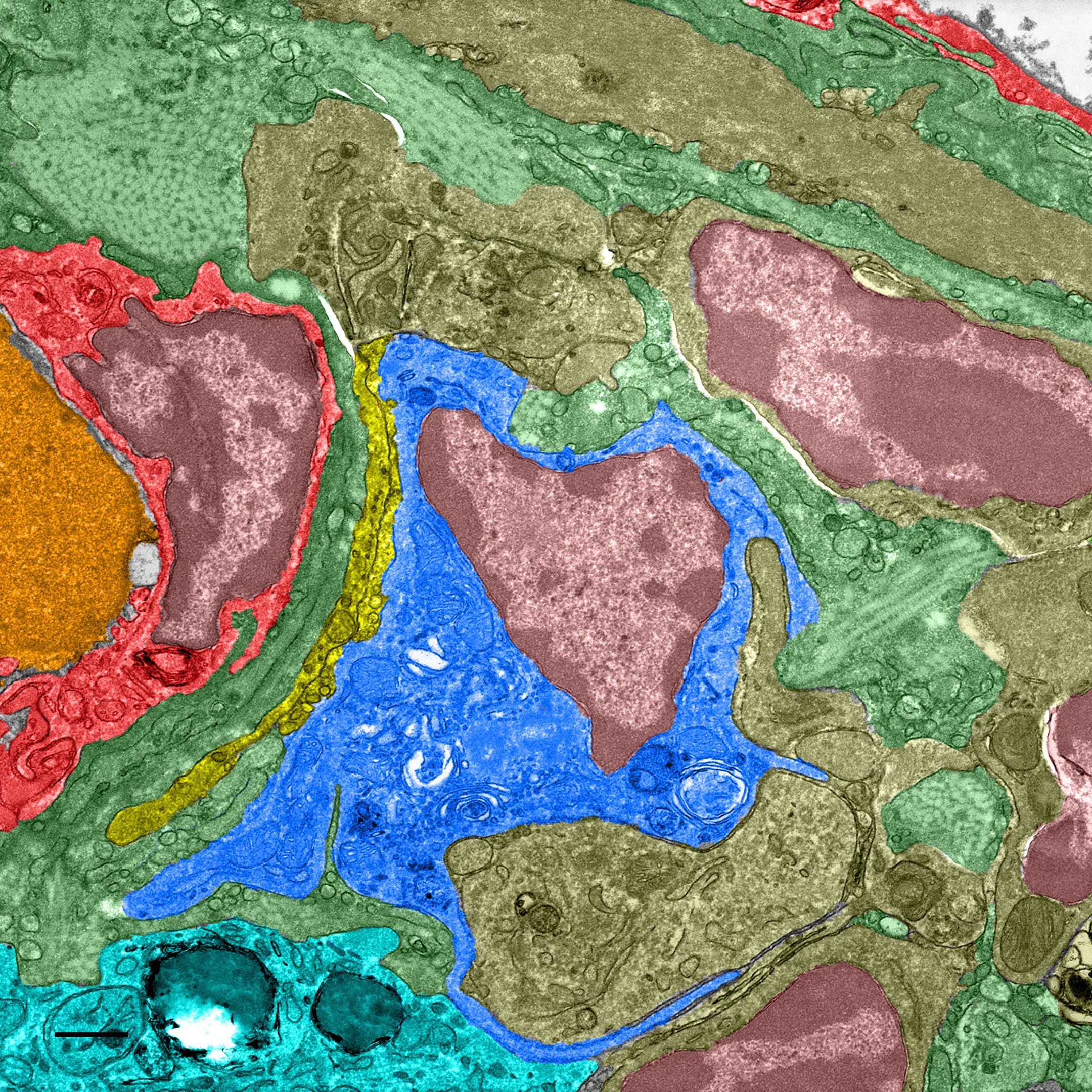
blue = hepatic macrophage
yellow = nerve fiber
bright green=connective tissue
dark red=endothelia
orange=capillary with blood fat and proteins
beige/dark pink=nuclei
dark green=fibroblas
Credit: Lisowski et al. (2026) Science
How Magnetic Information May Reach the Brain
After demonstrating that the cells affected navigation, the researchers investigated how information from the liver might be transmitted to the brain.
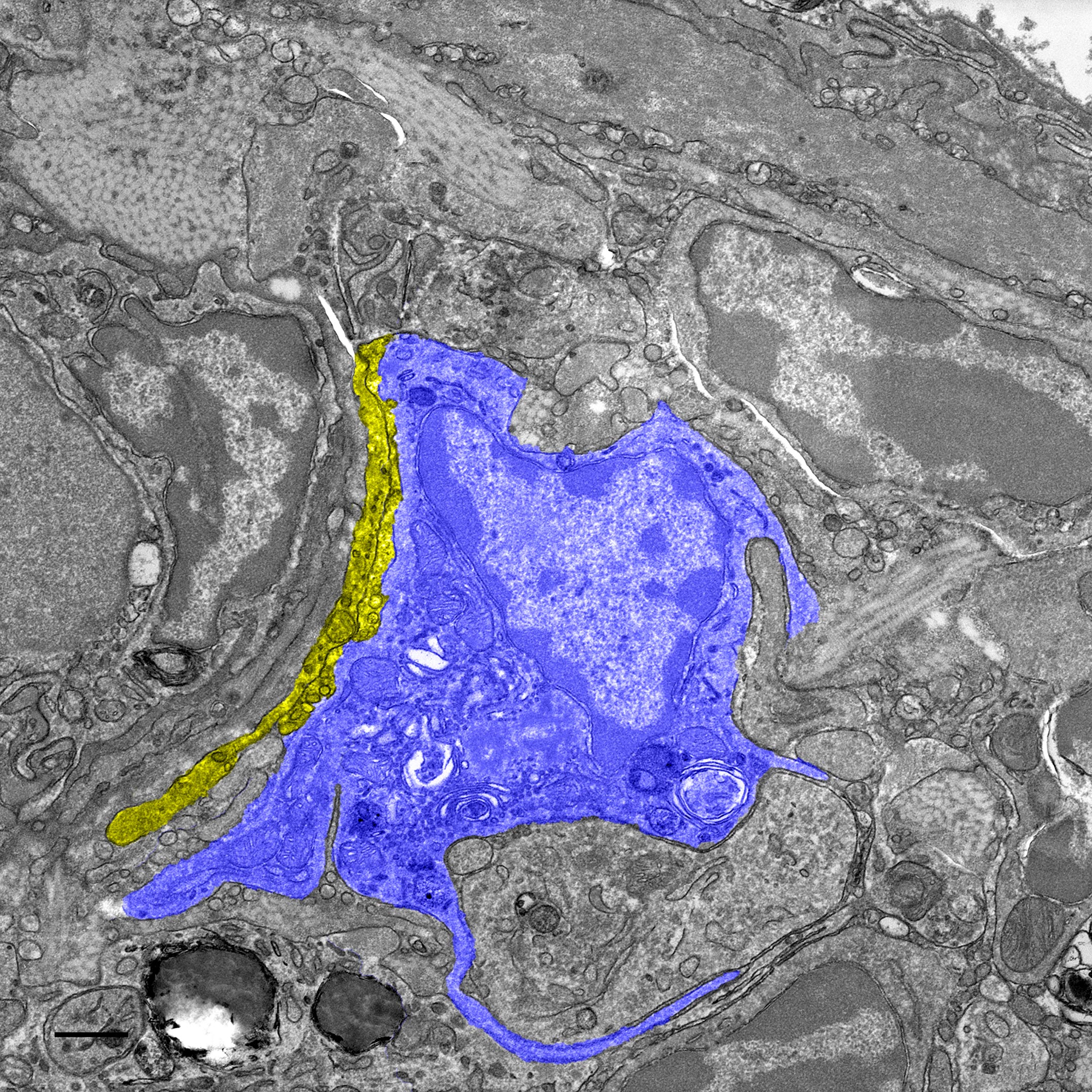
Using electron microscopy, they found that the iron-rich macrophages are located close to nerve fibers. This arrangement could provide a pathway through which magnetic information is relayed to the nervous system.
Lisowski says: “These findings provide the first concrete evidence of how the Earth’s magnetic field can be perceived within the body and passed on to the brain to guide movement.”
The researchers say the discovery brings together several known biological processes, including iron metabolism and communication between the immune and nervous systems, into a possible explanation for how animals navigate using Earth’s magnetic field.
“Animal navigation is one of the most fascinating phenomena in nature,” says Wikelski. “If immune cells are part of how birds sense direction, it would fundamentally change how we understand navigation.”
Implications Beyond Birds
Many questions remain, especially regarding how the brain processes signals originating from these liver cells.
The findings could also extend beyond pigeons. Animals such as sharks are able to navigate without relying on light, raising the possibility that similar mechanisms may exist in other species.
Researchers say the work opens the door to exploring whether animals, and perhaps even humans, respond to magnetic fields in ways that have not yet been fully understood.
Reference: “Homing pigeon navigation relies on superparamagnetic macrophages under overcast conditions” by Clivia Lisowski, Michael Quetting, Daniela Klaus, Lisa Lazarevski, Lea Seep, Maximilian Germer, Jian Li, Inge Müller, Daniel Zuniga, Wolfgang Fiedler, Dina K. N. Dechmann, Kasper Thorup, Jan Hasenauer, Lars Fester, Stefanie Kuerten, Michael Farle, Ulf Wiedwald, Martin Wikelski and Christian Kurts, 28 May 2026, Science.
DOI: 10.1126/science.ady2486
Never miss a breakthrough: Join the SciTechDaily newsletter.
Follow us on Google and Google News.
Full article can be found at: https://scitechdaily.com/how-pigeons-find-their-way-home-may-finally-be-solved/


