



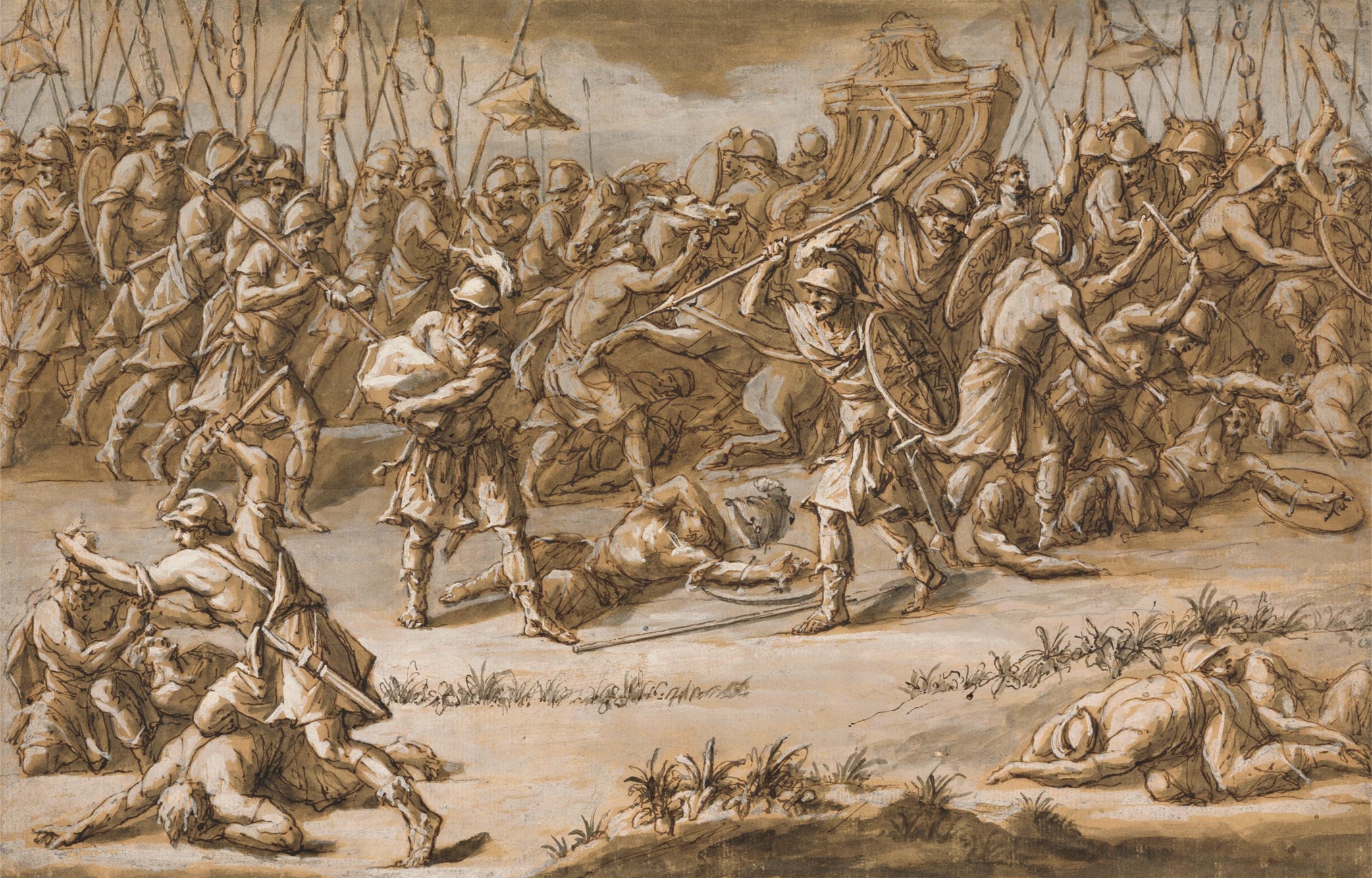
Researchers discovered an Iliad fragment in a mummy, marking the first literary papyrus used in embalming and offering new evidence of cultural practices in Roman Egypt.
More than 1,600 years after it was written, one of the most famous stories in human history has resurfaced in an unexpected place — wrapped around the dead.
Archaeologists working in Egypt have uncovered a fragment of Homer’s Iliad, the legendary Greek epic of the Trojan War, not in a library or archive, but inside a Roman-era tomb. The discovery, made at the ancient city of Oxyrhynchus (modern Al Bahnasa), reveals that this cornerstone of Western literature was once repurposed in a deeply unusual way, serving as part of the mummification process.
Composed nearly 3,000 years ago, the Iliad is one of the oldest and most influential works of literature ever created, recounting the clash between Greek and Trojan forces and shaping storytelling traditions for millennia. Finding even small fragments of the epic is significant. Finding one embedded in a mummy is something entirely new.
The papyrus fragment was uncovered by the Oxyrhynchus Archaeological Mission, led by Maite Mascort and Esther Pons and run by the Institute of Ancient Near East Studies (IPOA) at the University of Barcelona. Dated to around 1,600 years ago, it marks the first known case in which a Greek literary text — rather than a magical or ritual document — was intentionally used in a funerary context.
Between November and December 2025, a team led by Núria Castellano discovered a Roman-era mummy in Tomb 65 of Sector 22 with a papyrus placed on its abdomen as part of the embalming ritual. While earlier excavations at the site had revealed Greek papyri positioned in similar ways, those texts were always magical or ritual in nature. This is the first time a literary work such as the Iliad has been identified in this context.
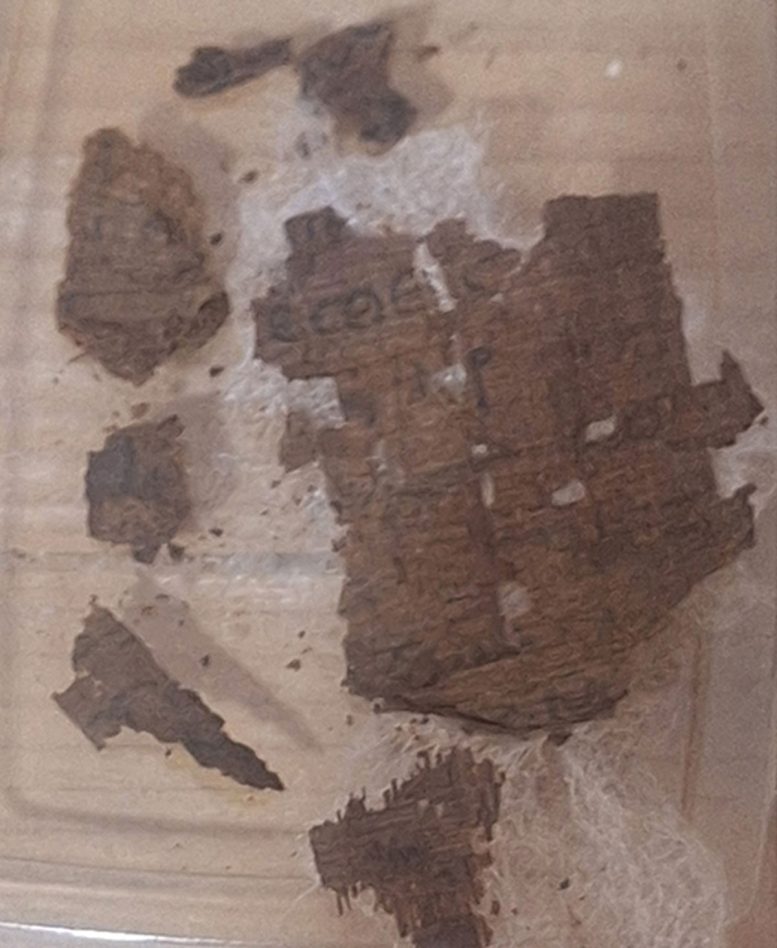
Further study took place between January and February 2026, when conservator Margalida Munar, papyrologist Leah Mascia, and Ignasi-Xavier Adiego analyzed the papyrus. Adiego, a professor in the Department of Classical, Romance, and Semitic Languages and director of the Oxyrhynchus project, confirmed, based on Mascia’s reading, that the text comes from the “Catalogue of Ships” in Book II of the Iliad, a well-known passage that lists the Greek forces before the Trojan War and is considered one of the most important sections of the epic.
Literary Papyrus in Funerary Context Explained
Professor Adiego explains, “This is not the first time we have found Greek papyri bundled, sealed, and incorporated into the mummification process, but until now, their content was mainly magical. Furthermore, it is worth noting that, since the late 19th century, a huge number of papyri have been discovered at Oxyrhynchus, including Greek literary texts of great importance, but the real novelty is finding a literary papyrus in a funerary context.”
The discovery comes from the Al Bahnasa necropolis, identified as ancient Oxyrhynchus, one of the key cities of Greco-Roman Egypt. The site lies about 190 kilometers (approximately 118 miles) south of Cairo near the Nile branch known as Bahr Yussef. Excavations uncovered a funerary complex with three limestone chambers containing Roman-era mummies and decorated wooden sarcophagi, many of which were damaged by earlier looting.
The University of Barcelona’s Oxyrhynchus Archaeological Mission began in 1992 under Professor Josep Padró and remains one of the longest-running Spanish excavations in Egypt. Its most recent campaign, conducted from November 2025 through February 2026, produced discoveries of major historical and archaeological importance.
The project receives support from the Ministry of Culture, the University of Barcelona, the Palarq Foundation, the Catalan Egyptology Society, and AIXA Serveis Arqueològics, along with cooperation from Egypt’s Supreme Council of Antiquities and Cairo University.
Never miss a breakthrough: Join the SciTechDaily newsletter.
Follow us on Google and Google News.
Full article can be found at: https://scitechdaily.com/first-of-its-kind-discovery-homers-iliad-found-embedded-in-a-1600-year-old-egyptian-mummy/


