


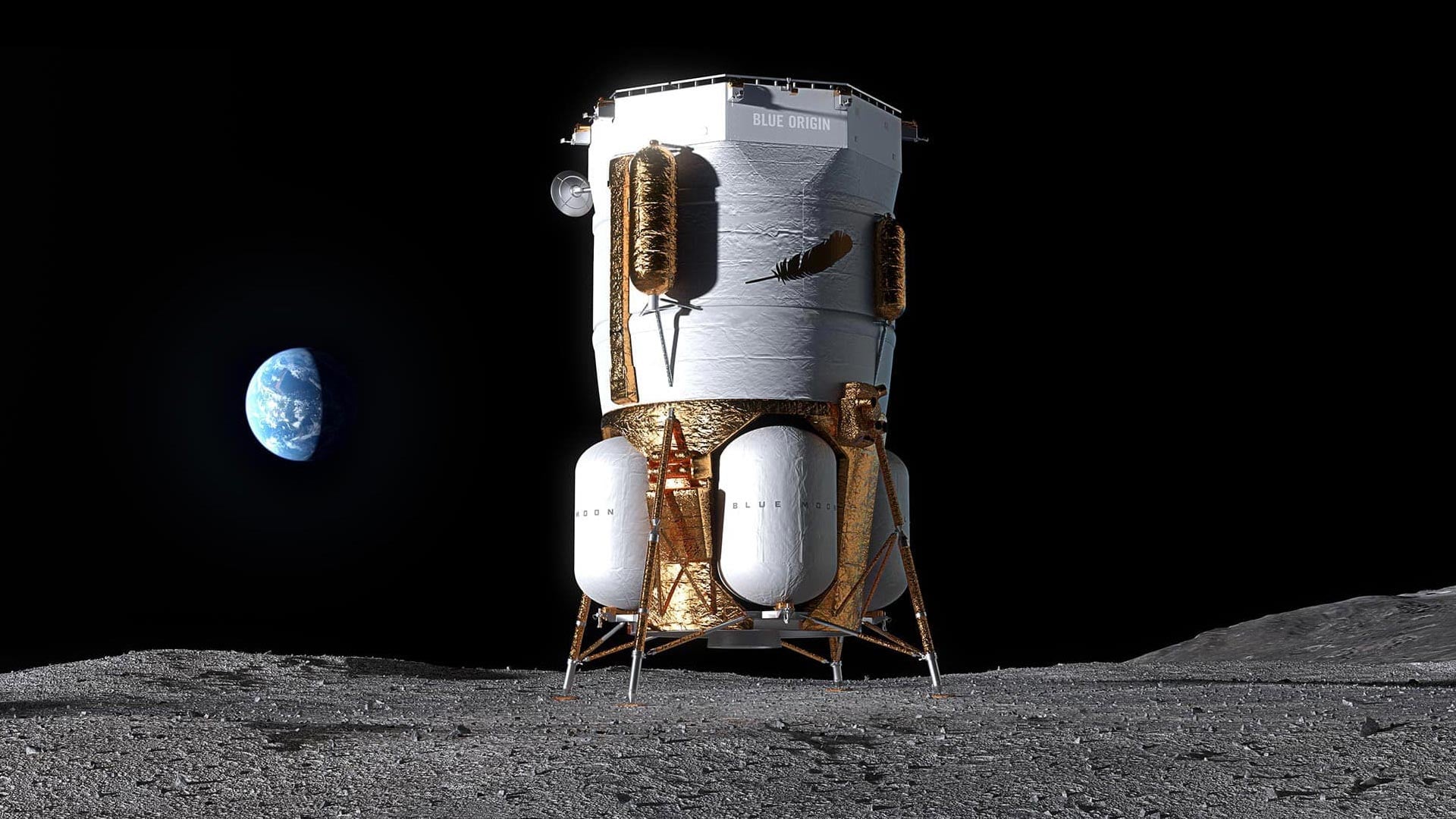
Blue Origin’s MK1 lander just survived a brutal dress rehearsal for the Moon.
Blue Origin’s MK1 lunar lander, also called Endurance, has completed a major phase of testing as the company moves closer to supporting NASA’s Artemis Moon program. The uncrewed cargo spacecraft is being developed as a commercial demonstration mission focused on advancing Human Landing System technology for future lunar exploration.
The recent work took place inside Chamber A at NASA’s Johnson Space Center. The testing effort reflects a public-private partnership model, with Blue Origin using NASA facilities and expertise through a reimbursable Space Act Agreement.
Testing Precision Moon Landing Technology
MK1 is designed to demonstrate several critical capabilities needed for future operations on the Moon. These include precision landing systems, cryogenic propulsion, and autonomous guidance, navigation, and control technologies.
The spacecraft will also carry two NASA science and technology payloads to the Moon’s South Pole region this year under the CLPS (Commercial Lunar Payload Services) initiative.
One payload, the Stereo Cameras for Lunar Plume-Surface Studies, will capture detailed images showing how the lander’s engine plume interacts with the lunar surface during descent and landing. The second payload, the Laser Retroreflective Array, will help orbiting spacecraft pinpoint locations more accurately using reflected laser light.
NASA’s CLPS Program Expands Lunar Research
Through CLPS, NASA works with American companies to send scientific instruments and technology demonstrations to the Moon. The initiative is intended to deepen understanding of the lunar environment while helping prepare for future crewed Artemis missions.
Extreme Vacuum Chamber Testing at NASA Johnson
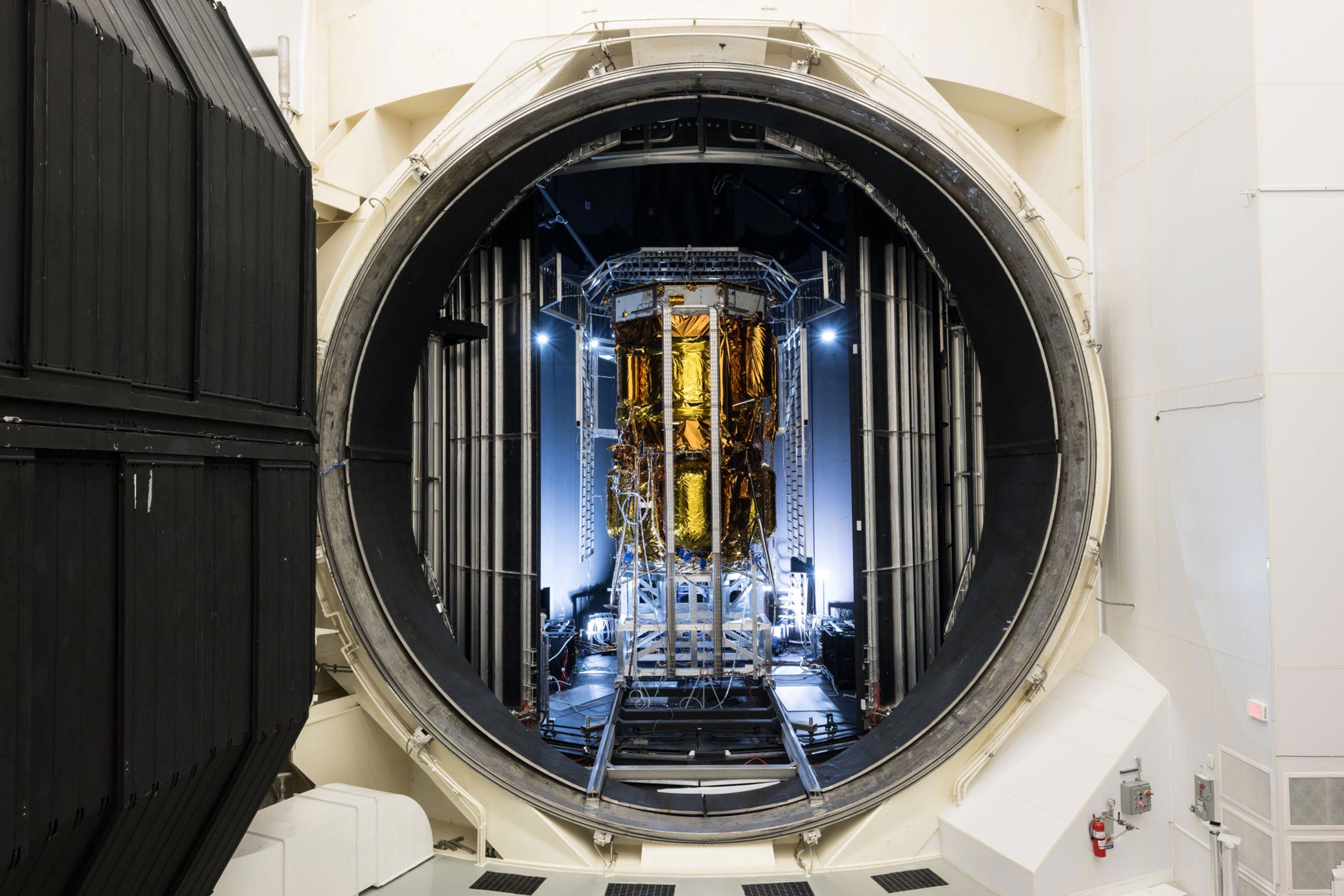
Engineers tested MK1 inside NASA Johnson’s Chamber A, one of the largest thermal vacuum chambers in the world. The facility can recreate the near vacuum of space along with the extreme temperatures spacecraft experience during flight.
By simulating these harsh conditions on Earth, teams were able to evaluate system performance and confirm the spacecraft’s structural and thermal durability before launch. NASA and Blue Origin plan to use lessons learned from MK1’s design, integration, and testing to support future Artemis missions aimed at returning American astronauts to the lunar surface.
Building Toward Crewed Moon Landers
Development of MK1 is also helping reduce risk for future human-rated lunar landing systems, including Blue Moon Mark 2 (MK2). The larger crewed lander is designed to transport astronauts safely between lunar orbit and the Moon’s surface, supporting long-term exploration near the lunar South Pole.
Testing at NASA Johnson was made possible through the agency’s “front door” approach — a coordinated system that gives commercial partners access to NASA facilities and technical expertise while maintaining safety, mission assurance, and alignment with agency goals.
Never miss a breakthrough: Join the SciTechDaily newsletter.
Follow us on Google and Google News.
Full article can be found at: https://scitechdaily.com/blue-origins-new-moon-lander-passes-a-crucial-test-for-nasa-missions/