



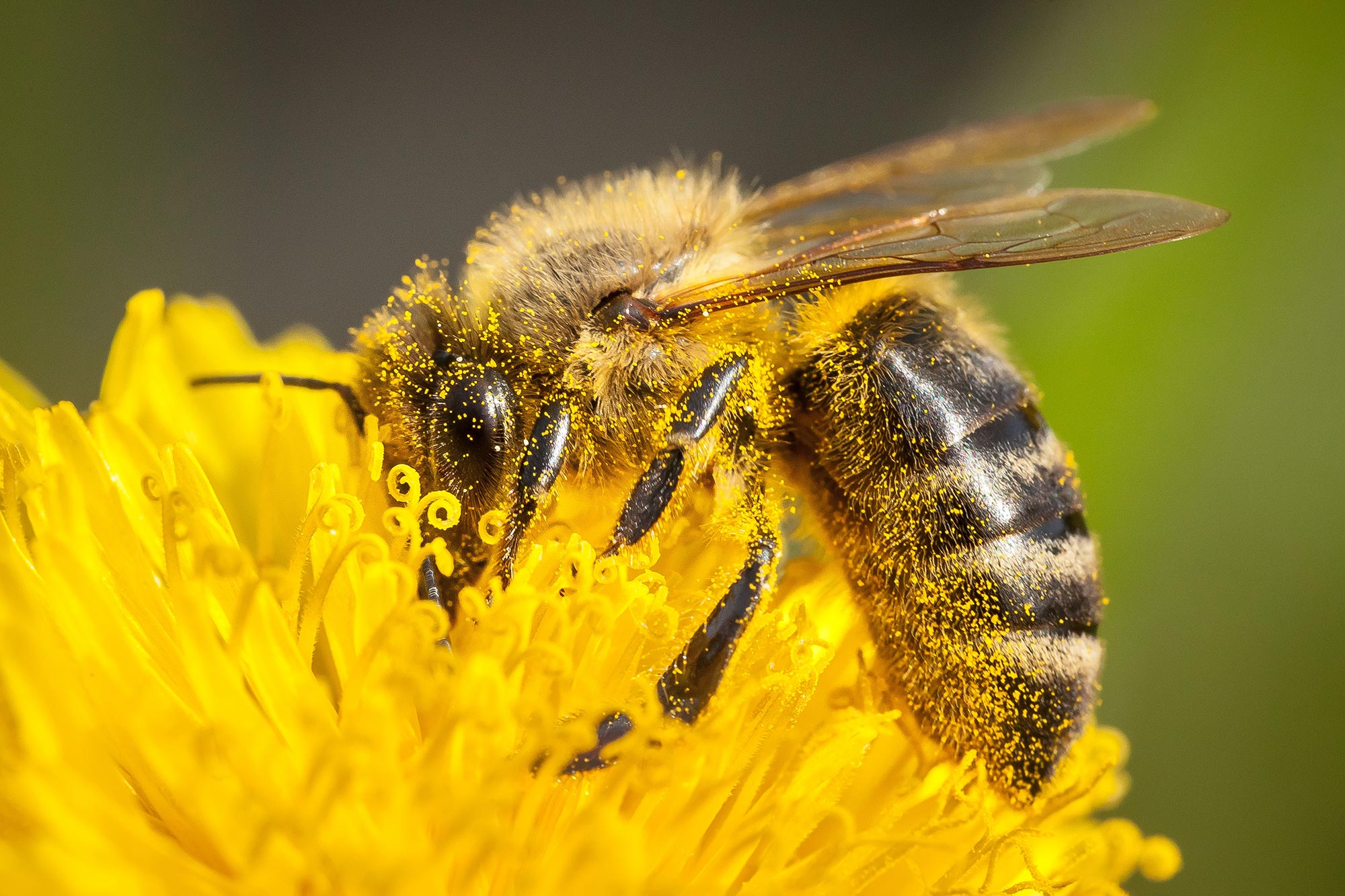
A flower may seem like a perfect meal to a bee, but its pollen may still lack the nutrients a bee needs.
New research led by the University of Oxford suggests that bees do more than simply search for enough pollen. They appear able to detect when their food contains an unfavorable balance of essential amino acids and reduce how much they eat, possibly protecting themselves from consuming harmful amounts of certain nutrients.
Honeybees may also have evolved a solution for feeding their young. By combining pollen from different flowers and processing it inside the hive, they produce nutrient-rich secretions that closely match the needs of growing larvae.
The findings, published in Current Biology, challenge the common assumption that pollen is naturally an ideal food for bees. They also suggest that gardens, farms, and conservation projects may need to provide a broad nutritional menu rather than simply planting large numbers of flowers.
The Hidden Nutritional Mismatch
Bees obtain most of their energy from sugary nectar, but pollen supplies the protein required for growth, tissue repair, and reproduction. Yet pollen did not evolve primarily to feed insects. It carries the male reproductive cells of plants, and its nutritional composition varies considerably between species.
As a result, a flower that produces abundant pollen may still provide bees with too much of one amino acid and too little of another.
Testing What Bees Really Need
Researchers compared the essential amino acid composition of honeybee tissues with pollen from 99 UK flowering plant species representing 26 plant families. Essential amino acids cannot be made by animals and must be obtained through food.
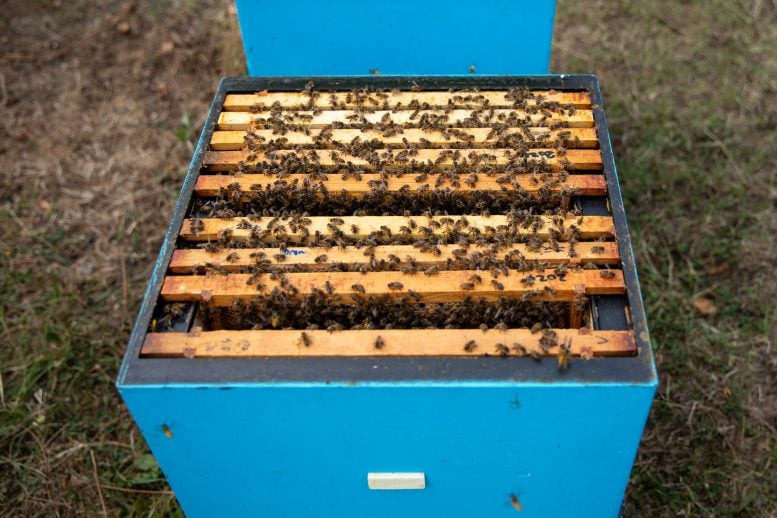
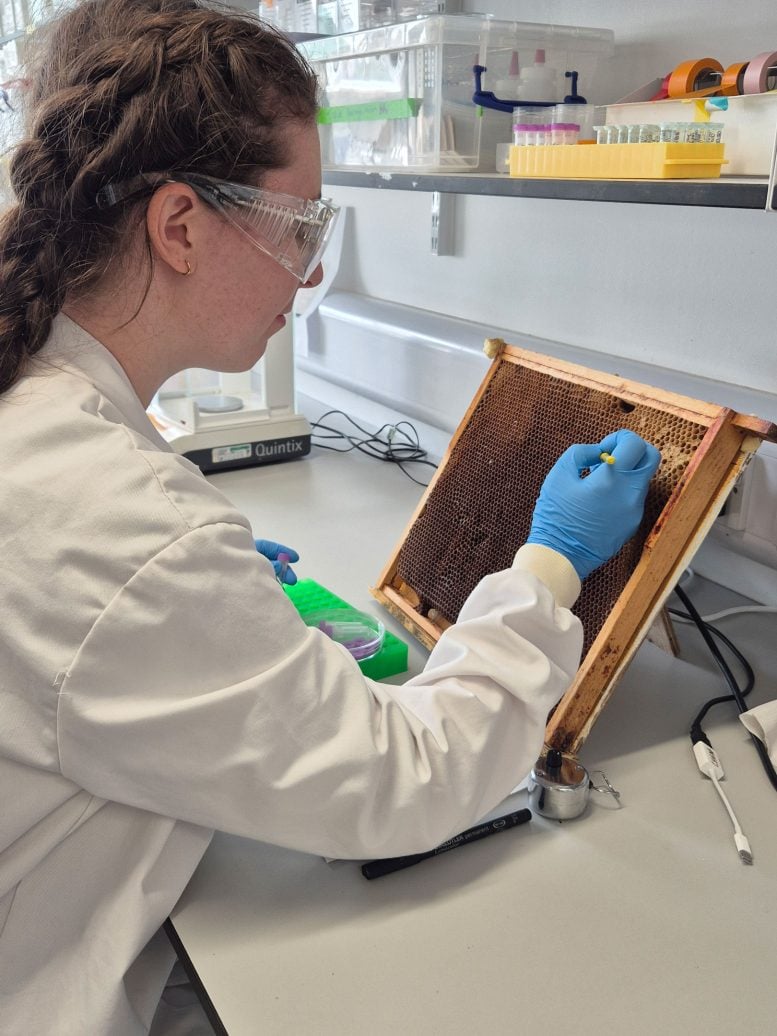
The team then produced artificial diets based either on the amino acid composition of different pollens or on the composition of honeybee tissues. Newly emerged worker bees were given these diets under controlled laboratory conditions.
Most of the pollen profiles did not closely match the nutritional composition of the bees themselves. In contrast, bees offered food that better resembled their own tissues, consumed more, gained more body mass, and selected a diet containing a greater proportion of protein.
How Amino Acids Control Appetite
This pattern led the researchers to investigate histidine, an essential amino acid that bees require in relatively small amounts. The team varied its concentration in relation to branched-chain amino acids (such as leucine and isoleucine), which play important roles in growth and development.
When histidine levels were comparatively high, the bees reduced their total food intake. They consumed less protein as well as less carbohydrate, suggesting that an imbalance in one nutrient can influence the amount of the entire diet they are willing to eat.
A Built-In Nutrient Safety System
The researchers believe this response may be controlled by signals generated after digestion. Instead of continuing to eat in an attempt to obtain nutrients that are lacking, bees may stop feeding when another amino acid reaches an unsafe level.
Similar nutrient feedback systems occur in other animals. In rats, for instance, excess histidine can be converted into histamine, which activates receptors in the brain that help regulate appetite.
Lead author Professor Geraldine Wright (Department of Biology, University of Oxford) said, “Although pollen is often assumed to be a near-perfect food for bees, it is the male gamete of plants, and, unlike nectar, it is rarely produced solely as a reward for pollinators. This creates a conflict of interest between the plant and the pollinator.”
Honeybees Transform Their Food
Honeybee colonies appear to reduce that conflict by transforming raw pollen before it reaches developing larvae.
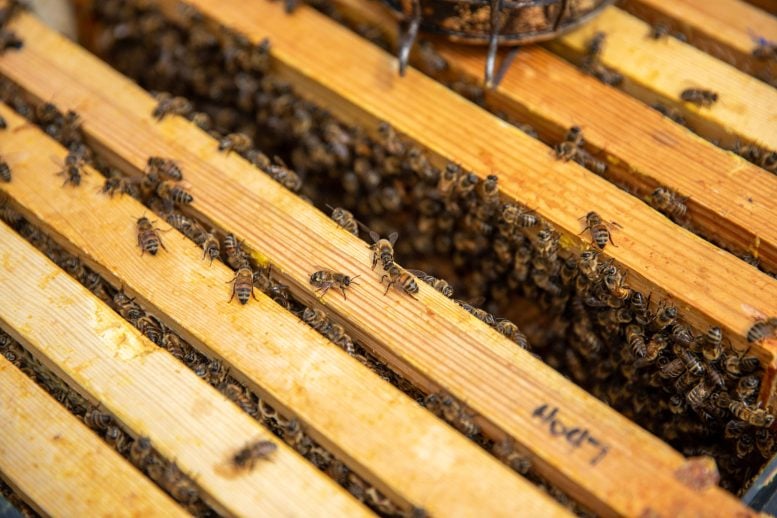
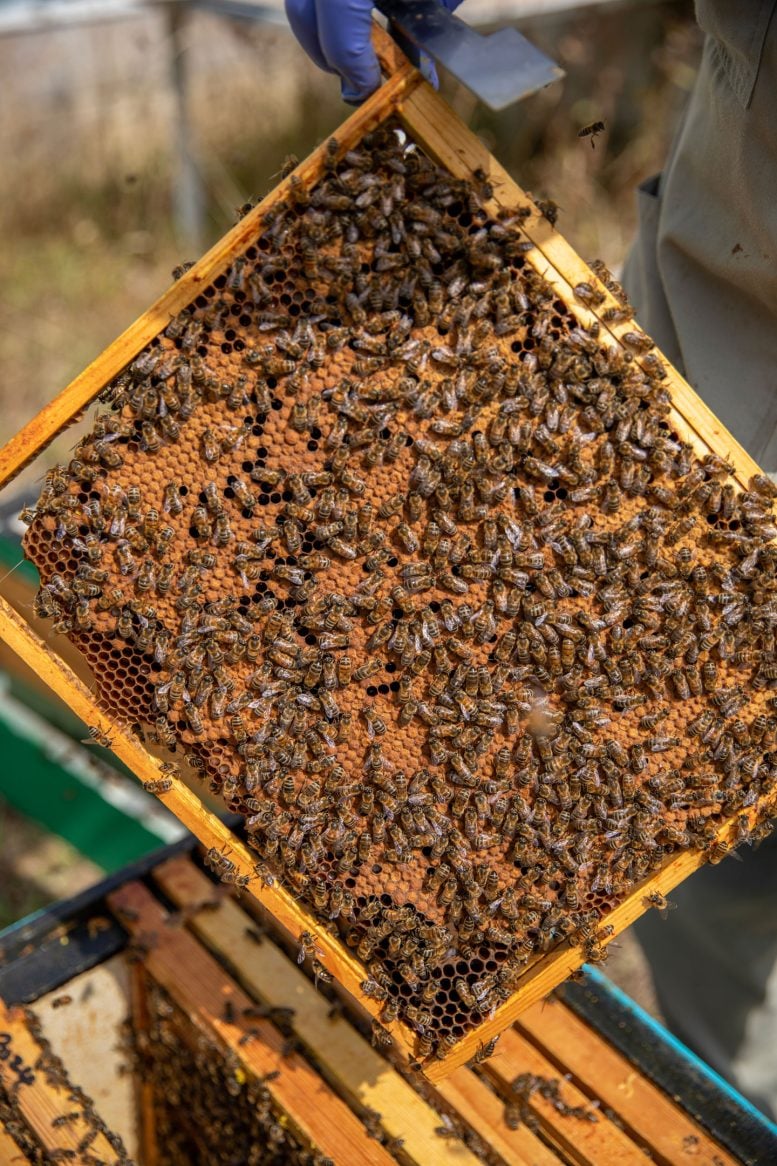
Workers gather pollen from many flower species and store it in the hive as “bee bread.” Nurse bees eat this material and convert its nutrients into glandular secretions, including royal jelly, which they feed to young bees.
The researchers found that bee bread had a more balanced essential amino acid profile than most individual pollen sources. Royal jelly was an even closer match to the composition of bee tissues.
This suggests that mixing pollen and processing it through nurse bees allows a colony to correct at least some of the nutritional weaknesses found in individual flowers.
Professor Wright added, “We predict that honeybees have evolved to create glandular secretions, which are the perfect food for their larvae, providing them with the ratios of essential amino acids that maximize growth.”
Why Wild Bees Face Greater Risk
Wild bees may be more vulnerable to poor pollen quality. Bumblebees and many solitary species provide pollen directly to their offspring rather than converting it into specialized secretions.
In landscapes dominated by only a few flowering plants, these bees could receive plenty of pollen but still lack the correct nutrient balance. The problem may be especially serious when large areas bloom for a short period and then offer little variety for the rest of the season.
The findings indicate that pollinator planting should prioritize diversity as well as abundance. A mixture of flowering species, available across the season, may give bees a better chance of combining different pollen sources into a nutritionally complete diet.
Professor Wright said, “Our results suggest that planting for pollinators should not only focus on providing flowers throughout the season but also on ensuring a diversity of pollen sources. A varied diet may be essential for bees to obtain the right balance of nutrients.”
Reference: “Nutrition of honeybees is constrained by the ratios of essential amino acids in pollen protein” by Daniel Stabler, Jennifer A. Chennells, Eileen F. Power, Jennifer Scott, Giorgia Perri, Philip Donkersley, Sharoni Shafir and Geraldine A. Wright, 17 June 2026, Current Biology.
DOI: 10.1016/j.cub.2026.05.070
Never miss a breakthrough: Join the SciTechDaily newsletter.
Follow us on Google and Google News.
Full article can be found at: https://scitechdaily.com/bees-have-a-hidden-nutritional-superpower-oxford-study-reveals/


