

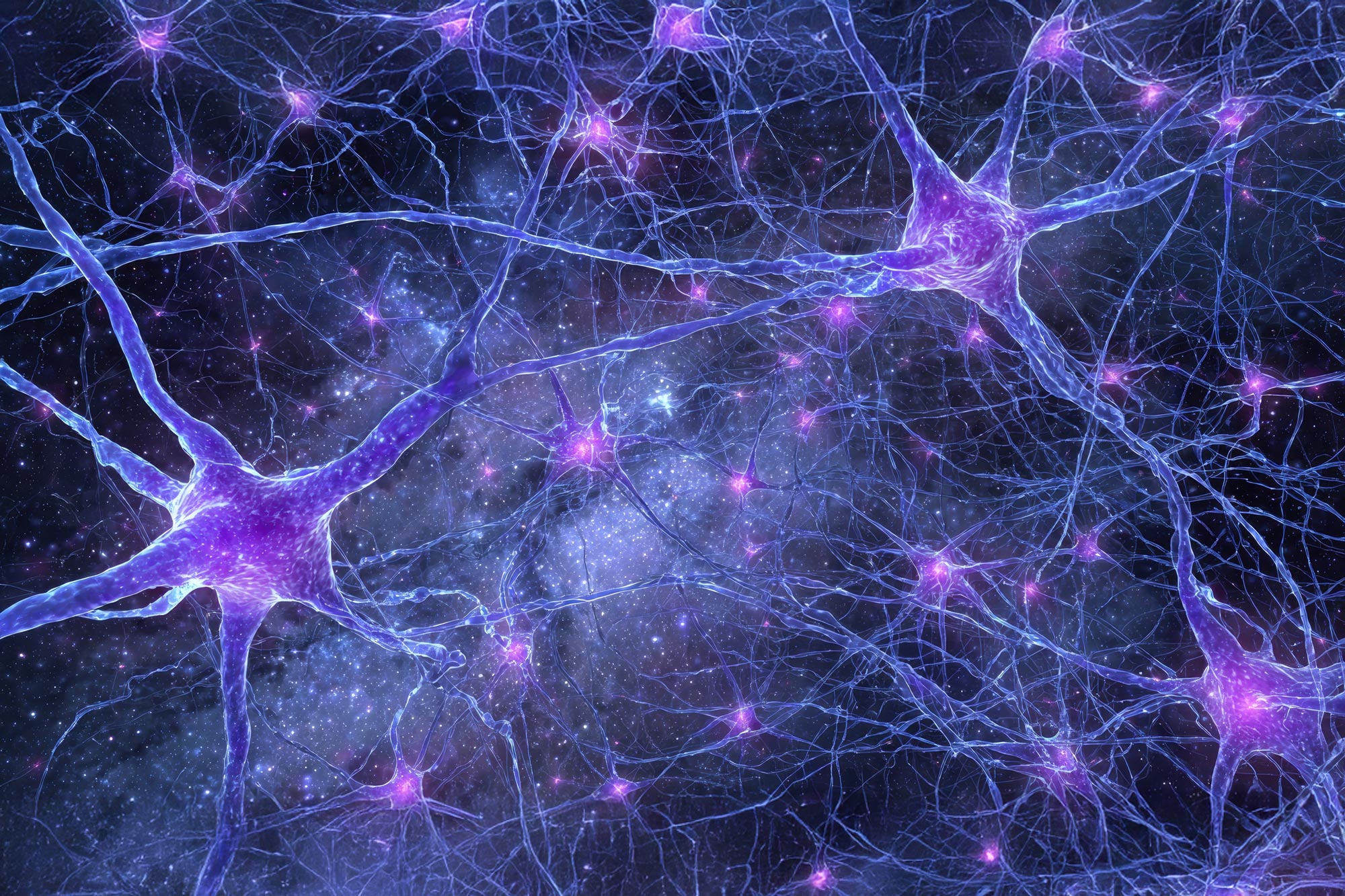
The new findings could help explain what made the human brain unique during evolution.
A mouse’s brain immune cells mature in about three weeks. Their human counterparts take four to eight years, an unusually slow timetable that may help explain how the human brain develops its distinctive cognitive abilities.
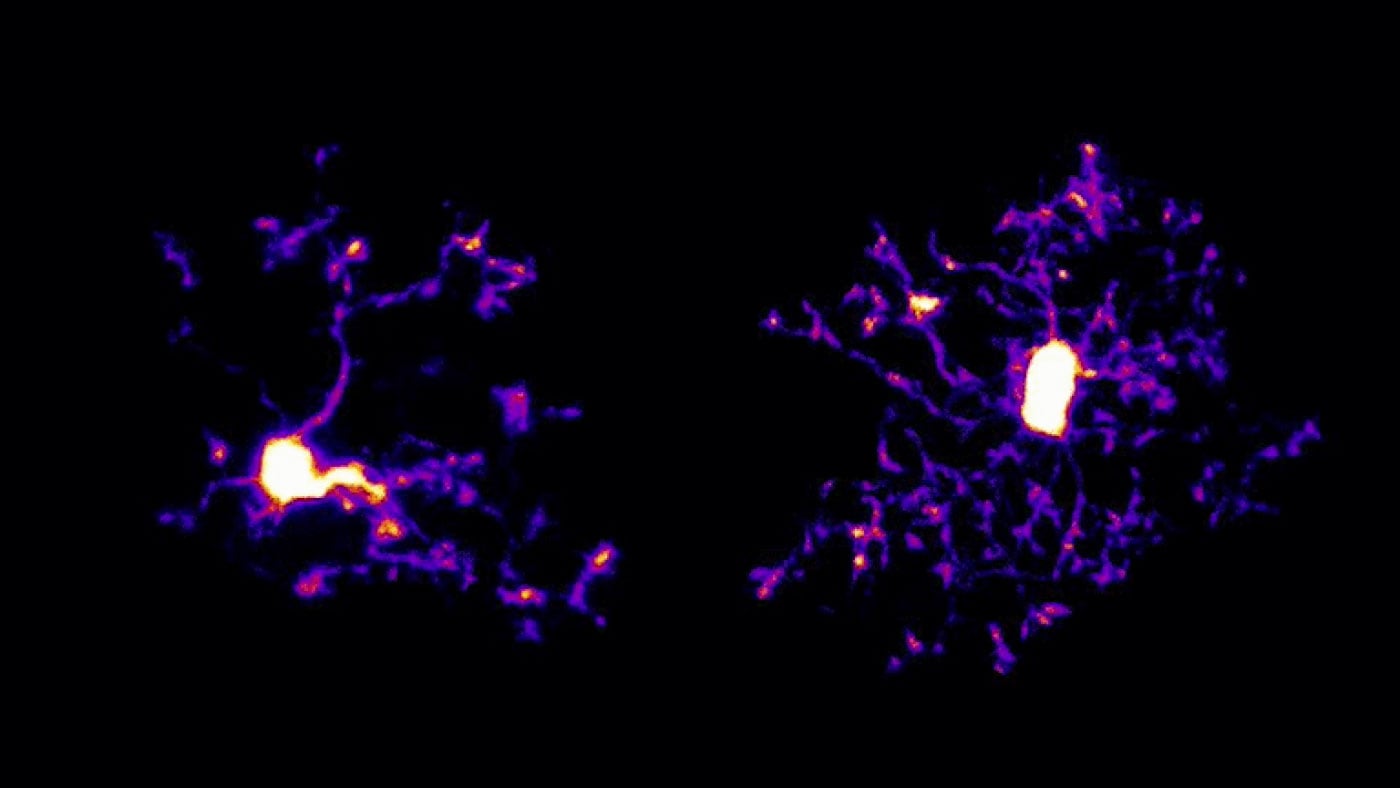
Microglia are the brain’s most abundant immune cells. They protect against invading threats, remove damaged neurons and help shape neural circuits as the brain develops. Scientists at Columbia’s Zuckerman Institute have now found for the first time that human microglia, like human neurons, mature far more slowly than those of other animals.
“This slow development may help human microglia influence the human brain in ways that enable our powerful cognitive abilities,” said Carlos Diaz-Salazar, PhD, lead author of the Neuron study. He conducted the research in the laboratory of Franck Polleux, PhD.
A human gene points to microglia
For more than 15 years, the Polleux laboratory has investigated SRGAP2, one of several dozen genes duplicated only in humans. The work aims to uncover genetic changes that helped make the human brain different from those of other species.
Dr. Polleux previously found that human-specific copies of SRGAP2 increase the number of synapses, the connections through which neurons communicate. Those copies also cause synapses to mature unusually slowly, two features that distinguish human neurons from those of other mammals.
The extended development produces neurons with stronger, denser connections to surrounding cells, improving their capacity to process and store information. The new research suggested that the influence of SRGAP2 extends beyond neurons.
Microglia mature years more slowly
Dr. Diaz-Salazar found that human-specific copies of SRGAP2 are almost 10 times more abundant in microglia than in neurons.
“So the question was, ‘Why on Earth is this gene so active in microglia?’” recalled Dr. Polleux, a principal investigator at the Zuckerman Institute.
Research over the past two decades has transformed scientists’ understanding of microglia. Although these cells fight infection and help repair damaged tissue, they also play an important role in building the developing brain.
Microglia account for about 5 to 10 percent of brain cells. During development, they help determine which synapses neurons preserve and which they eliminate. They can also make synapses in brain circuits more or less responsive.
Experiments using mice and human cells revealed that human-specific SRGAP2 copies dramatically extend microglial development. Human microglia require four to eight years to mature, while mouse microglia complete the process in roughly three weeks.
“This gene helps control the developmental tempo of neurons, and nature has also selected it to control the development of microglia that are so crucial to neuron development, so they are in sync during development,” said Dr. Diaz-Salazar, who is now a researcher at the Hospital del Mar Medical Research Institute in Barcelona.
Slow timing may shape human brains
Among mammals, the human brain stands out for its prolonged maturation. This extended developmental period is known as neoteny and is thought to contribute to humans’ advanced cognitive abilities.
The findings suggest that SRGAP2 may coordinate the slow maturation of both neurons and the microglia that help guide their development. Keeping these cell types on a similar schedule could allow microglia to influence neural connections throughout the unusually long period in which the human brain is taking shape.
The researchers now plan to investigate exactly how SRGAP2 produces neoteny in neurons, microglia, and other brain cells.
“We want to understand all the elements that help make up the human brain to understand what makes us unique from an evolutionary standpoint,” Dr. Polleux said. “Because scientists have recently found that microglia are involved in neurodevelopmental disorders and neurodegenerative diseases, our findings get us a step closer to understanding what makes human microglia special in the context of brain diseases.”
Reference: “Human-specific SRGAP2 paralogs synchronize neotenic microglial maturation and synaptic development” by Carlos Diaz-Salazar, JaeYeon Kim, Marine Krzisch, Juyoun Yoo, Patricia R. Nano, Aparna Bhaduri, Rudolf Jaenisch, Mercedes Paredes and Franck Polleux, 28 July 2026, Neuron.
DOI: 10.1016/j.neuron.2026.07.007
This work was supported by a Revson Senior Fellowship in Biomedical Sciences (REVSON 23-17; CDS), a career award from the NIH-NINDS (R35 NS127232), and an award from the NOMIS Foundation.
Never miss a breakthrough: Join the SciTechDaily newsletter.
Follow us on Google and Google News.
Full article can be found at: https://scitechdaily.com/a-human-specific-gene-may-help-explain-our-extraordinary-brainpower/